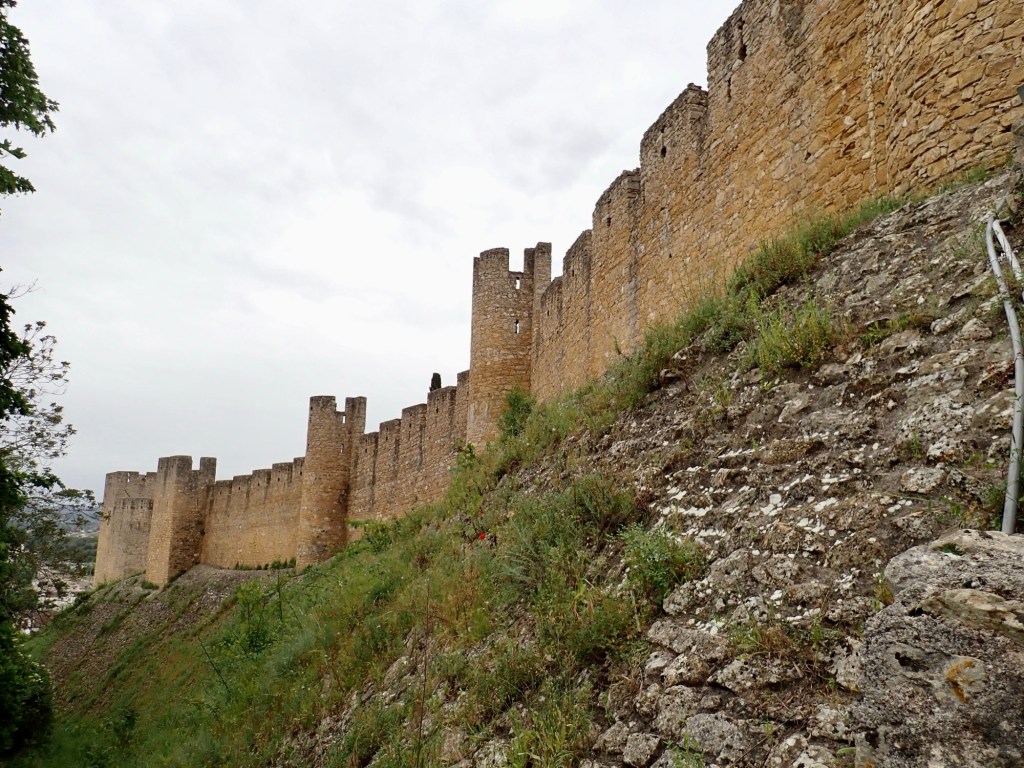
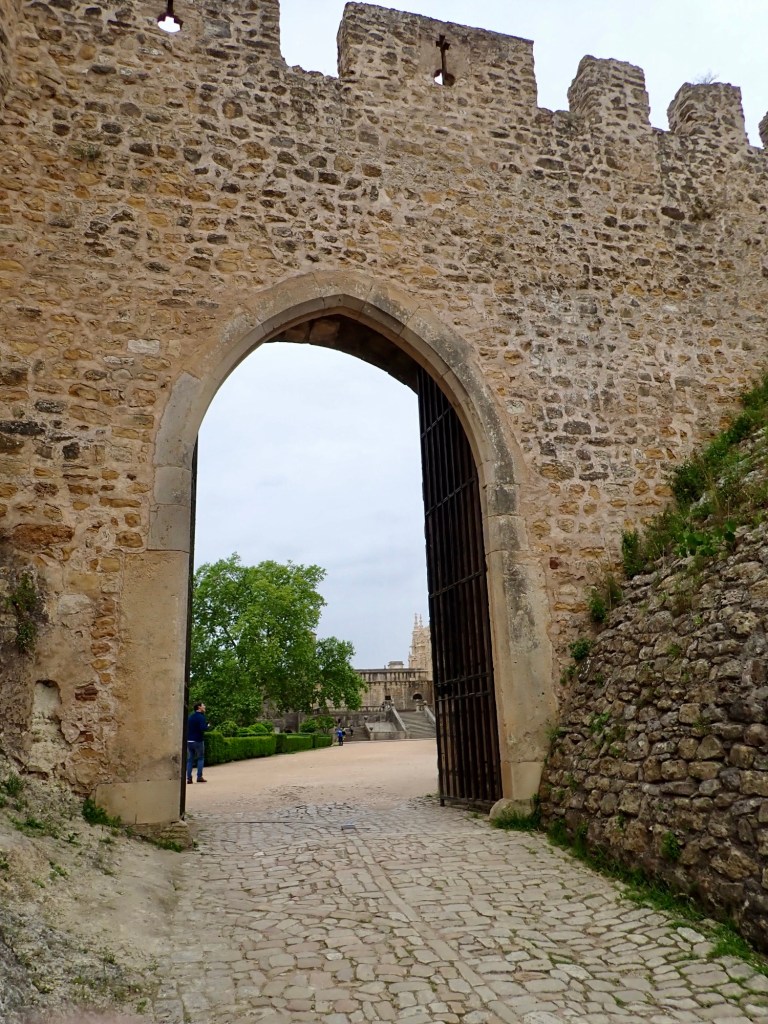
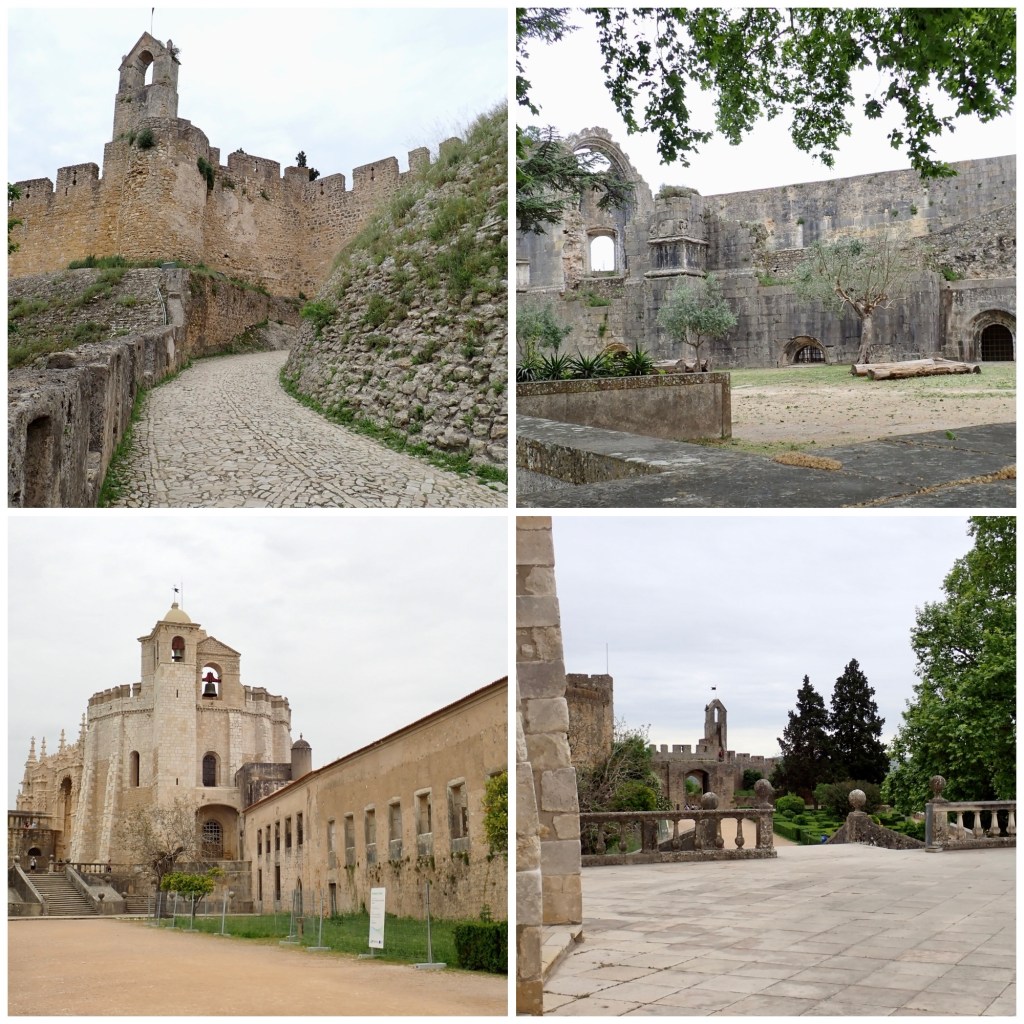
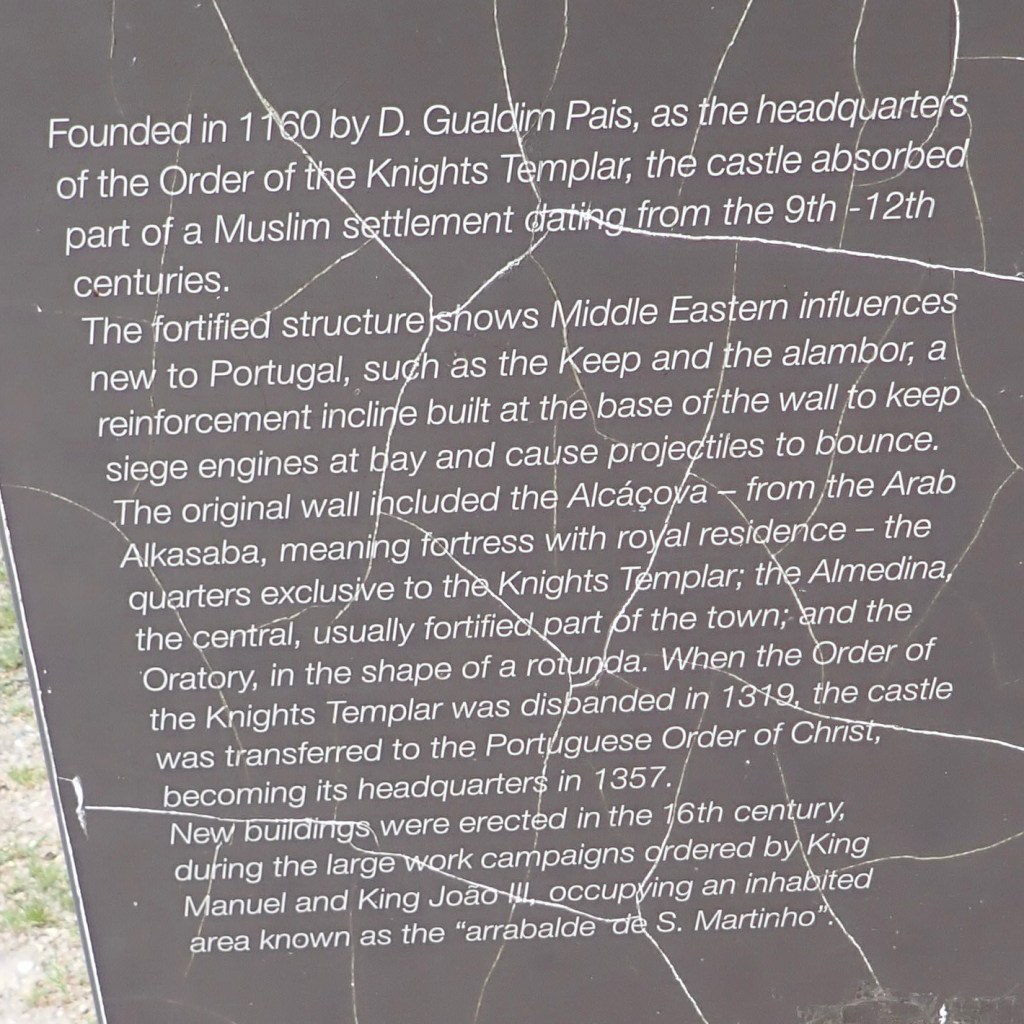
Tomar although settled in Roman times, its importance only started in the 12th century with the construction of a hill topping castle, the Convento de Cristo. A GrandMaster of the Knights Templar religious order put Tomar on the map by building a castle with middle eastern architecture picked up during the crusades in the Holy Land.
It was easy to wander around the gardens and exterior of part of the castle but to enter the Convent and interior of part of the castle there was 15 euro per person fee, I’m sure it may be worth it but again only one of us can go in.
Michelle and a Judas Tree that was coming into flower.
Below the castle the hill was heavily covered with trees but I did manage to find one stop where we could see the River Nabao way down below us.
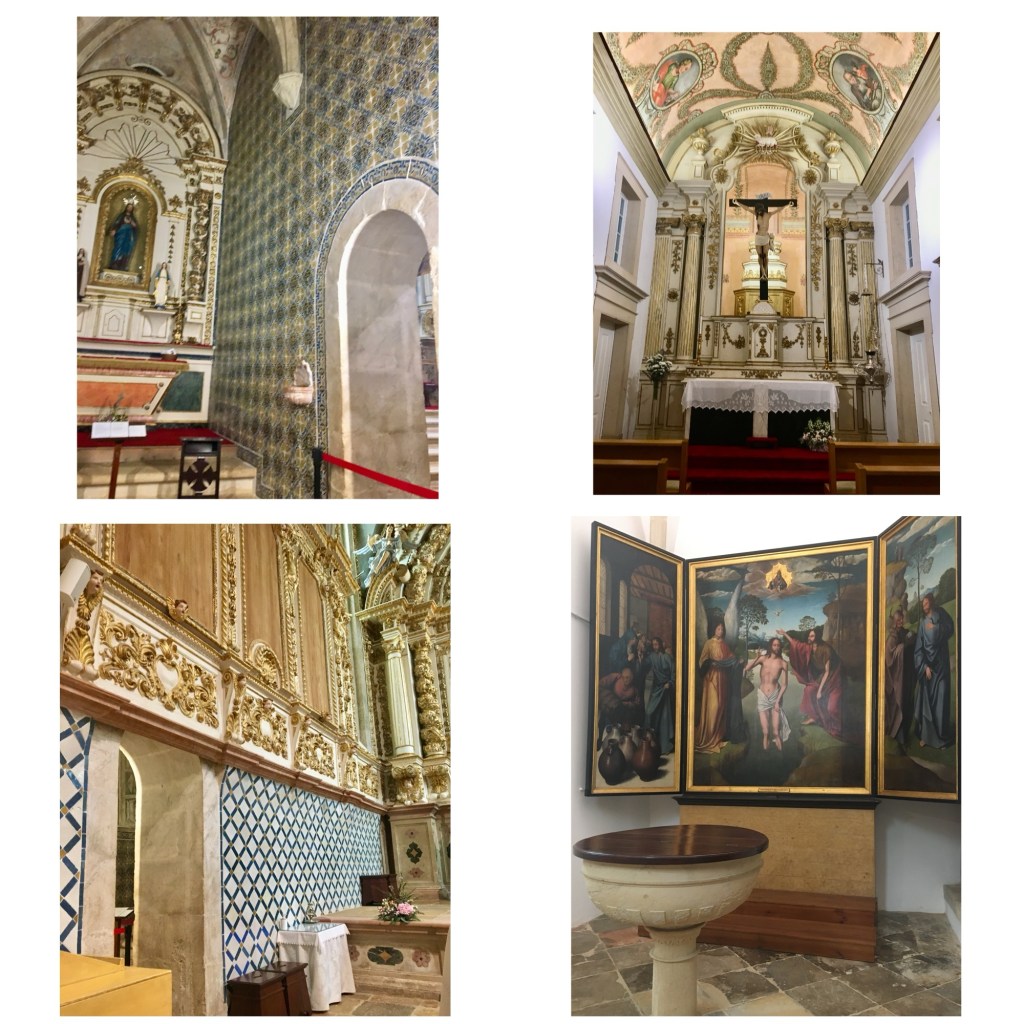
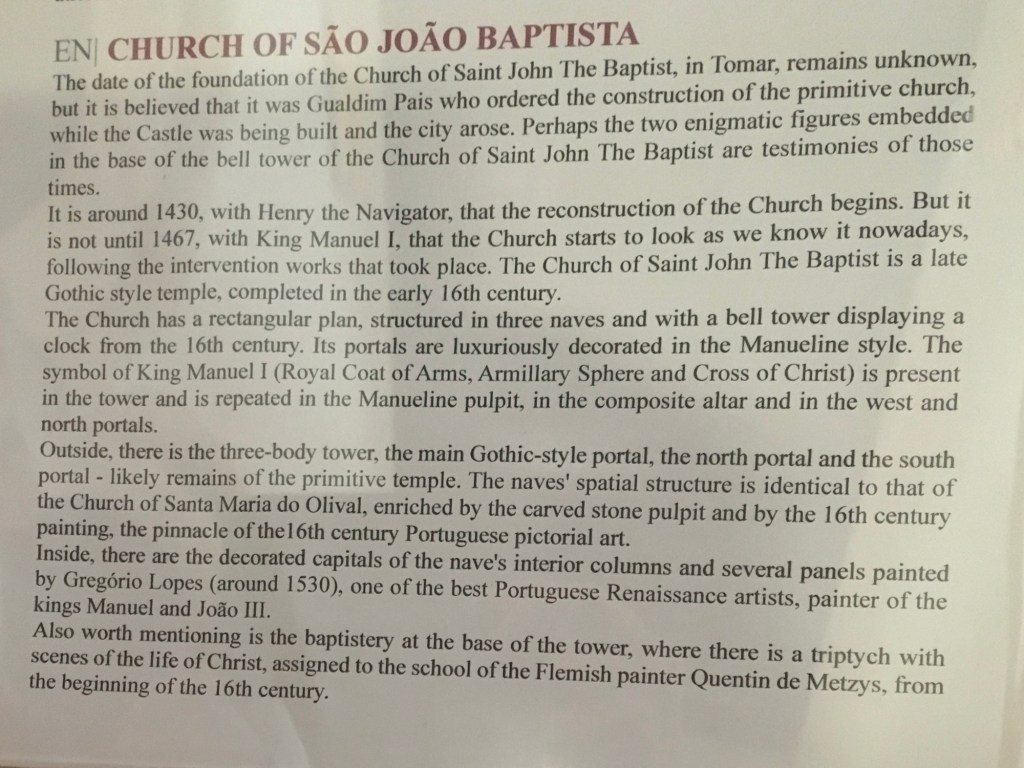
In the centre of the town is the Church of Sao Joao Baptisa ( St John the Baptist) Michelle went for a wander around inside and took some photos.
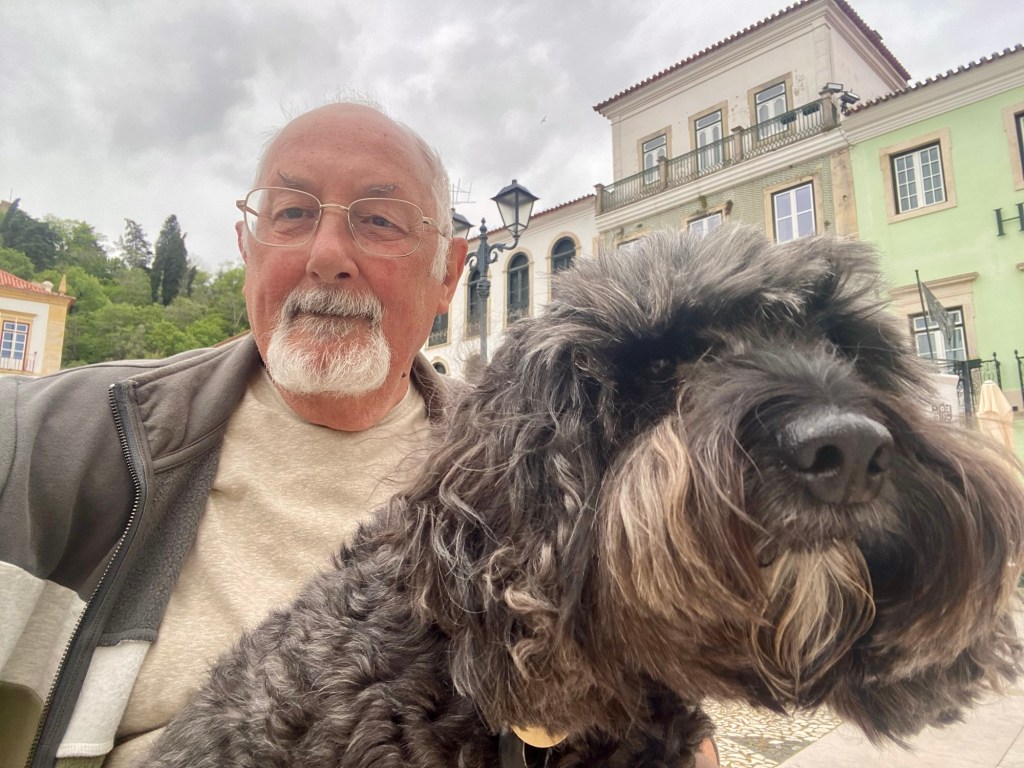
Of course it wouldn’t be a trip away without at least one photo of Layla and I sat outside a building be it a church, museum, cathedral etc so here is another one to add to Our Guide Book of Famous Buildings We Have Sat Outside.
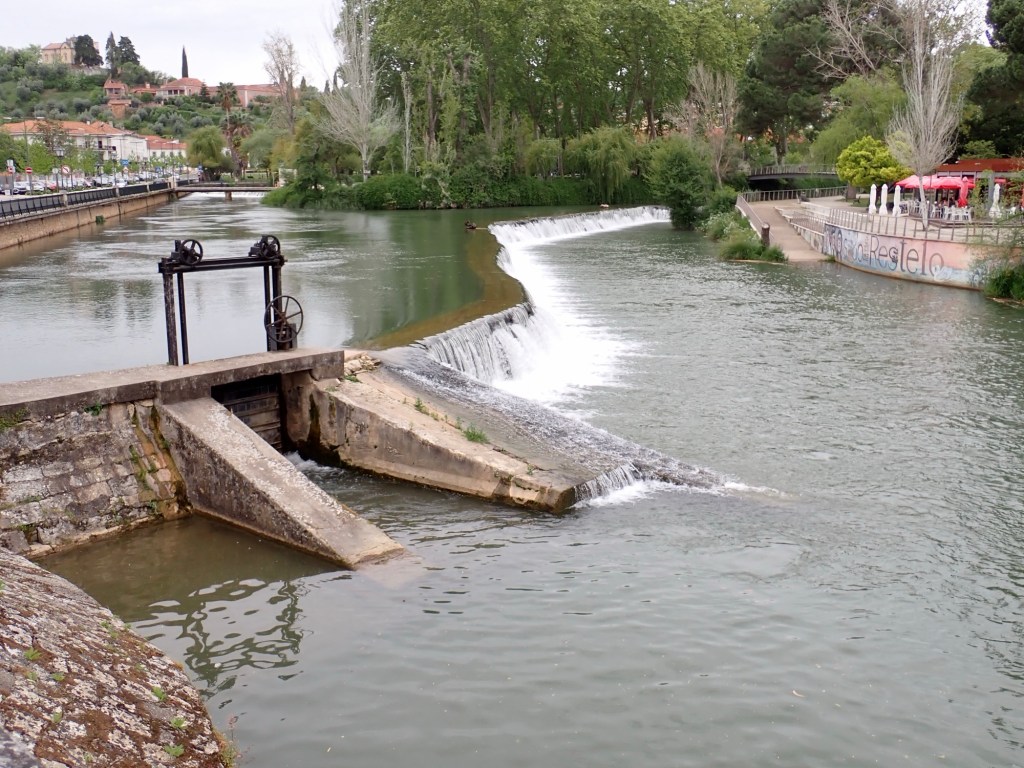
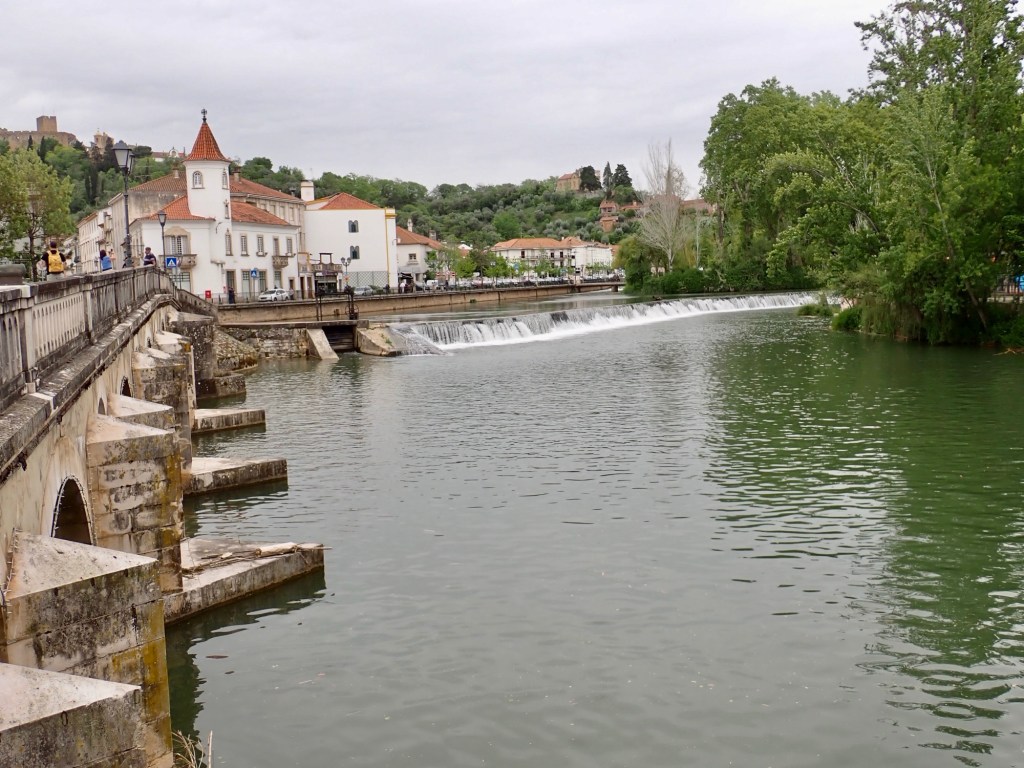
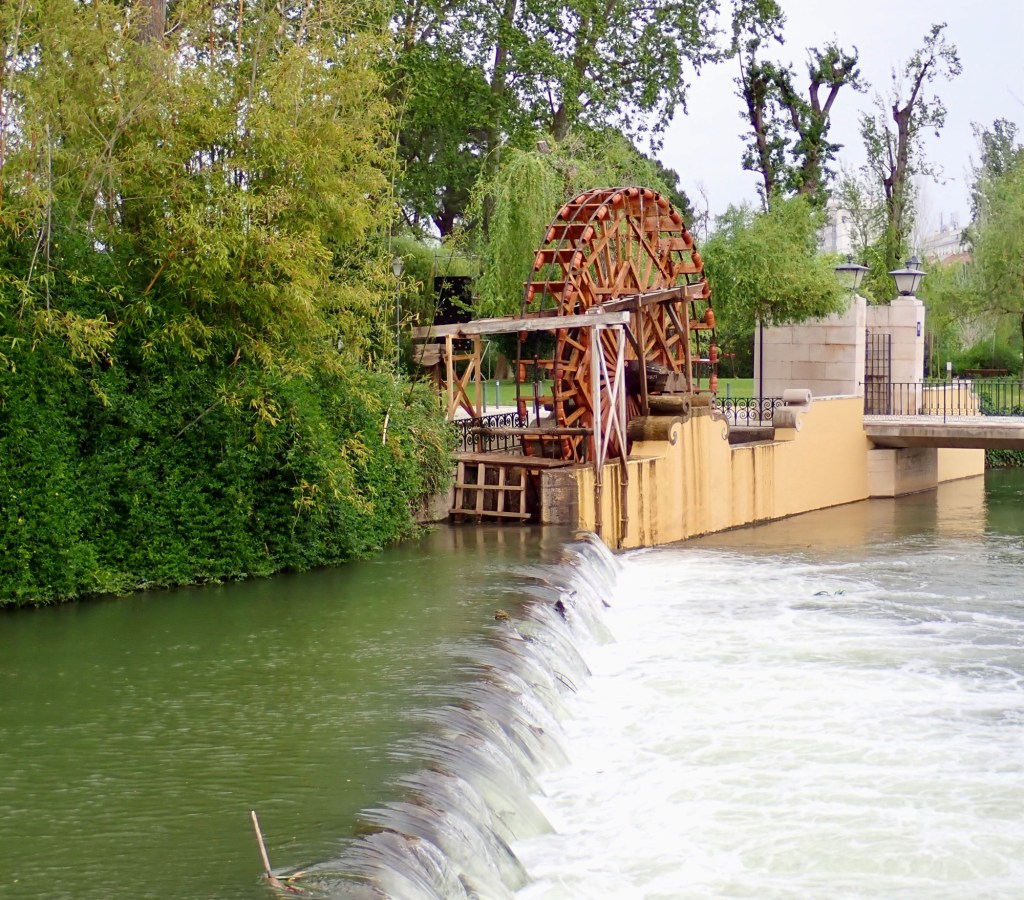
The area around the river is very pleasant with a park alongside.
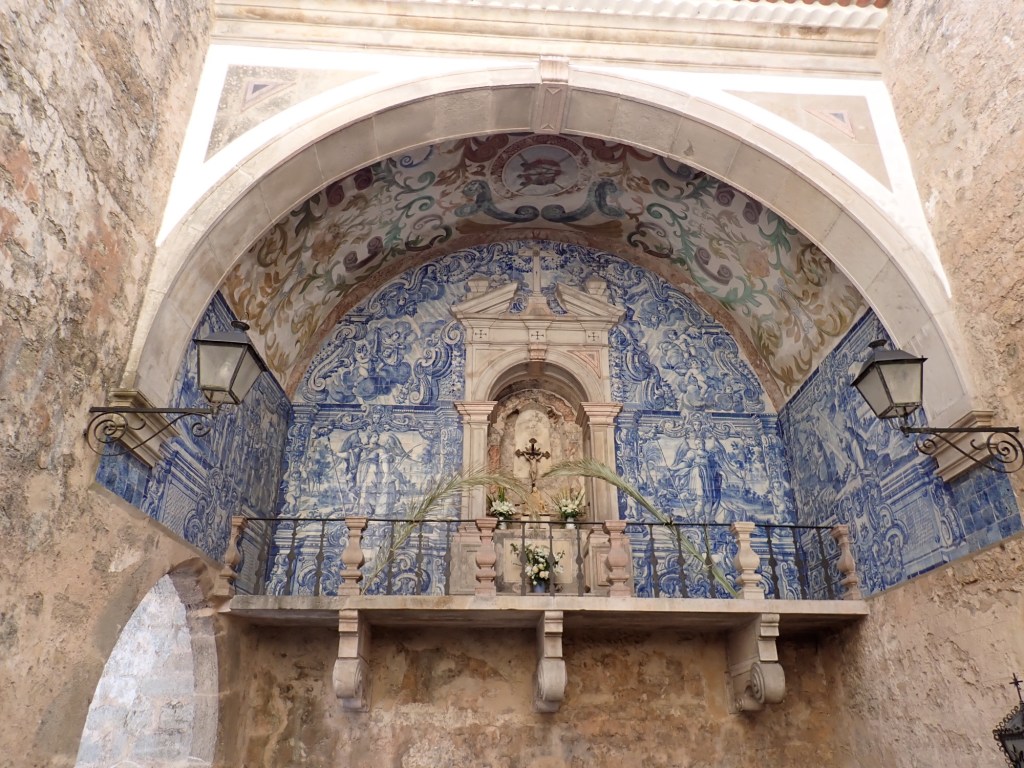
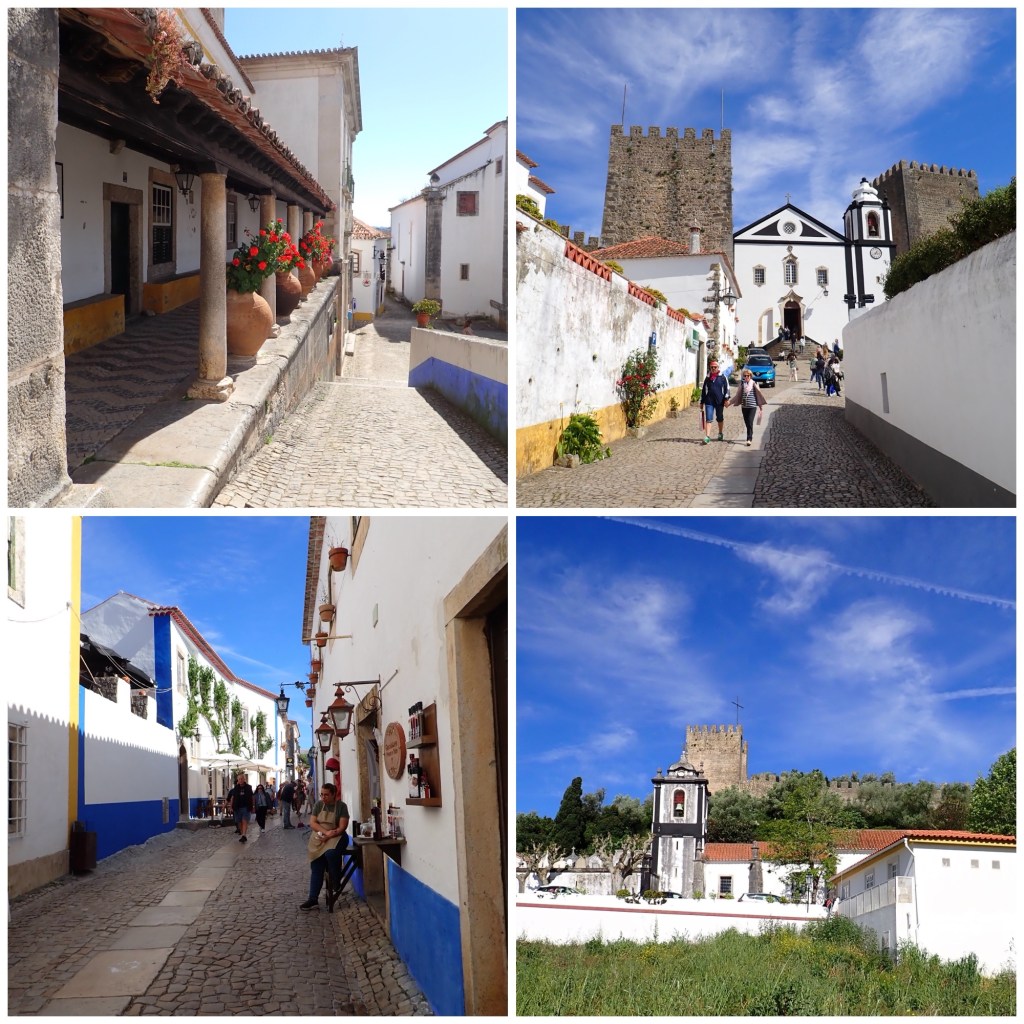
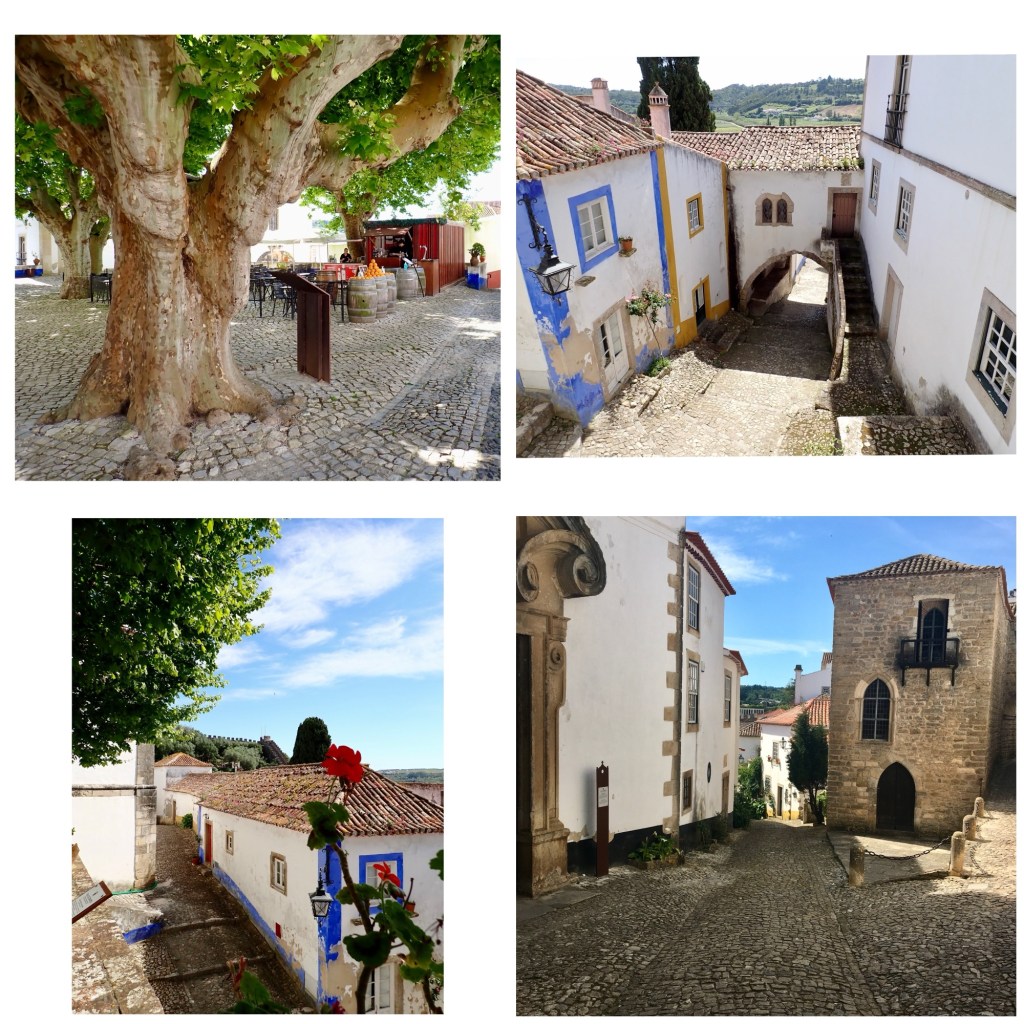
Our first stop today was Obidos an interesting historical town, and it is described as enchanting which is why until 1883 Obidos was the exclusive property of the Queens of Portugal.You enter through the southern gate of Santa Maria which is embellished with 18th century “azulejo” decoration.
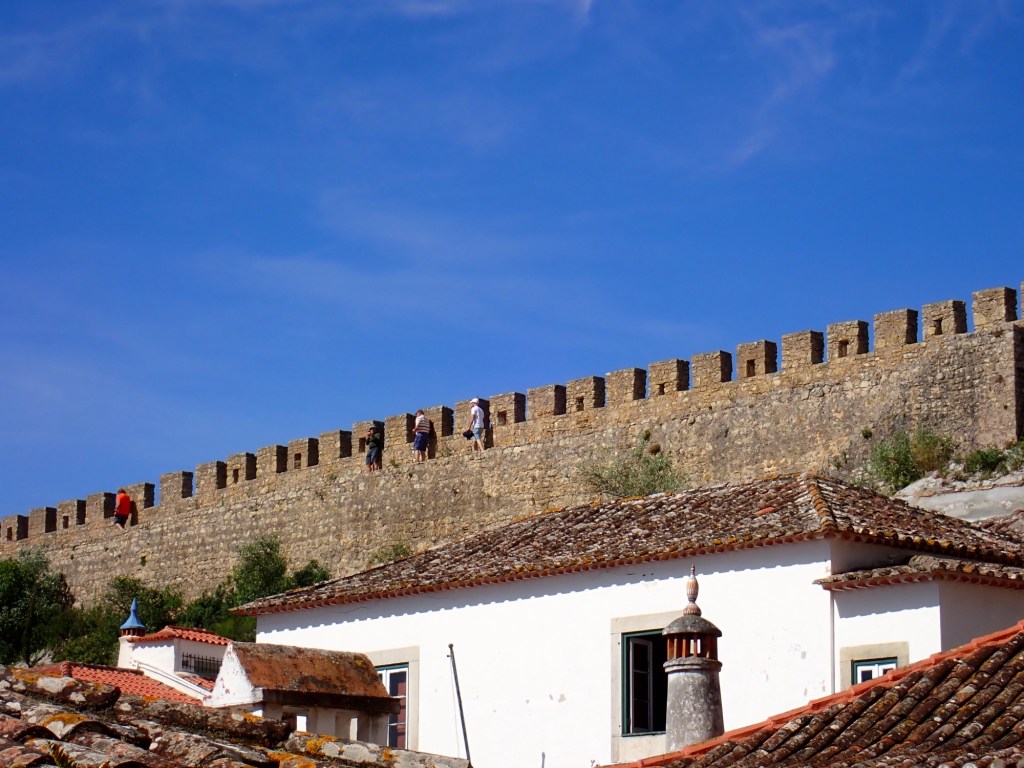
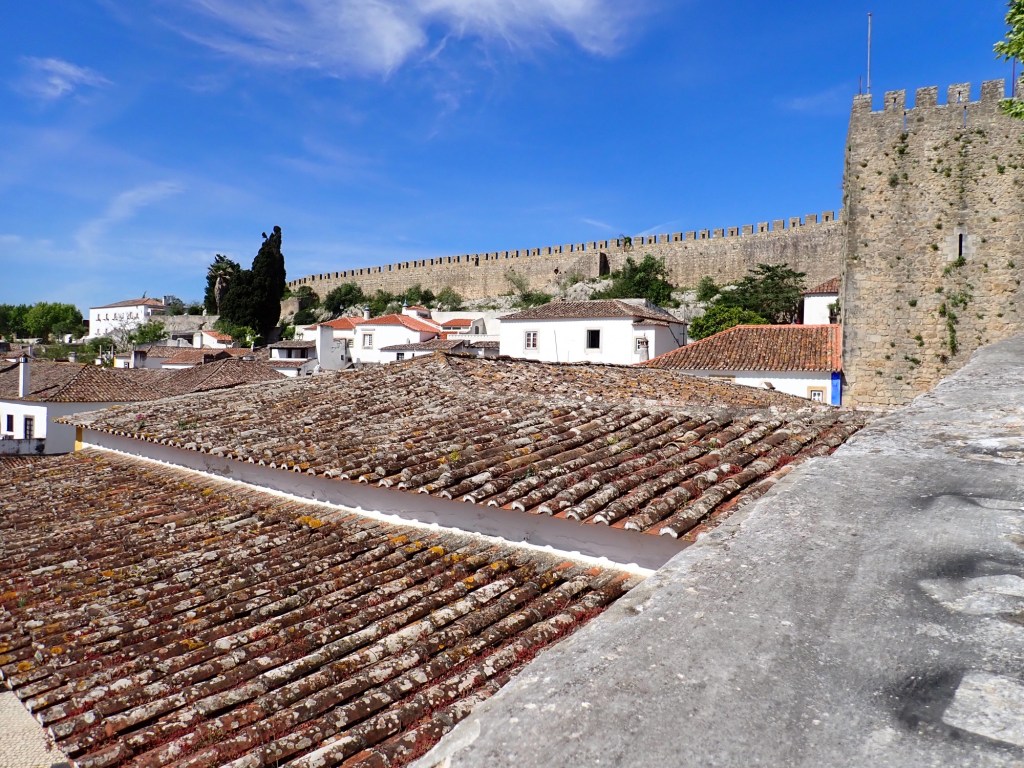
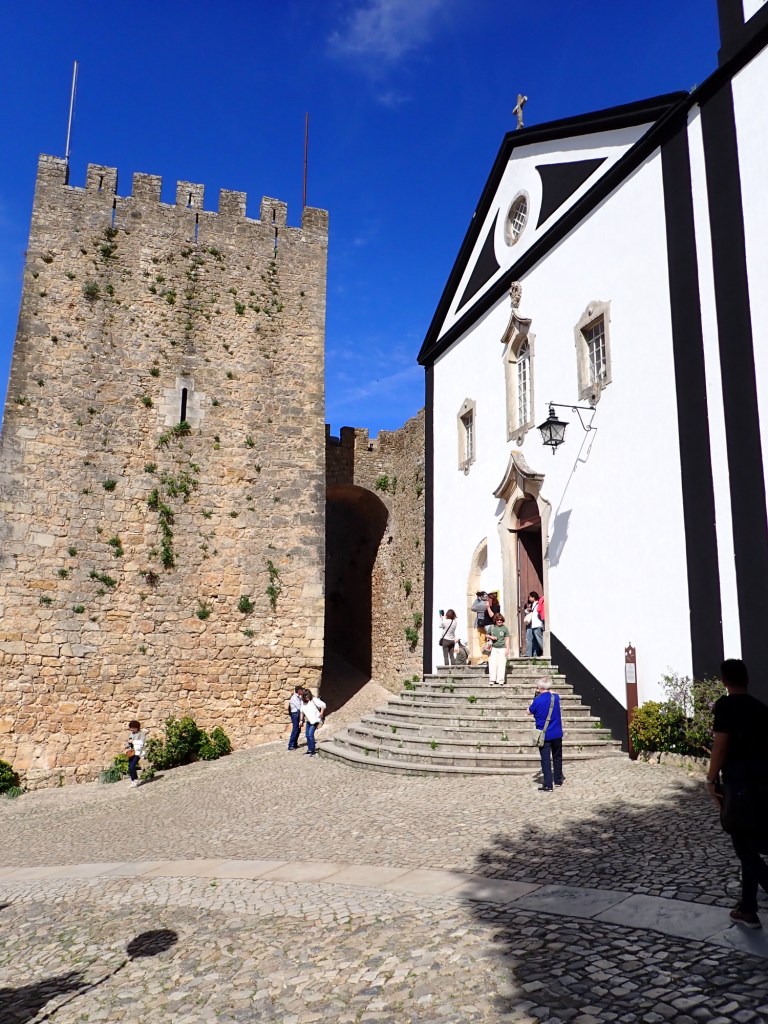
The whole town is encircled by its walls of fortification and if you have a head for heights you can walk along them.
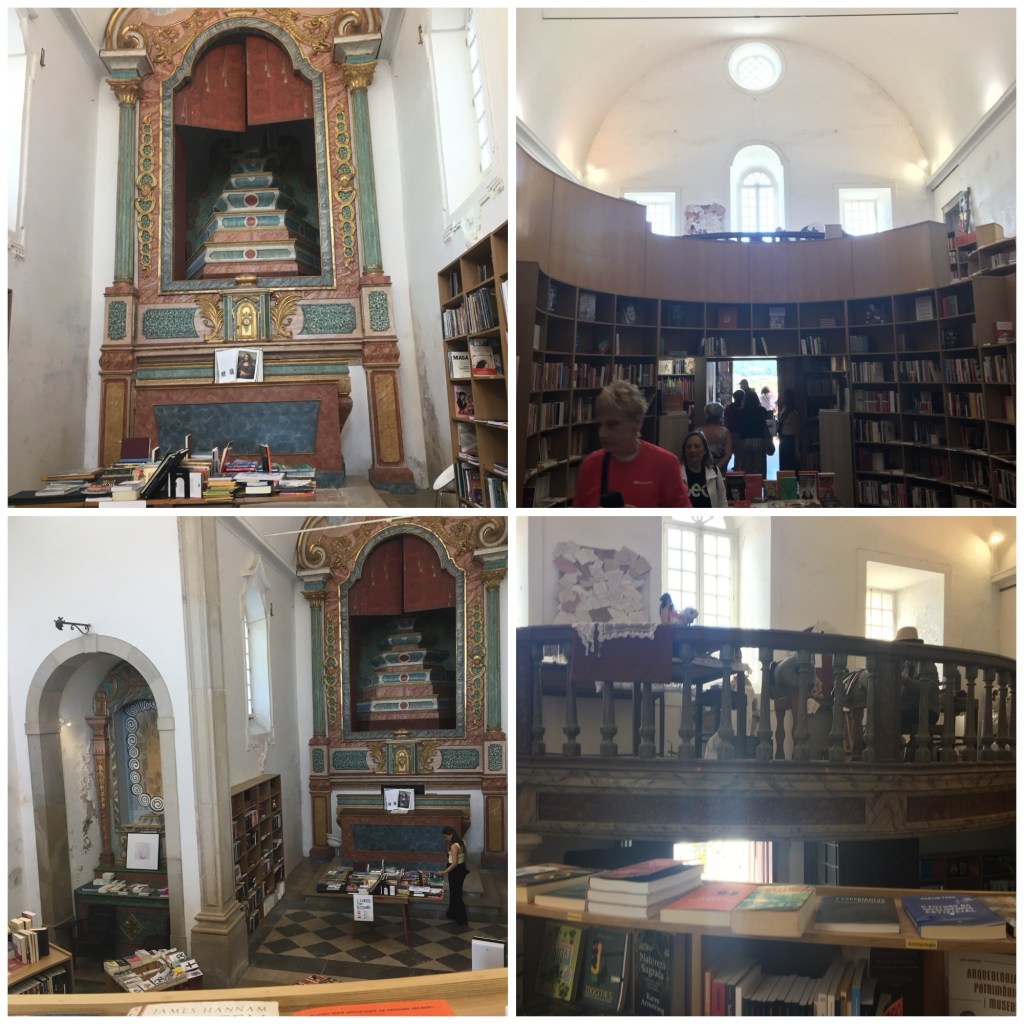
In the centre there was a building that looked like a church but when Michelle entered it turned out to be a library.
The lady on the balcony was lace making.
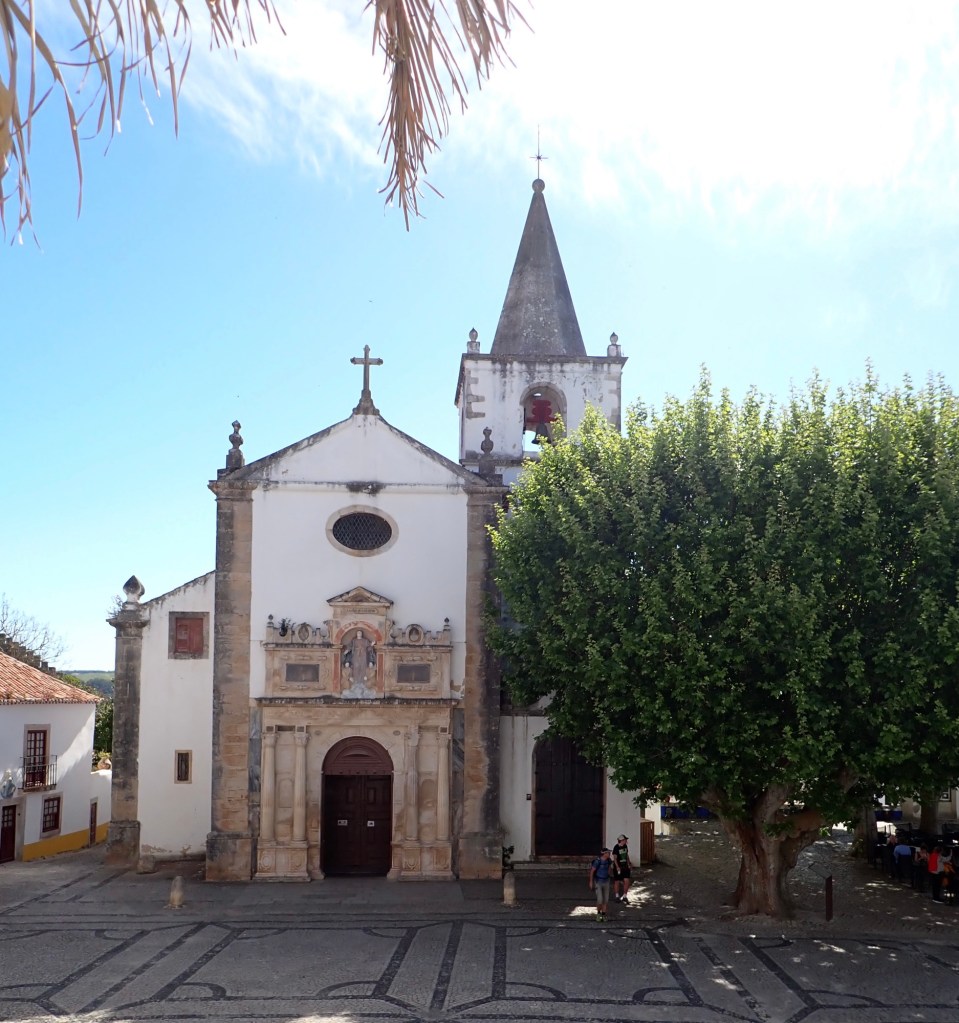
Another very interesting building was the church .
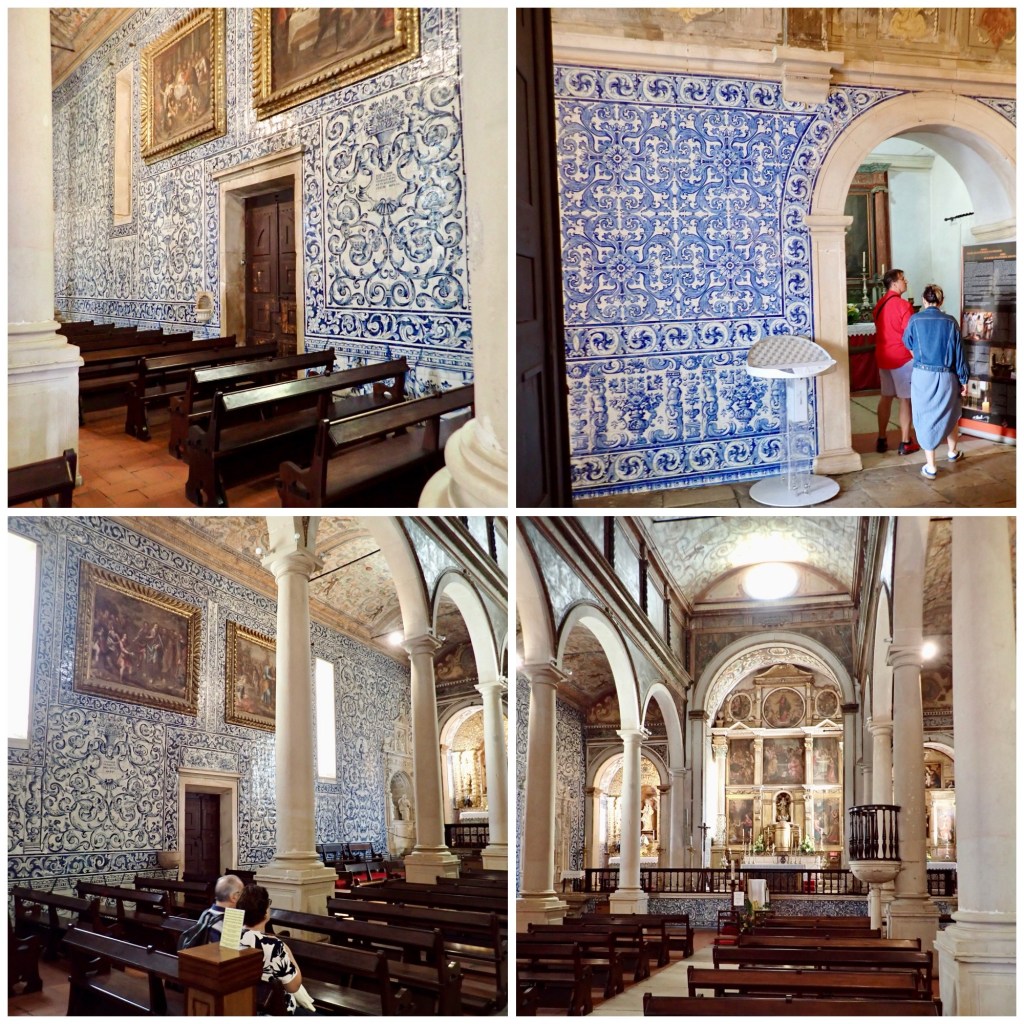
St Mary’s church, built in the 12th century with additions in the 16th and 17th century the interior is tiled which was added in 1696.
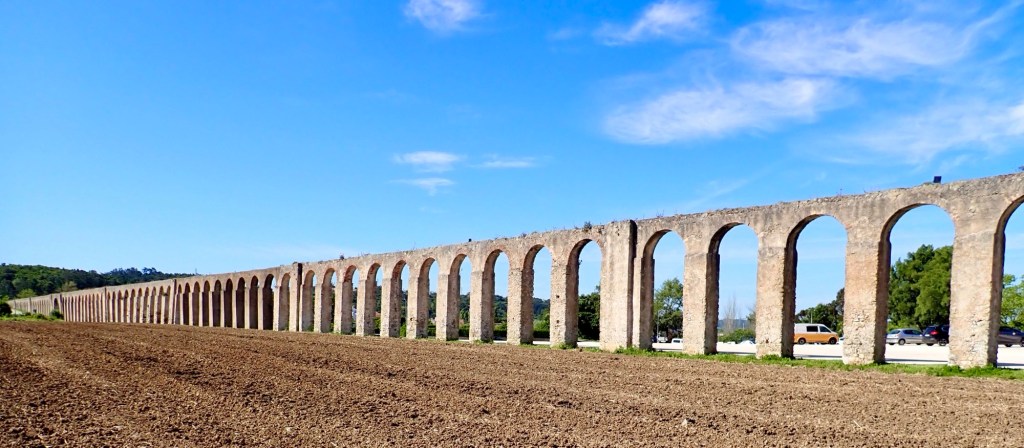
Obidos aqueduct built about 1570.
Our next stop was the town of Alcobaca where after lunch we walked across town to the Alcobaca monastery. This monastery was founded in 1153 by the first Portuguese king, Afonso Henriques. This association with the royal family lead it to become the richest and most powerful in Portugal until it closed in 1834, the church and monastery were the first Gothic buildings in Portugal.
For reasons we didn’t discover until later it was closed.
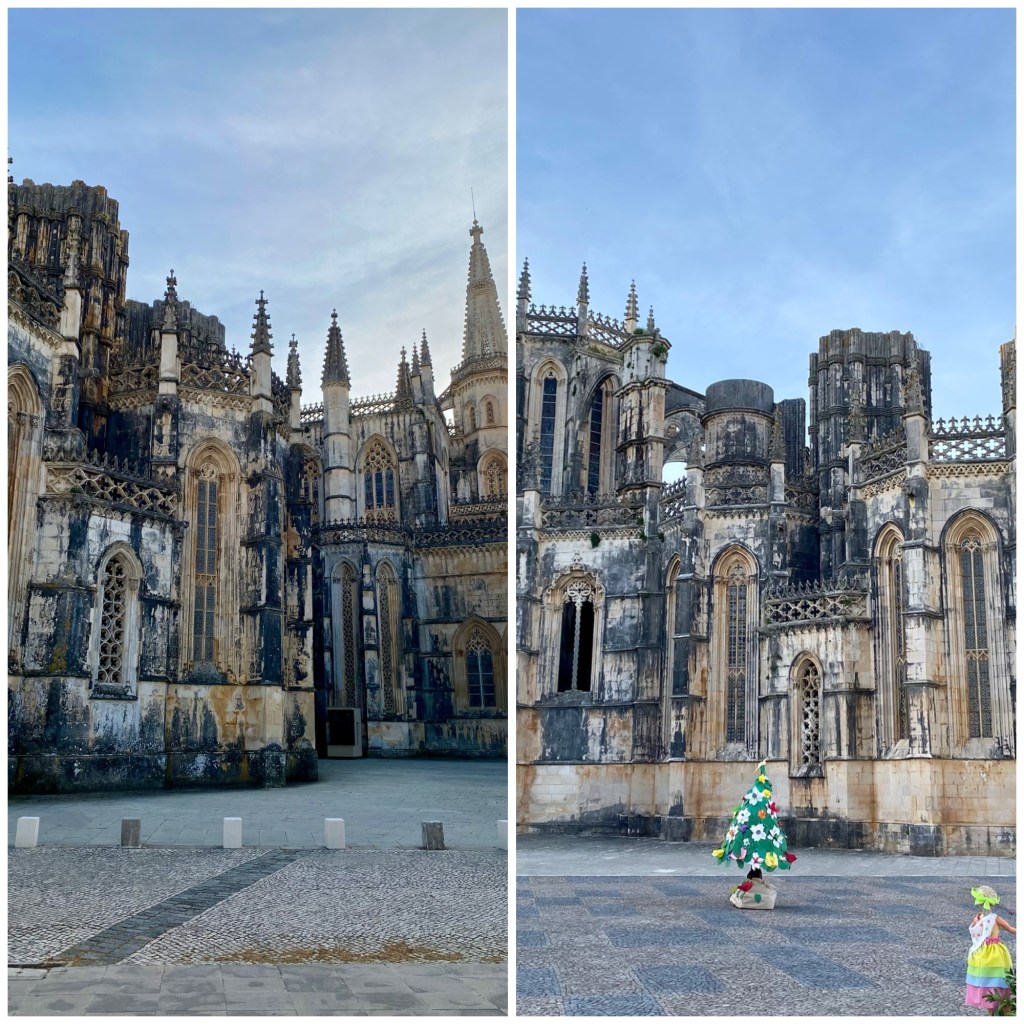
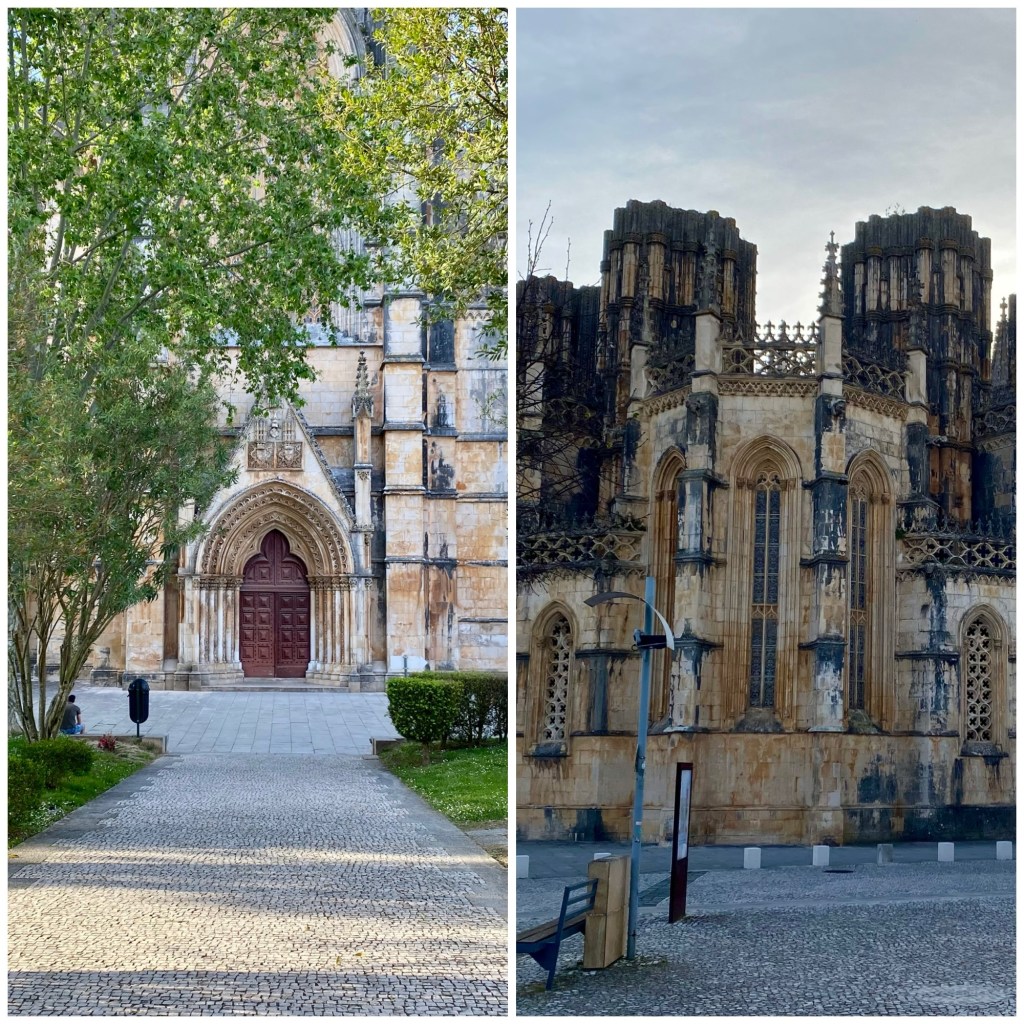
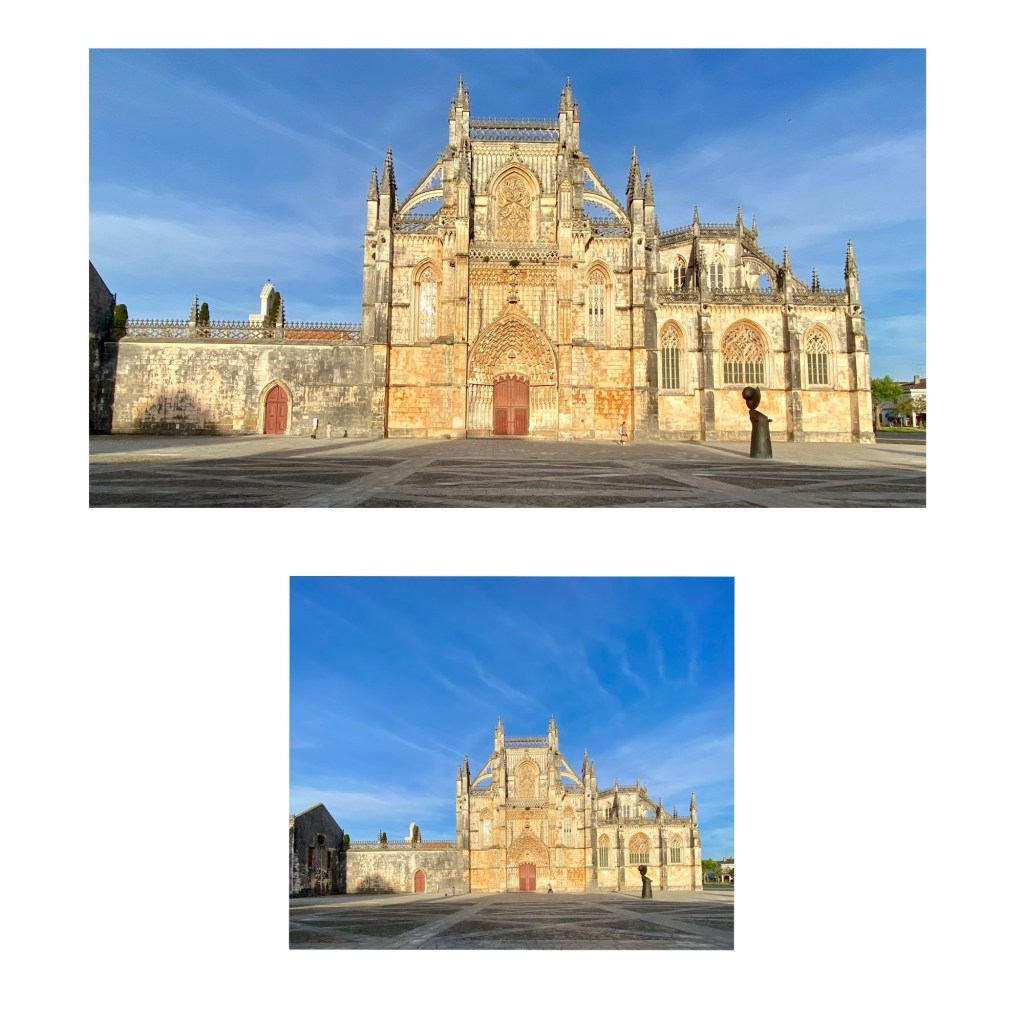
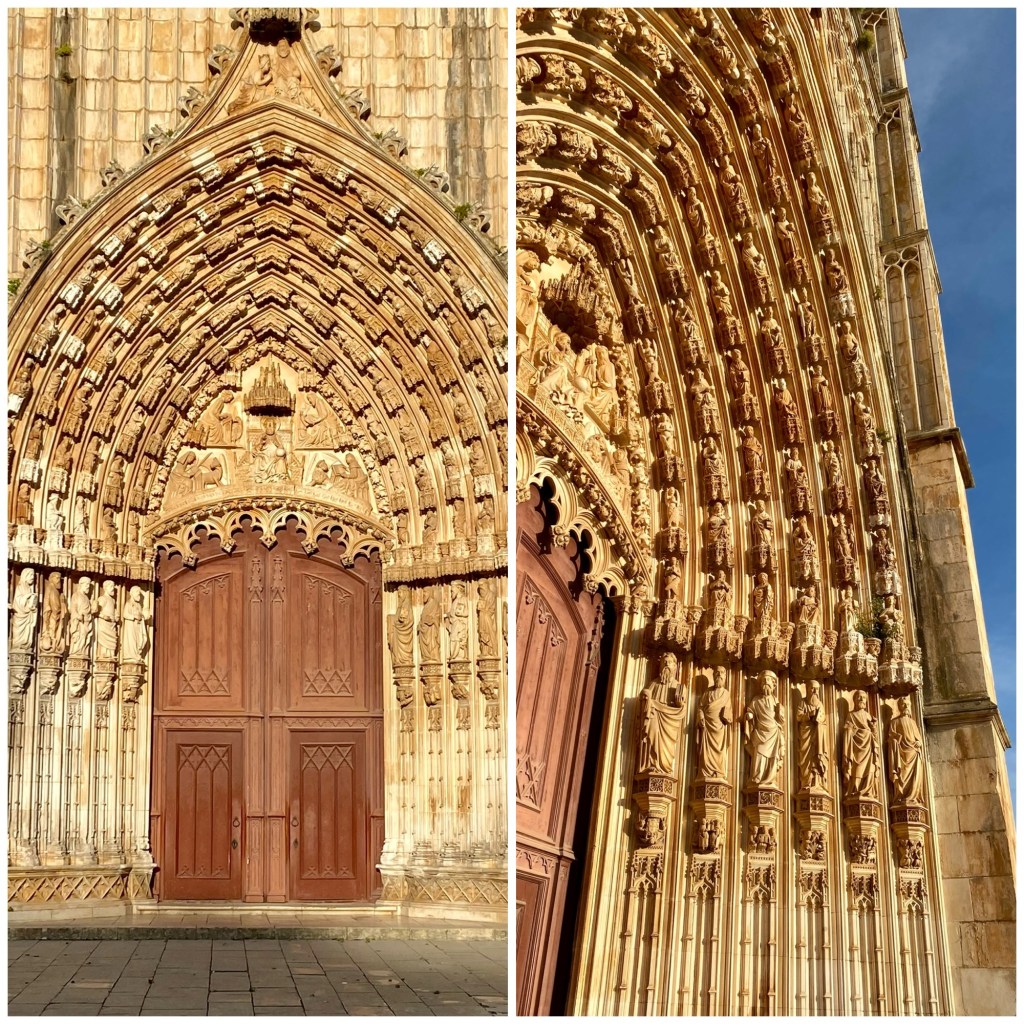
From there we took another short drive to the town of Batalha where we planned to stop for the night, it is famous for its monastery a UNESCO heritage site. Its construction began to commemorate the victory over the Castilian’s it is a masterpiece of Gothic art. It was designed by an English architect Master Huguet and its most dramatic feature is to be found in the centre of the chapel: the enormous medieval tomb of Dom Joao 1st and his wife Queen Phillips of Lancaster, also buried there is their son Prince Henry the Navigator.
My photos can’t do it justice it is magnificent.
We discovered during the day, that lasting for about 12 hours, there had been a huge power outage across Spain and Portugal which had brought most of these countries transport system to a stand still. Shops, fuel stations, cafes and bars were mostly closed, a few bars stayed open by flickering candle light and cash only payments . For us it had the effect of making our ipads and iphones inoperable cutting us off from communication and also navigation systems, thankfully as we are self contained it had no effect on our normal living. We were staying in an area with parkland and sports facilities but we could see shops and apartments from Homer, suddenly at 10 pm the lights came back on and there was a cheer from the people sitting outside.
A short hop this morning took us to Ericeira where we stopped at an intermarché to fill with LPG and for Michelle to do a load of washing, all went well until it was discovered the tumble drier wasn’t working. As a result later this afternoon the interior of Homer looked like a Chinese laundry as everything dried, with exterior temperatures of 24 degrees it didn’t take long, just the time to explore the town and have a beer and red wine.
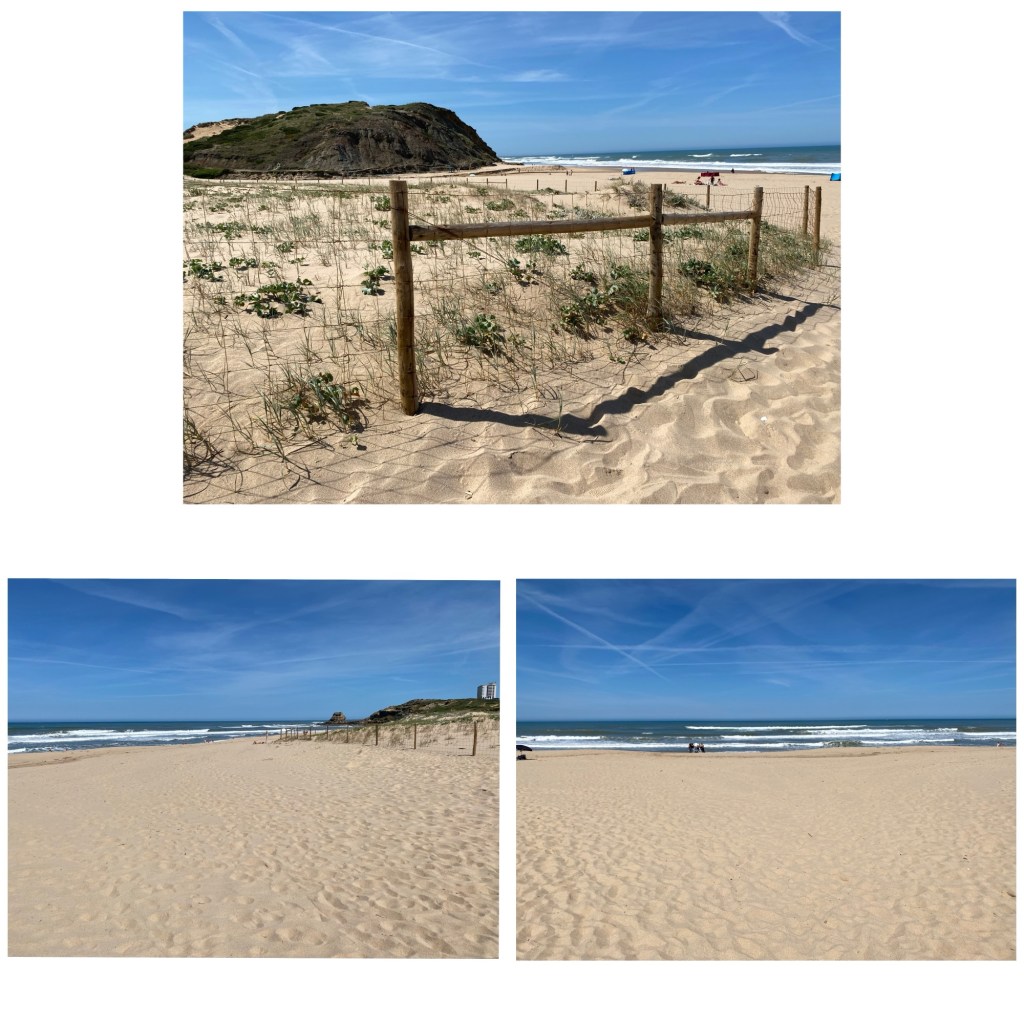
Our next stop was a small coastal village Praia de Santa Rita where we had a 30 minute break, I took a few photos of the beach but dogs weren’t allowed.
As you can see the beach was rammed.
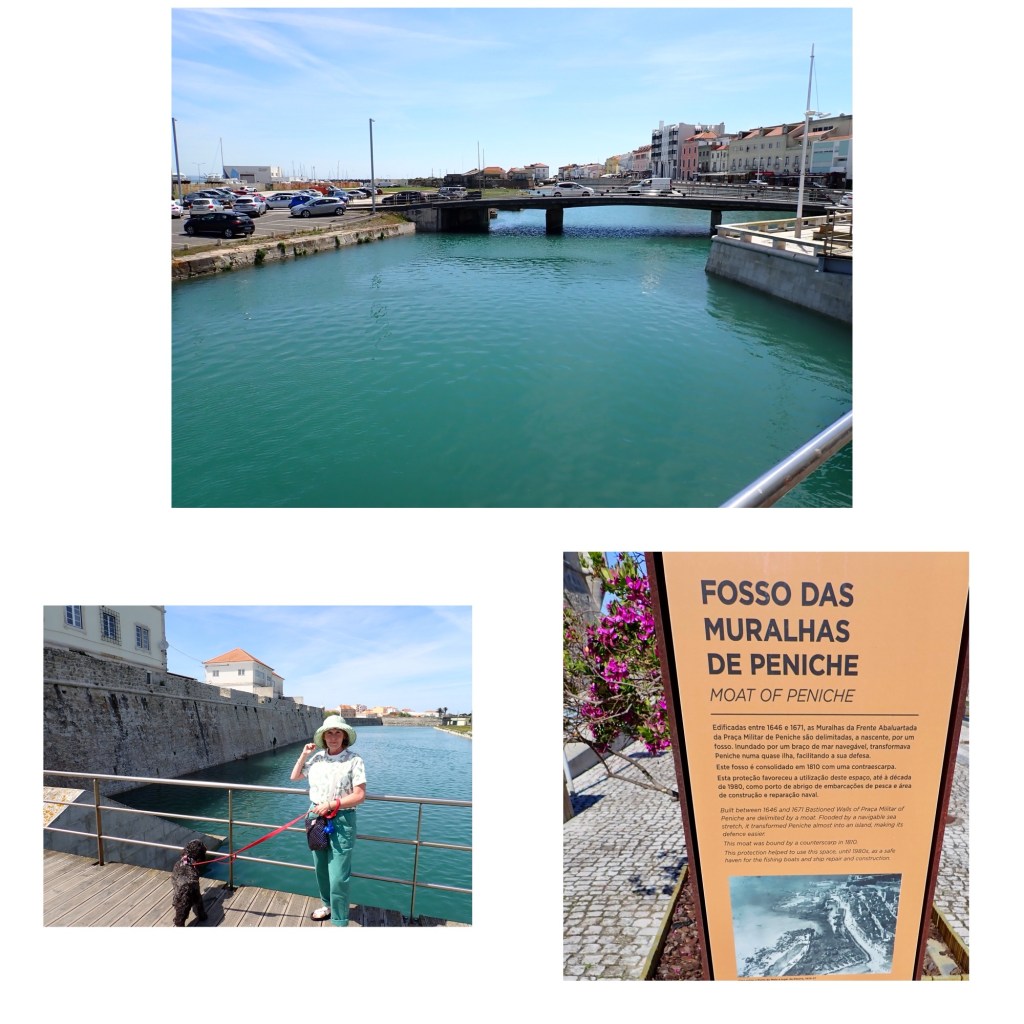
We then headed to Peniche where we are again on a free stopover parked along with many Portuguese vans. As mentioned above whilst the laundry dried we went into town.
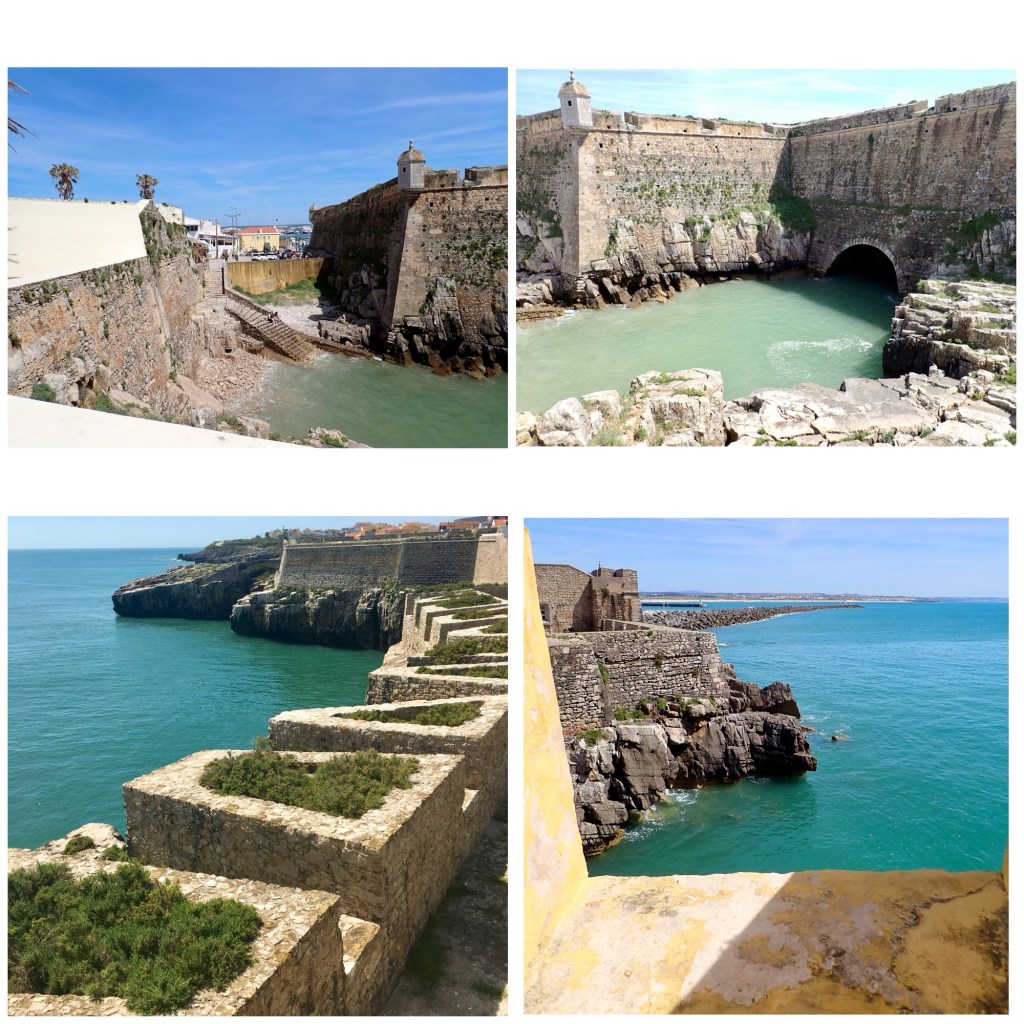
A moat for town security.
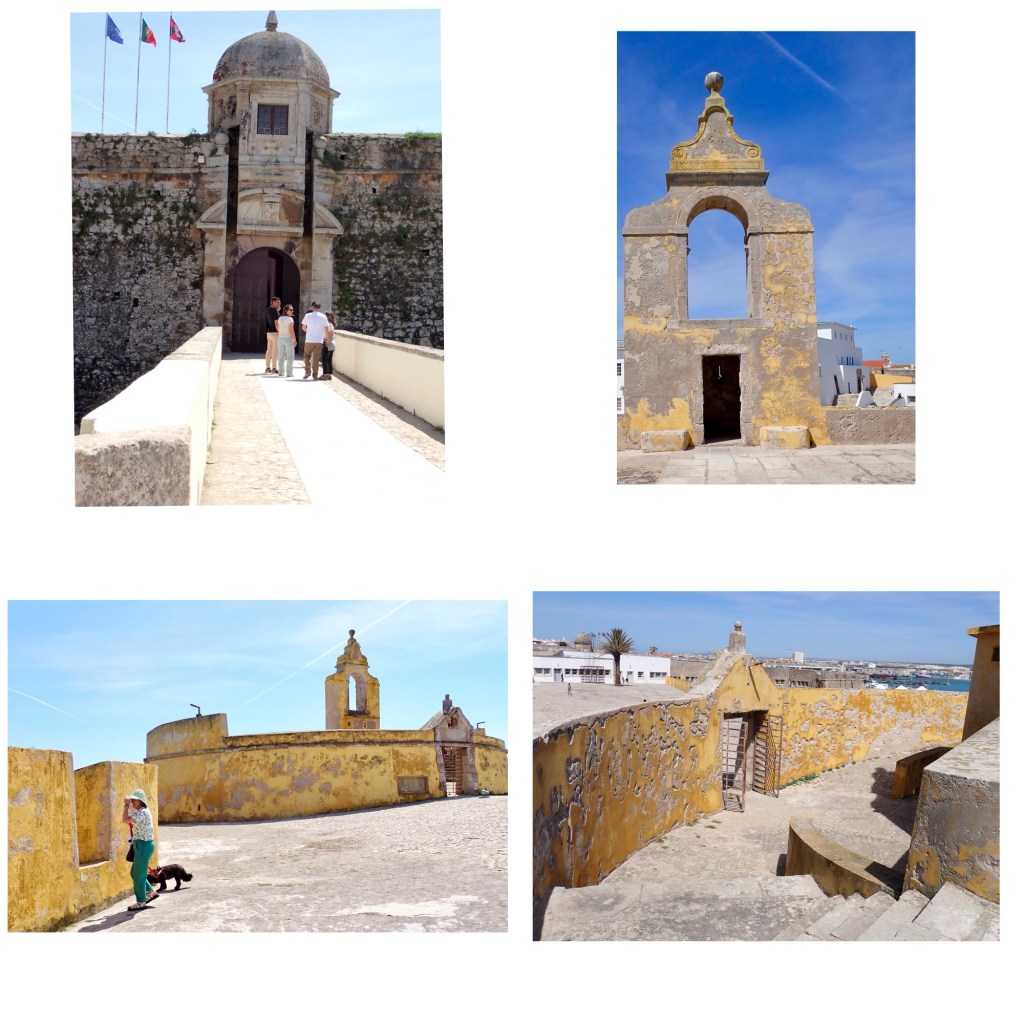
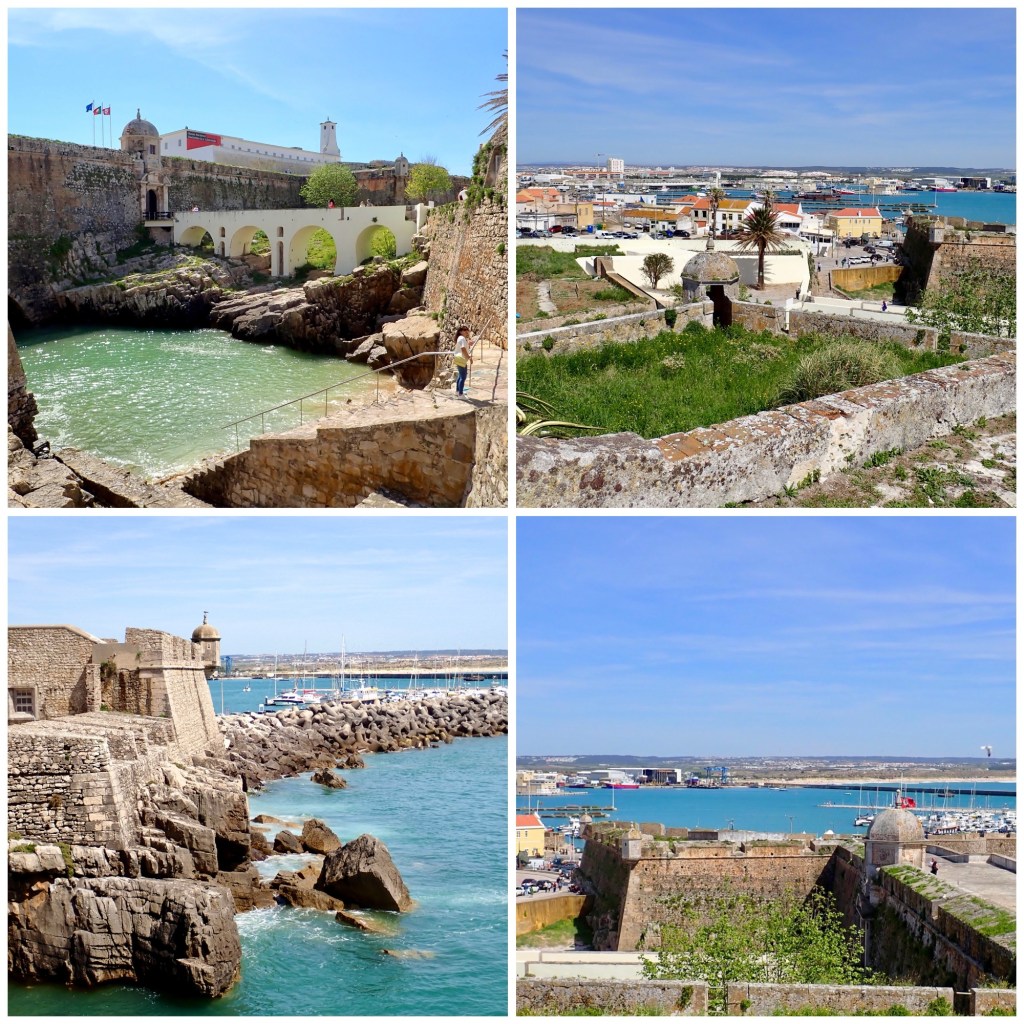
At the far end of town there is a fort with its wall still standing it houses a museum of Resistance and Freedom. It was used to imprison people against the regime of the dictator Salazar.
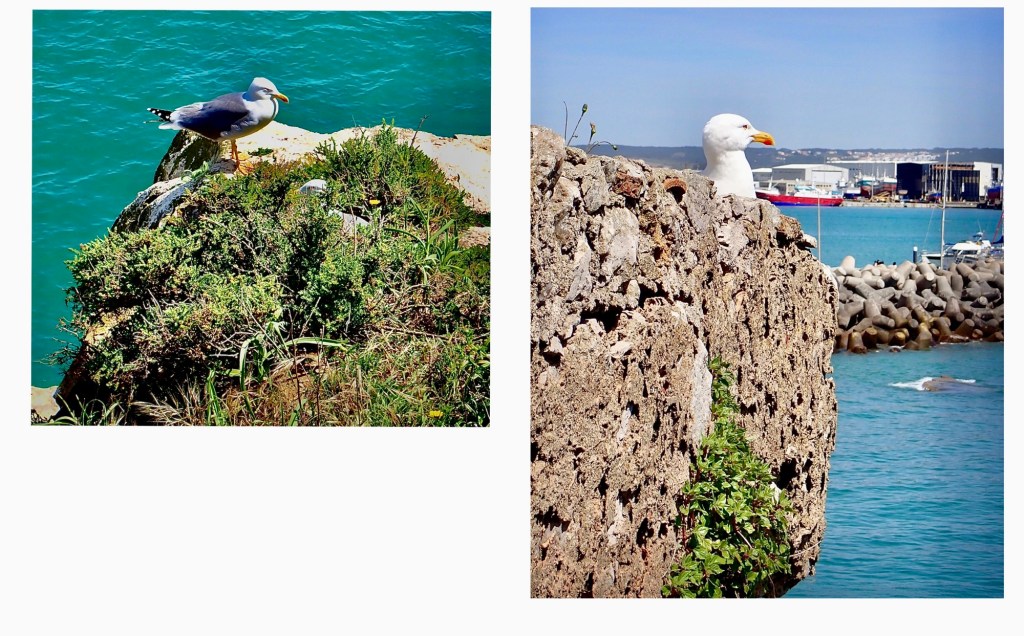
New inhabitants, one on sentry duty.
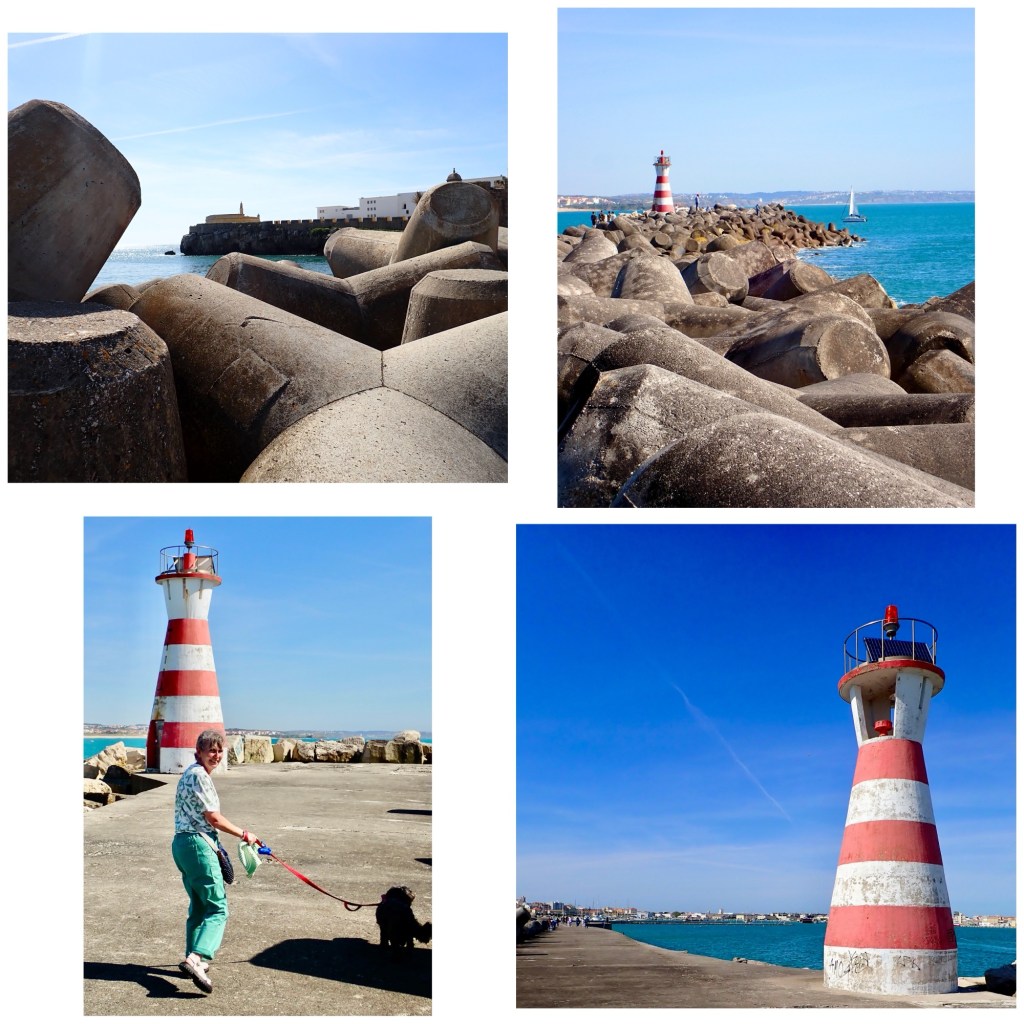
From the castle we walked the length of the breakwater that protects the busy fishing harbour.
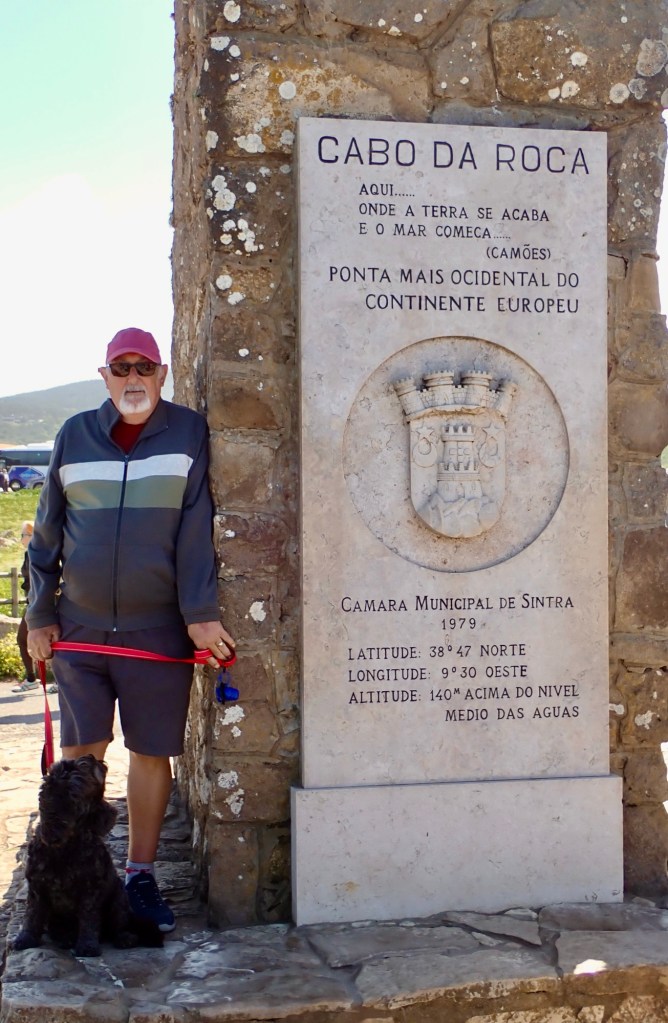
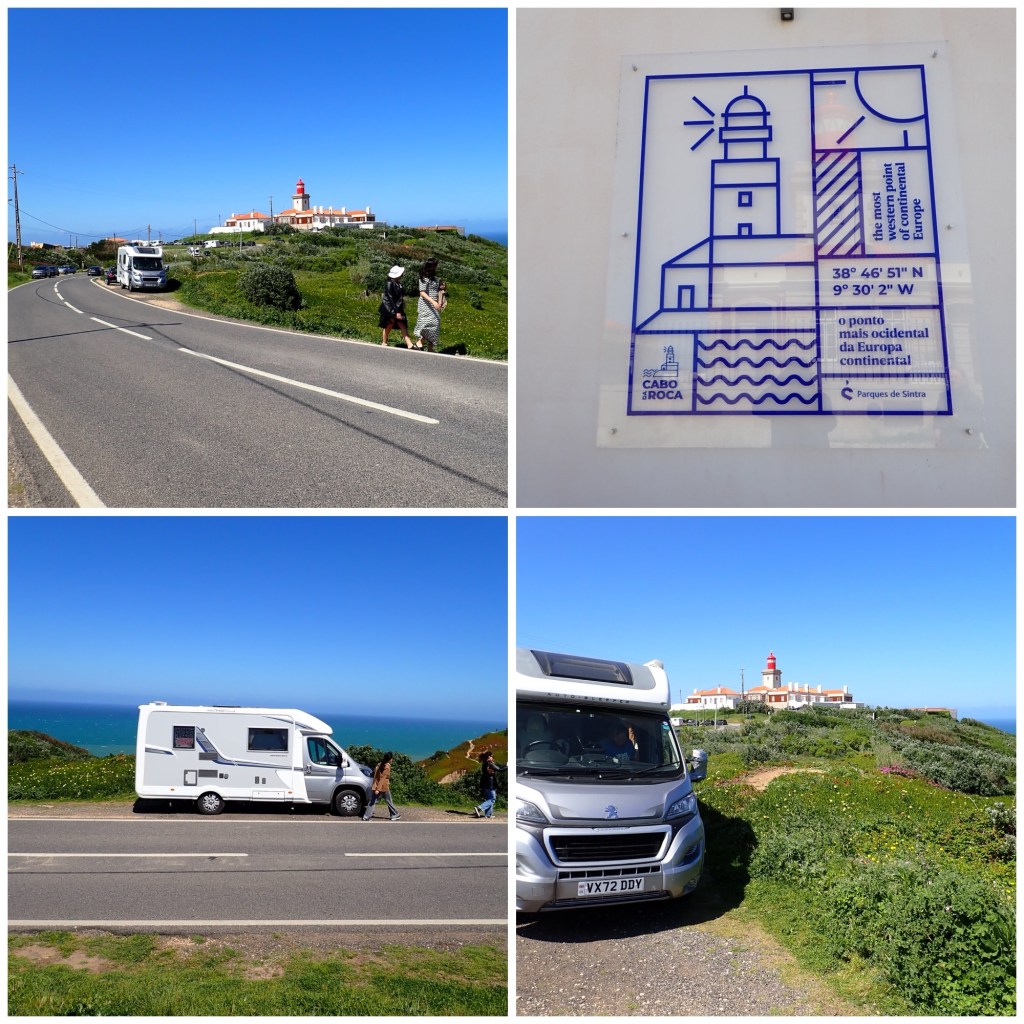
Today I achieved one of my hopes for this trip and visited Cabo da Roca the most westerly point on mainland europe.
To get there we drove over the April 25th 1974 bridge, which was quite interesting and then joined a toll motorway for some miles as we headed west out of Lisbon towards Sintra. When we exited it showed the toll was €3.05 which didn’t break the bank.
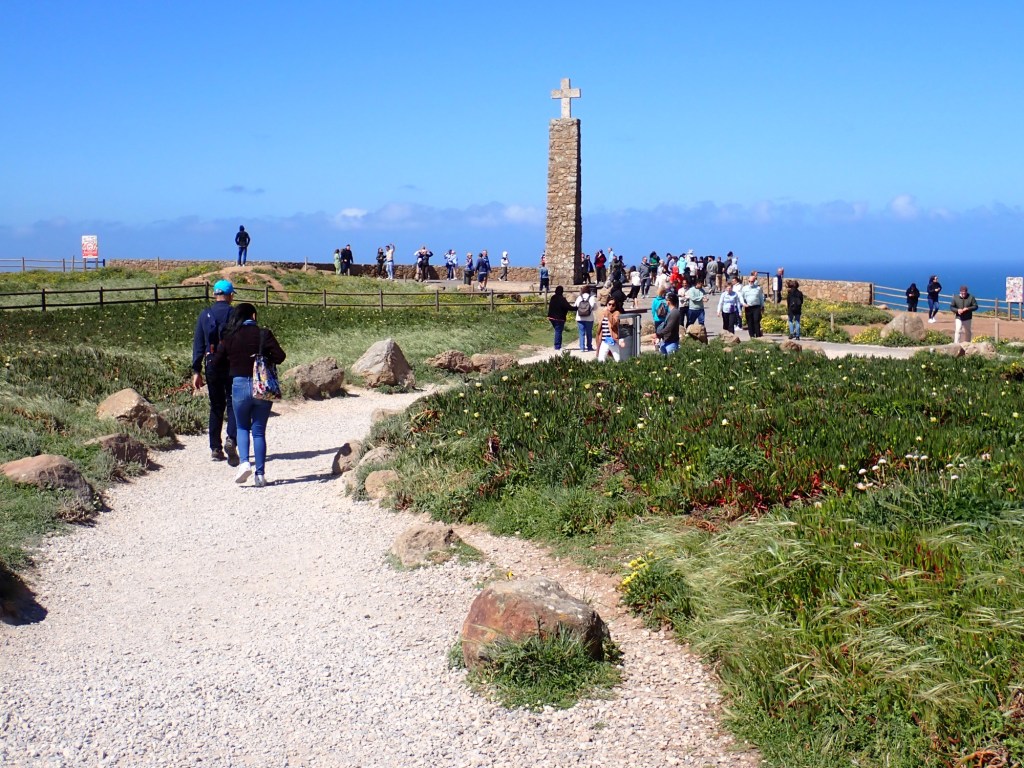
This famous tourist spot was the first we have visited that was somewhat overrun by coach parties especially Japanese, which past experience teaches us it is difficult to take photos of views and objects of interest. It was extremely windy and at times the gusts made it hard to stand.
I was holding on to stop being blown over.I look as though I’ve enormous shorts on but it is just shadow.
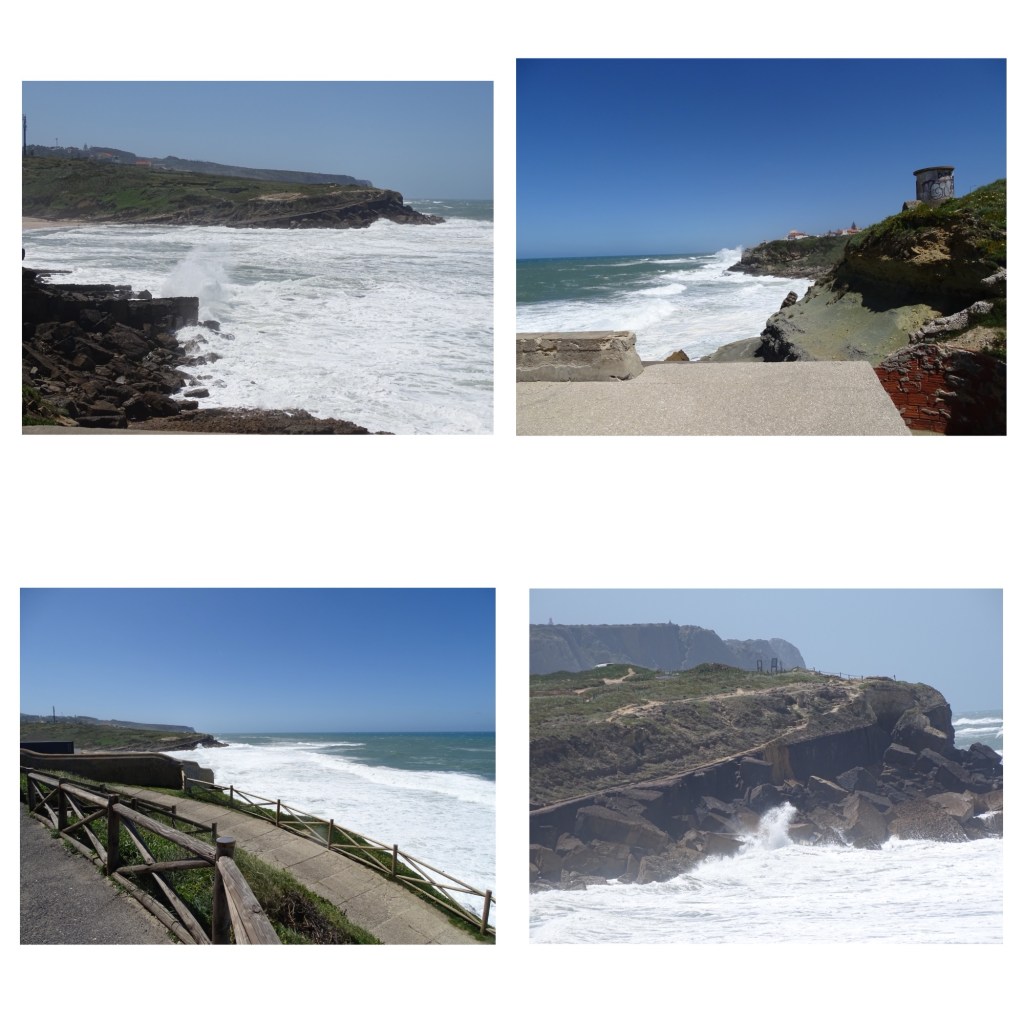
We drove on further north keeping to the coast road and stopped in a parking area for lunch at Praia das Macas again the wind buffeted us about but the views of the sea were stunning.
Tonight we are at a free stopover with services in a small village, it’s adequate for our needs tonight but there is nothing here of interest.
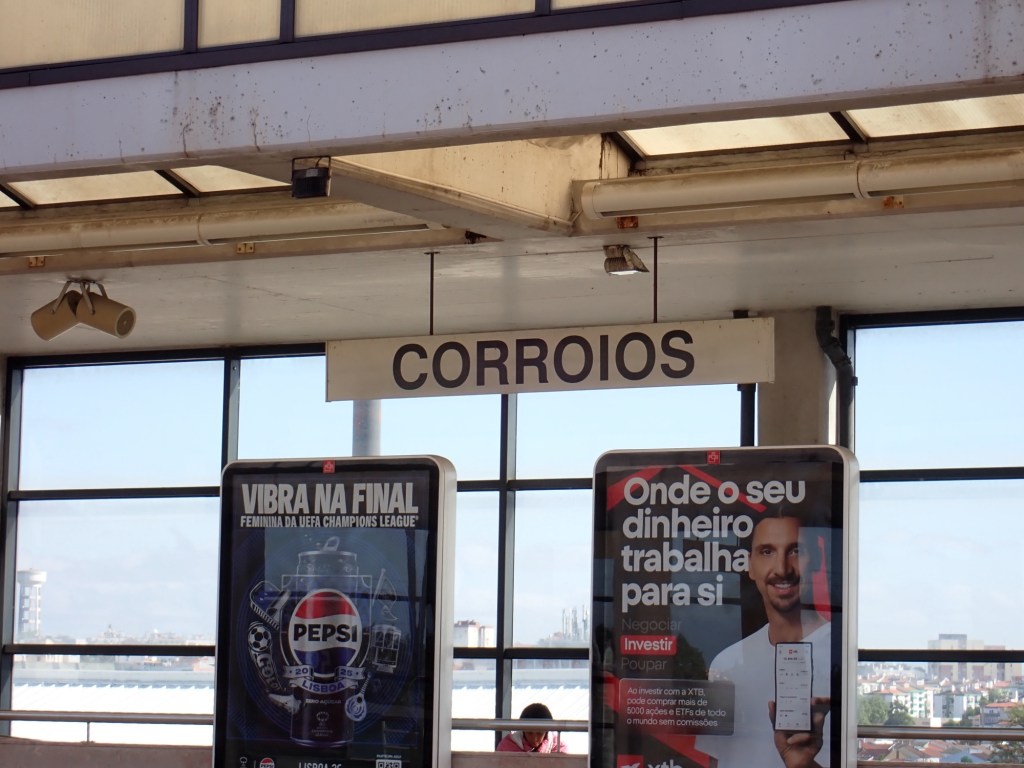
We have stayed for 2 nights in the small town of Corroios south of Lisbon south of the River Tagus.
We managed to find out after visiting both the tram station and the train station that Layla would not be allowed on the tram but it was ok for her to travel on the train and so we used that option to get into Lisbon.
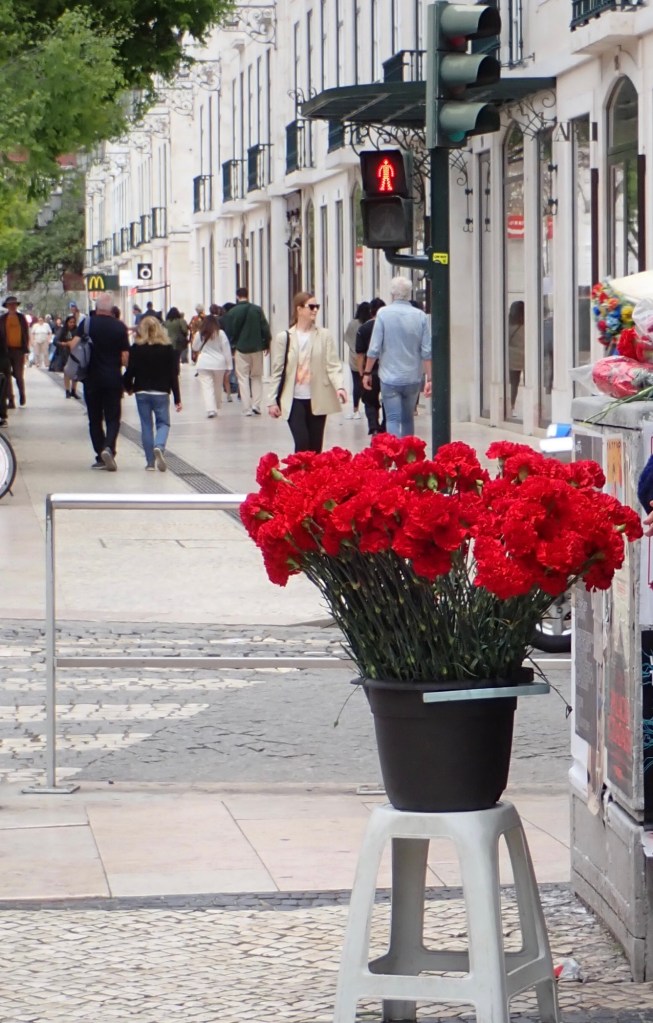
The train took us over April 25th Bridge which is of course todays date, it is a National Holiday here in Portugal to celebrate their day of revolution in 1974 where the dictator signed over power to the army generals. During the afternoon today there was a large parade celebrating the event and as on the day when people placed red carnations in the barrels of the soldiers, carnations are for sale everywhere.
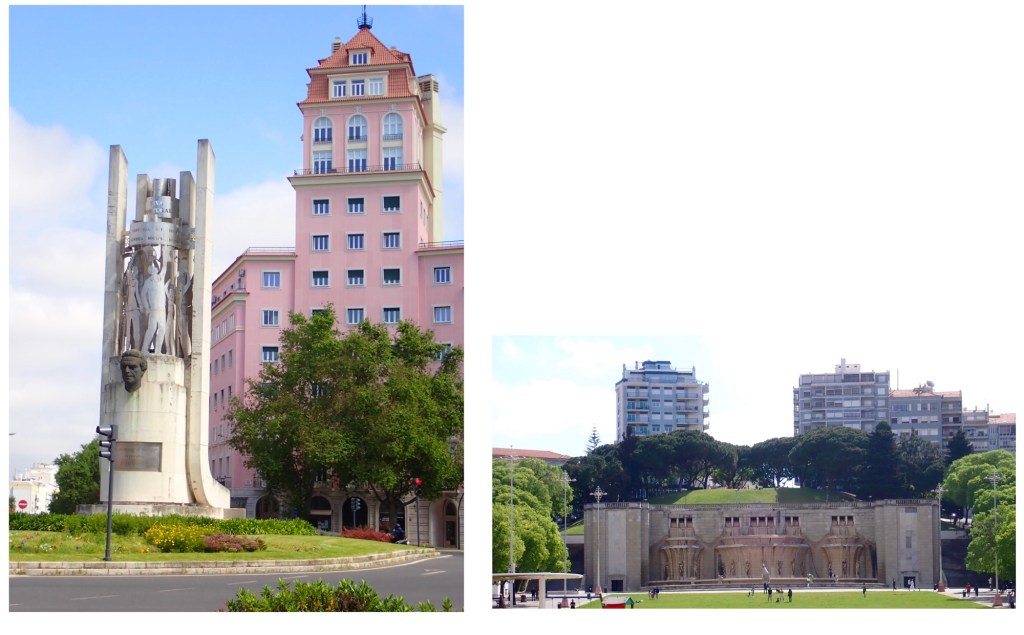
The train took us to a station north of Lisbons old quarter and we walked 3 miles to get there passing on the way a few monuments.
To the left Francisco Sa Carneiro and to the right Fonte Luminosa a 1940s illuminated fountain.
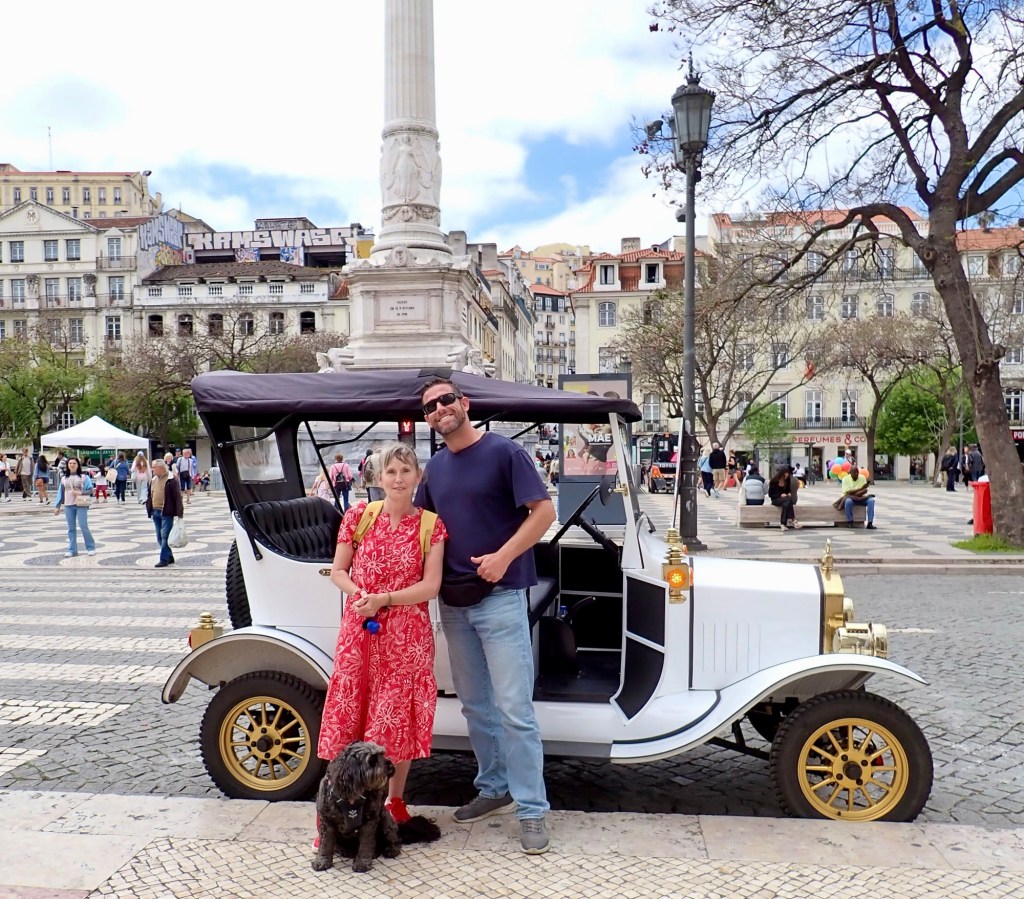
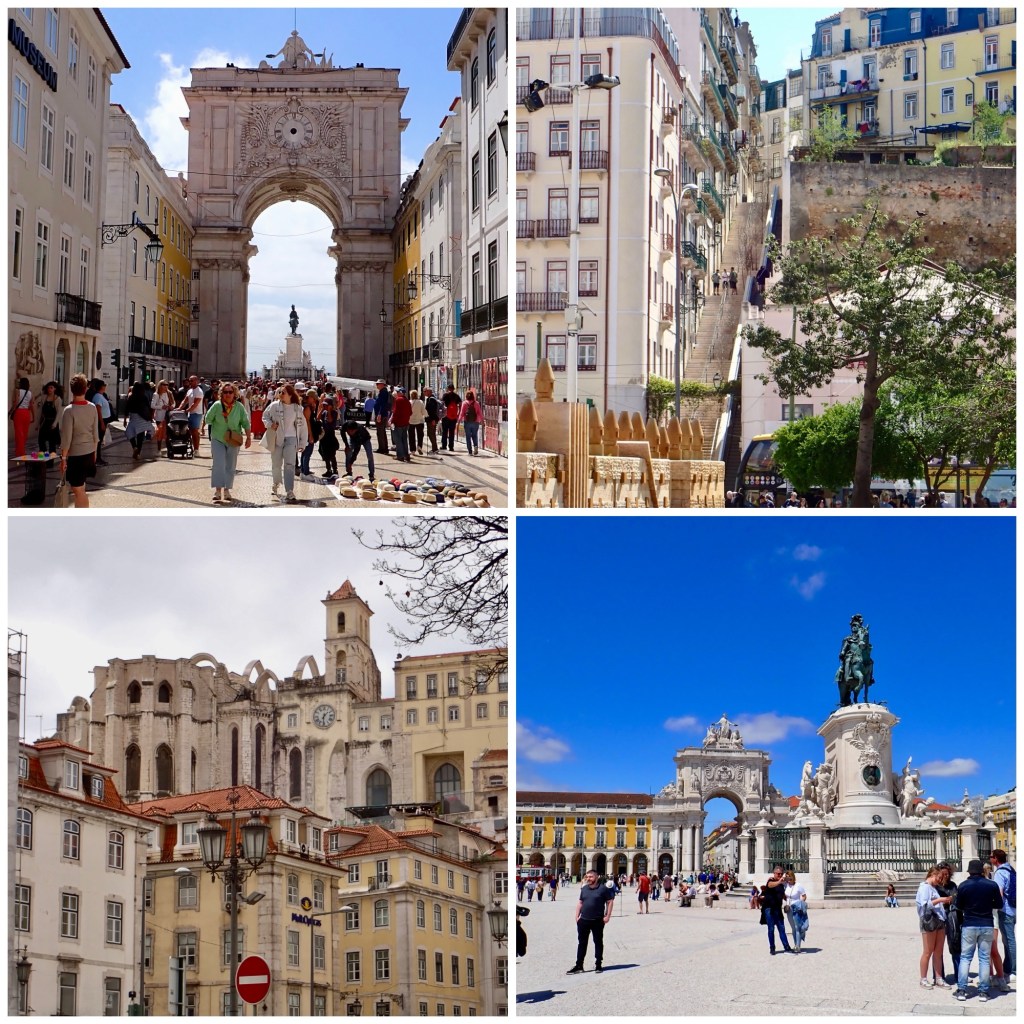
We eventually emerged in Rossio Square with a monument to Dom Pedro 1V where we were approached by a pleasant young man touting for business to take a site seeing ride in his Tuk Tuk, and much to our surprise he agreed to take Layla and did so giving her much fuss.
Michelle and Duncan our Tuk Tuk driver.
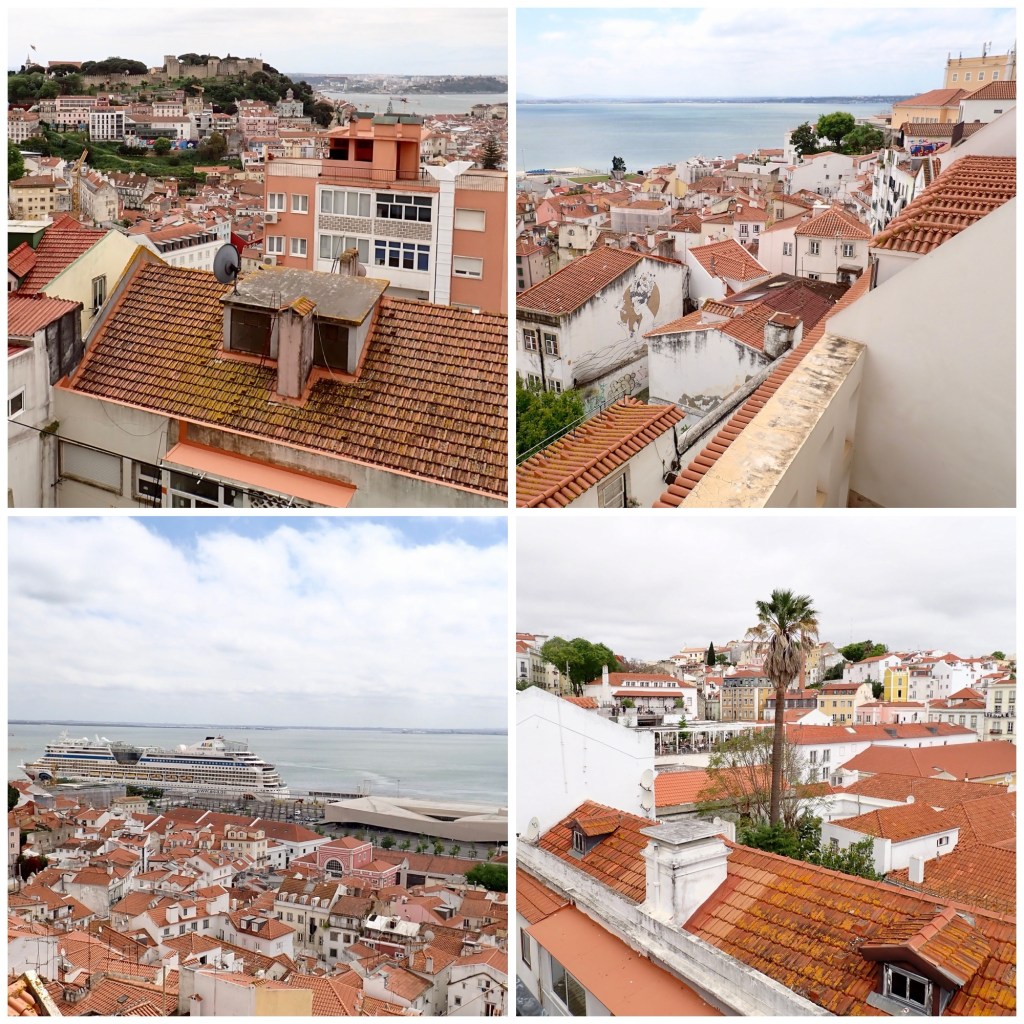
Duncan took us on an excellent trip around the narrow streets to all the sites and view points over the city, he explained much of its history and the influence of Fado music.
Duncan took time to explain the different architecture, Lisbon had been one of the most important ports in Europe until struck by a great earthquake in 1755 which was felt as far away as Jamaica. It struck at 9.30 am on November 1st, All Saints’ day when most of the city’s population was at mass, within the space of 10 minutes there had been three major tremors and the candles of a hundred church altars started fires that swept through the capital. A huge tsunami then struck the city drowning many who escaped to the river away from the fires ( we learned of the tsunami last year when in Ireland a it caused huge damage there) 40,000 of 270,000 people died. It later lead to debate about God’s action and why destroy people at prayer and those who believed in natural disasters. Lisbon was rebuilt in a grid fashion but never recovered its golden age.
After the Tuk Tuk ride we wandered some more and had lunch outside a restaurant .
Slowly the streets began to fill with people who wanted to watch the parade and it got a point when it wasn’t easy for Layla to walk comfortably so we decided as we were feeling weary we would head back to the station, another 3 mile walk! By the time we had returned to Homer my steps calculator indicated we had walked 9 miles, and did we know it.
It would be better to explore Lisbon on foot taking funiculars and elevators and having time to enter the buildings but as Layla is banned from all these we at least can say we have seen the tourist sites even if we haven’t been in them, which is better than not doing so.
Today we drove on some reasonable roads with good scenery, now very much back into a rural region with plantations of cork oaks in abundance.
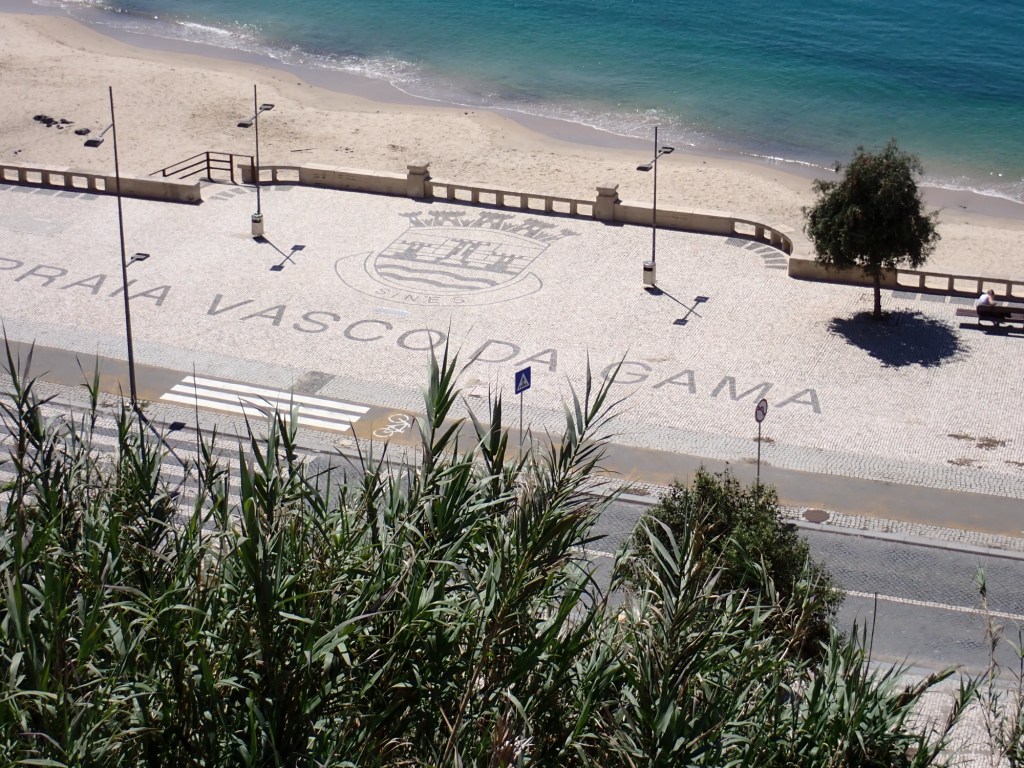
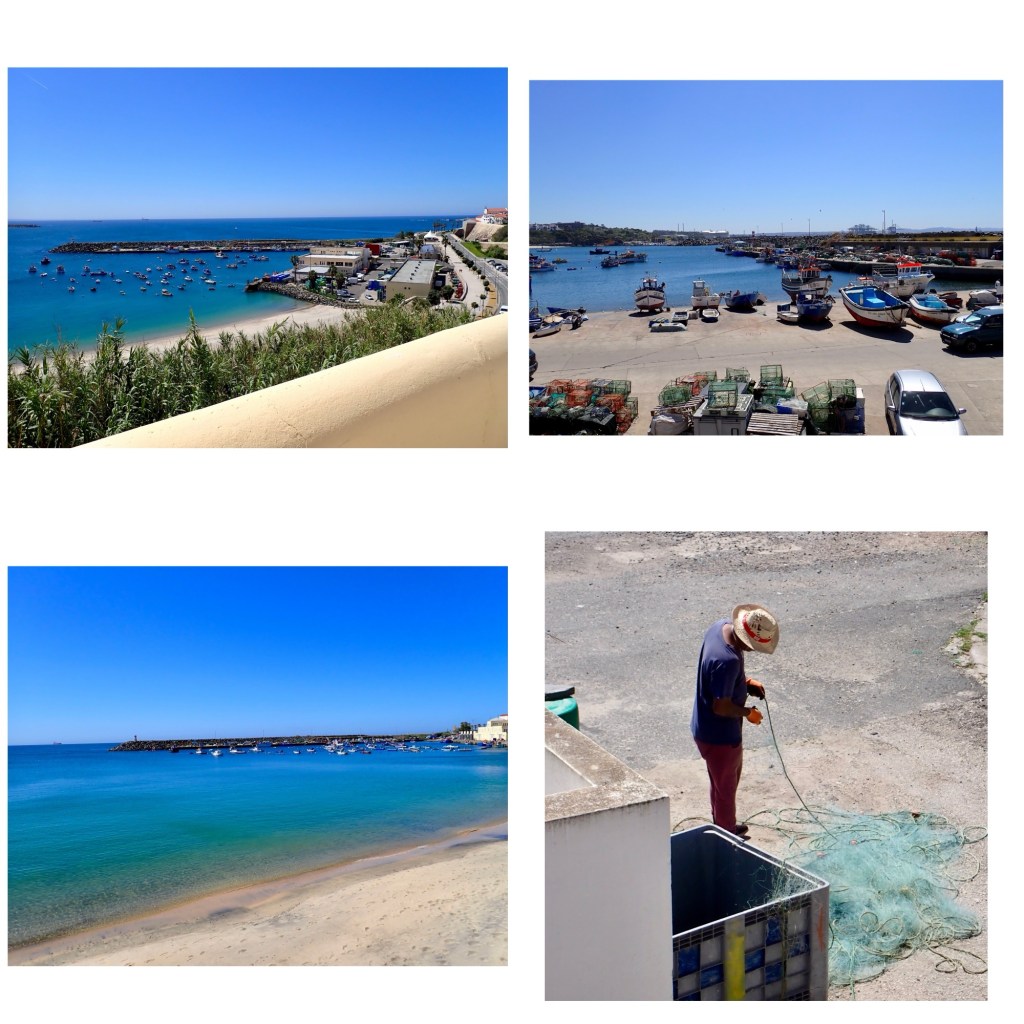
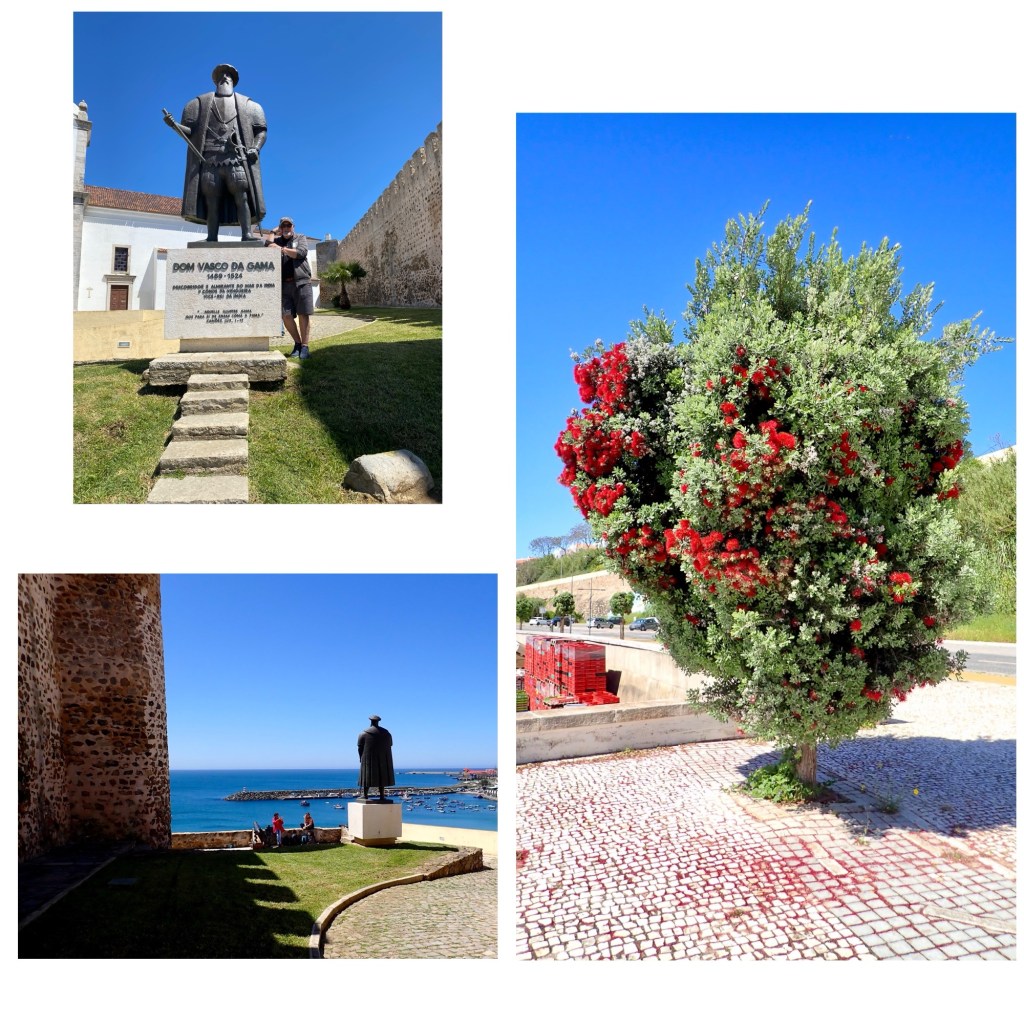
We visited the town of Sines home to Vasco de Gama, it is a popular beach spot and the main fishing harbour of Alentejo region. Sines holds an important oil refinery and several petrochemical industries and there are huge pipelines taking the products to a refinery inland.
It is the birthplace of Vasco de Gama it has an active fishing fleet and harbour and a deep sea port.
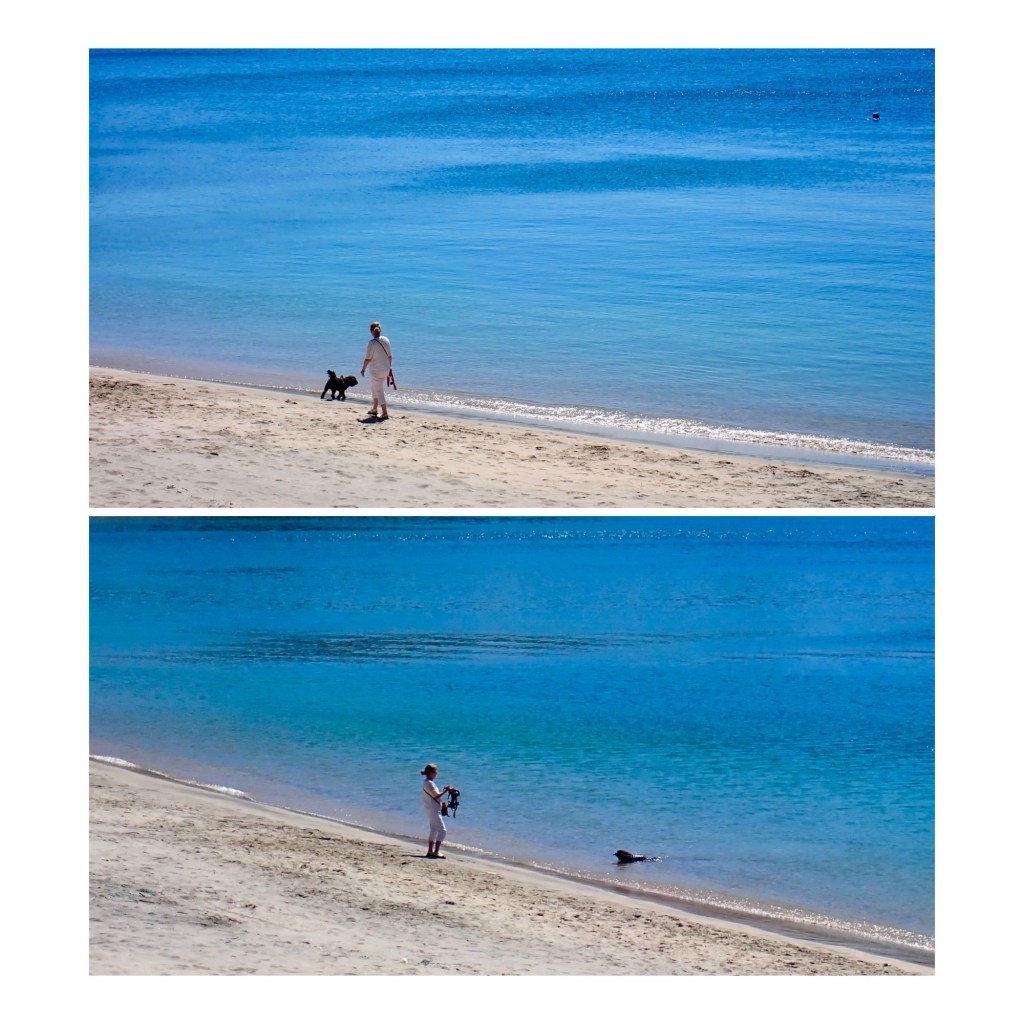
For once there wasn’t a sign banning dogs from the beach, probably because it was on the edge of the harbour and not one of its famous beaches out of town, so Layla got to have her swim.
The town itself is perched high up above the sea and is quite a walk uphill by road or there are places with a series of steps, there was a lift contraption that either wasn’t working or was exclusively for the hotel at the top I’m not sure.
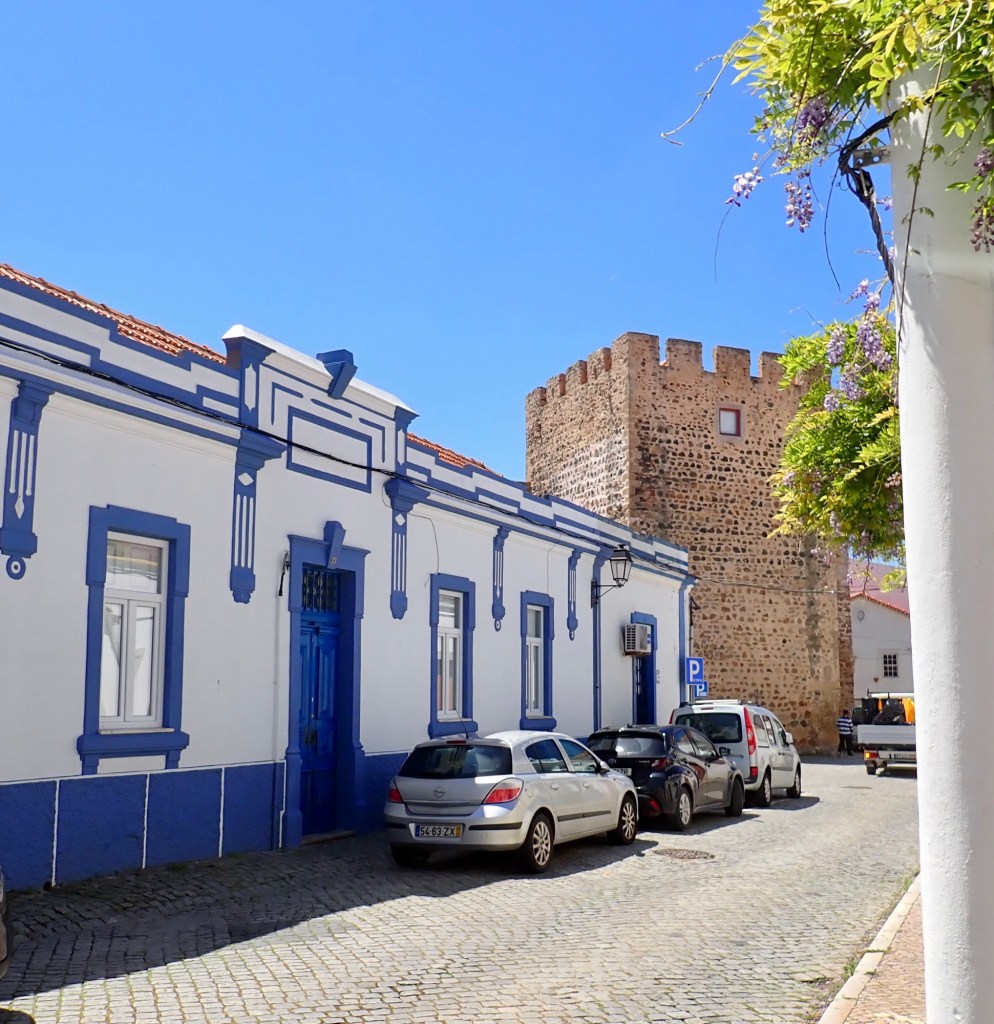
The town streets were narrow and where we walked not commercial, no tourist shops, the castle was closed in preparation for a large festival.
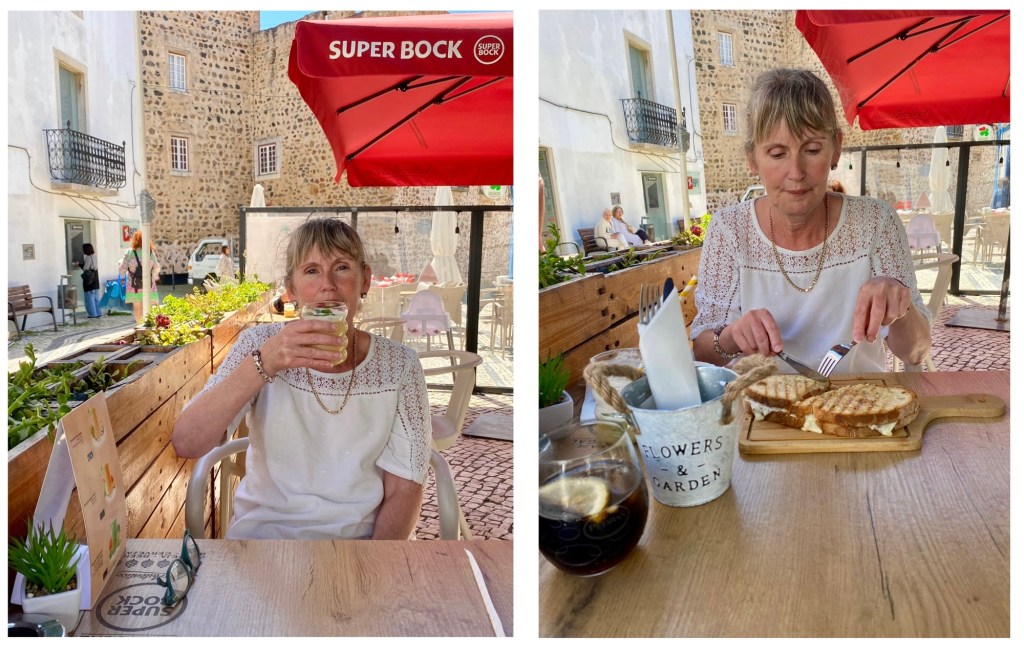
We found a small restaurant and sat outside for lunch.
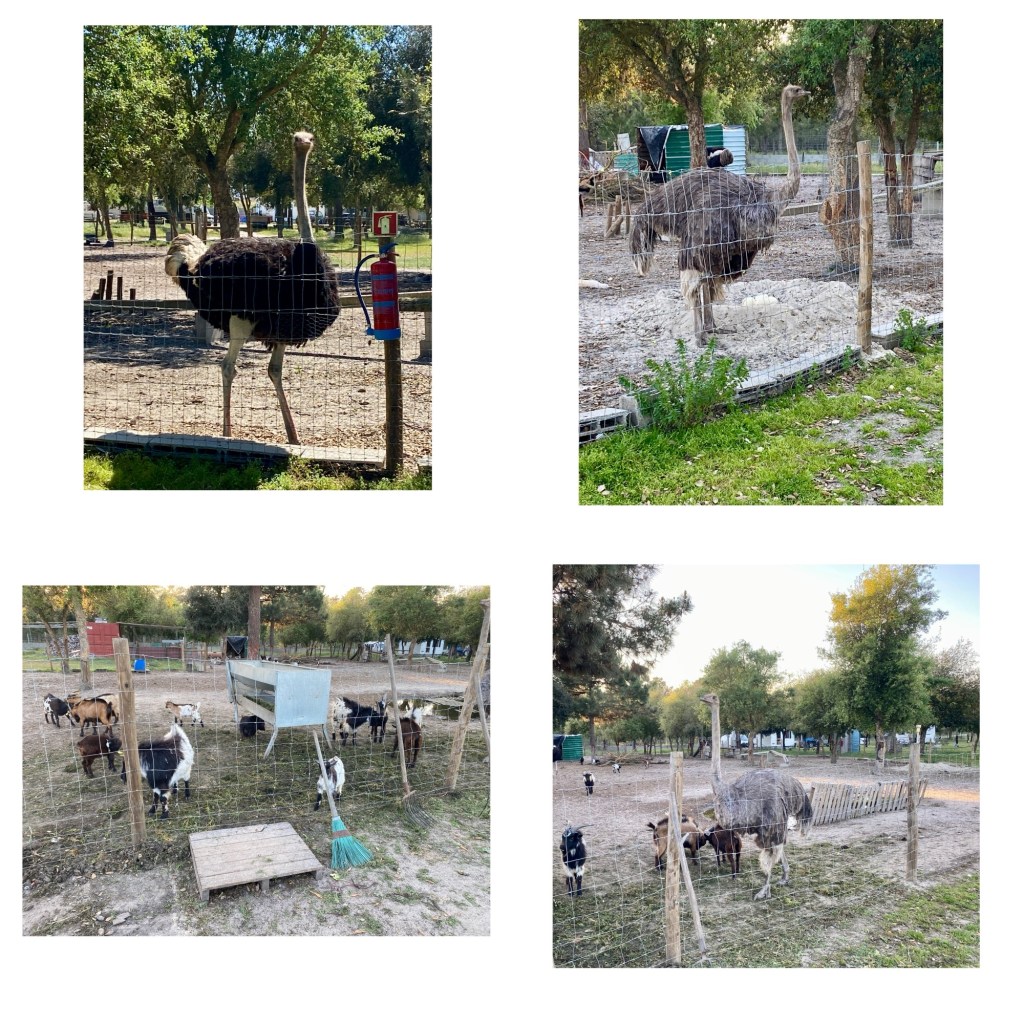
We drove on from there to tonight’s stop which is best described by its owner Pedro as a unique environment to relax and enjoy your surroundings, it’s 2.5k from a lagoon and the beach. Pedro is very friendly and enjoys joining you for a chat. He has an eclectic mix of animals from ostriches, pot belly pigs, goats, chickens etc. He has bought up huge areas of the local forest and has great plans for the future development of the site giving every pitch plenty of space.
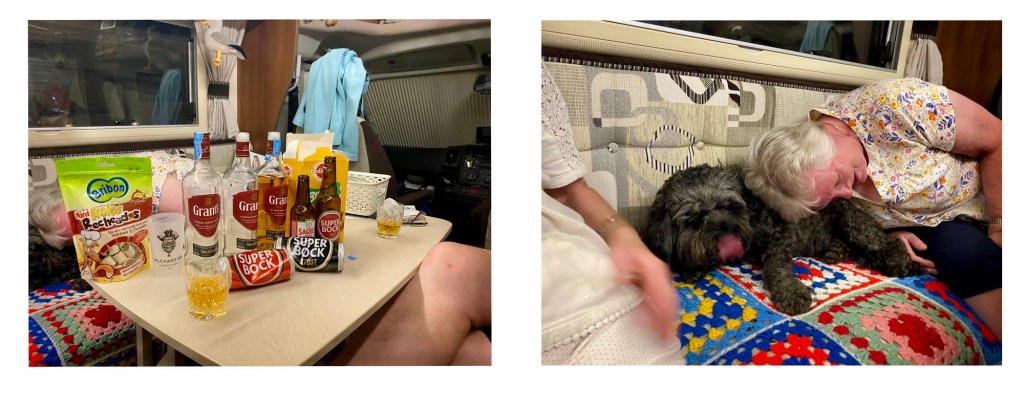
Every evening we get together as a foursome, exchange our daily experiences and then discuss the next nights venue, sometimes it takes a long time, needs lubrication and not everyone has the full stamina.
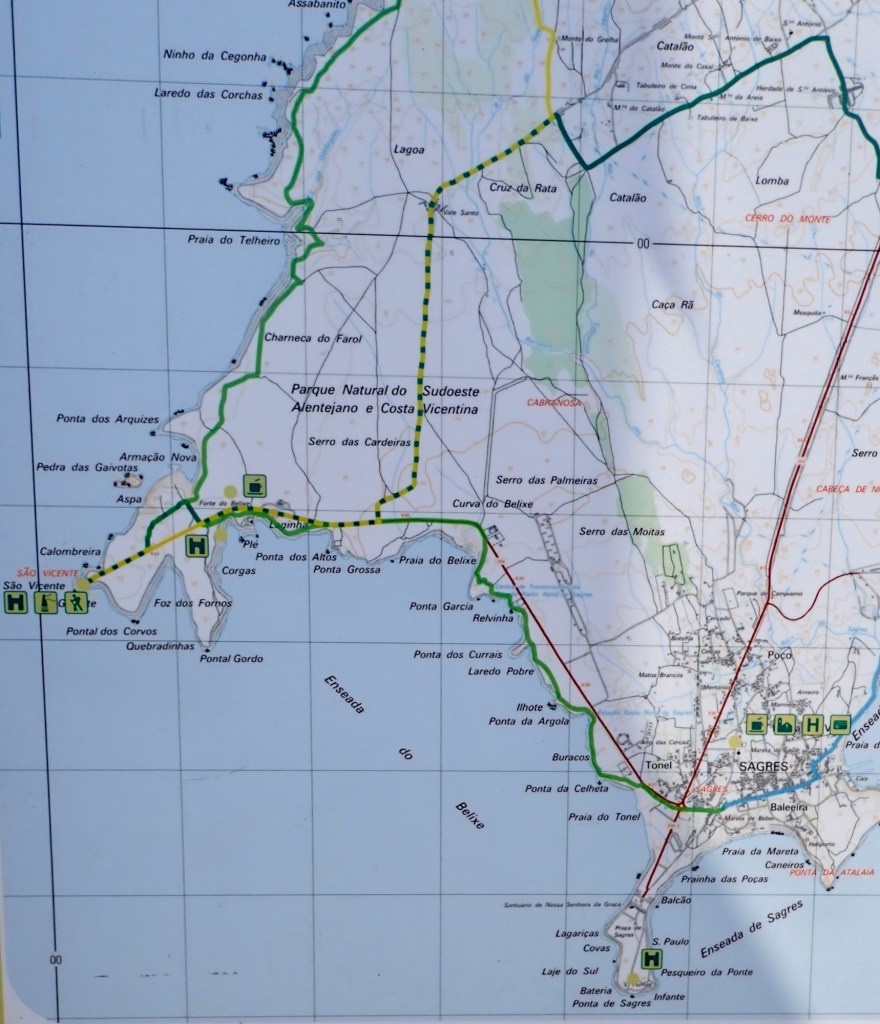
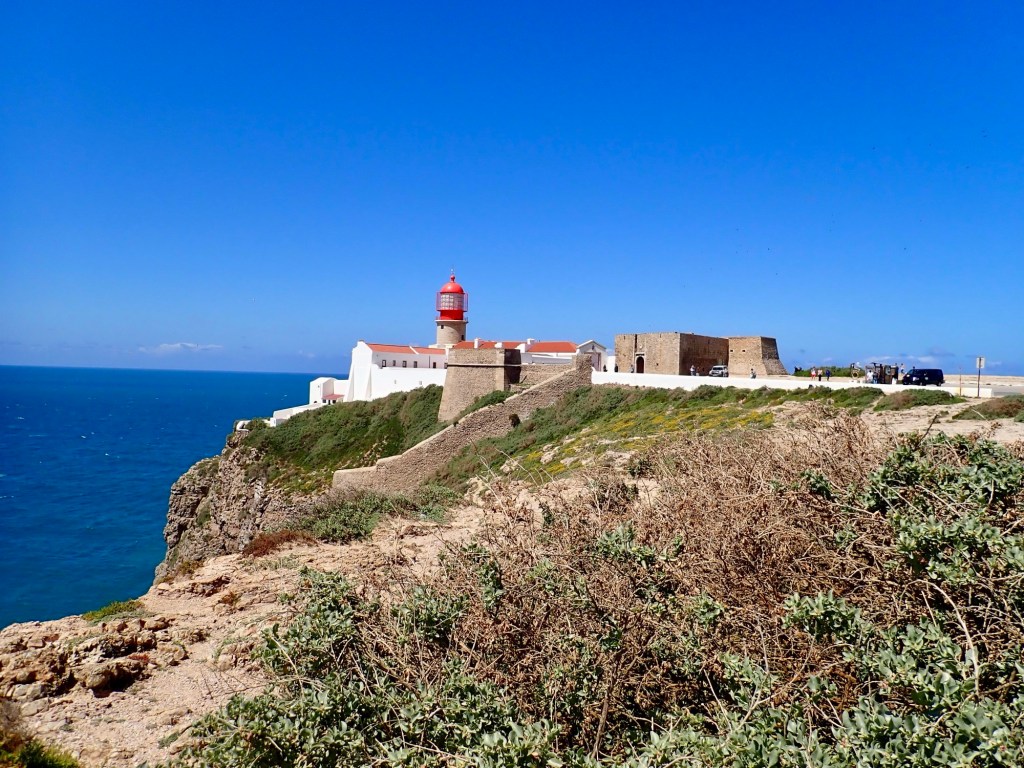
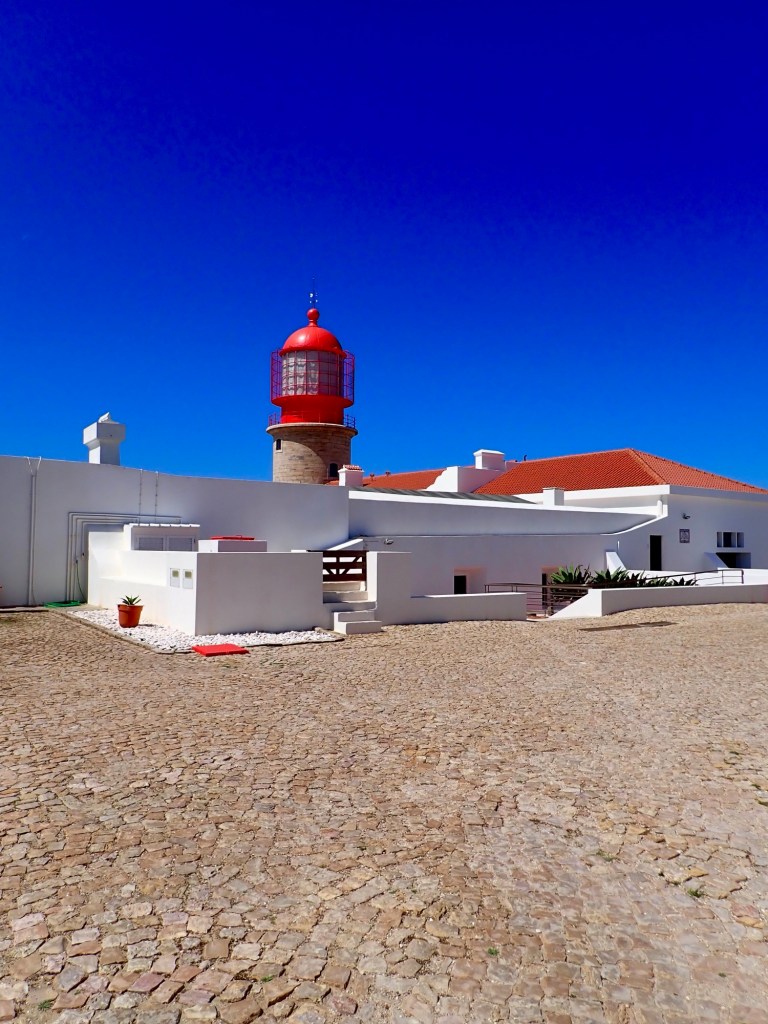
Cabo de Sao Vincente is the most westerly point of the Algarve although not quite the most westerly point of Continental Europe. It has always been the very last piece of land seen by sailors from Southern Portugal going into the ocean.There were fortifications on the point built in XV1 Century but these were devastated by an earthquake in 1755.Today there is a lighthouse on the site that came into operation in 1846.
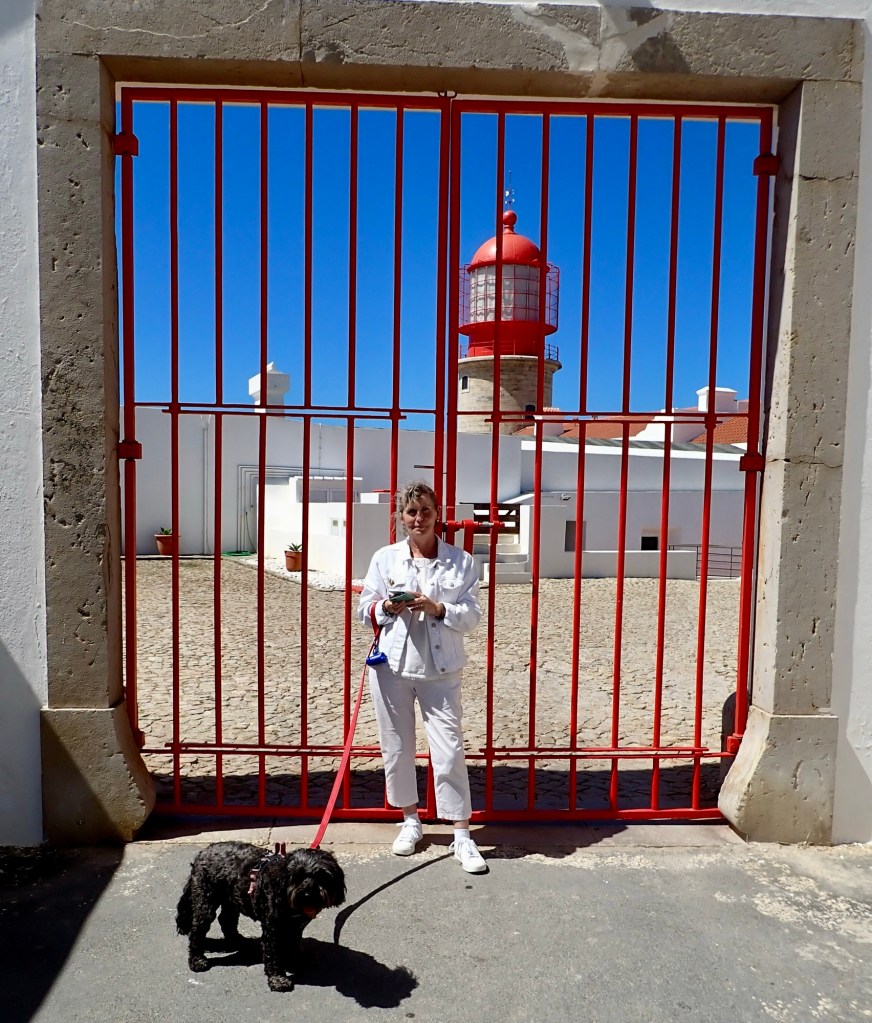
Sadly you are not allowed into the lighthouse and considering its geographical position there are no great placards or information boards about it.
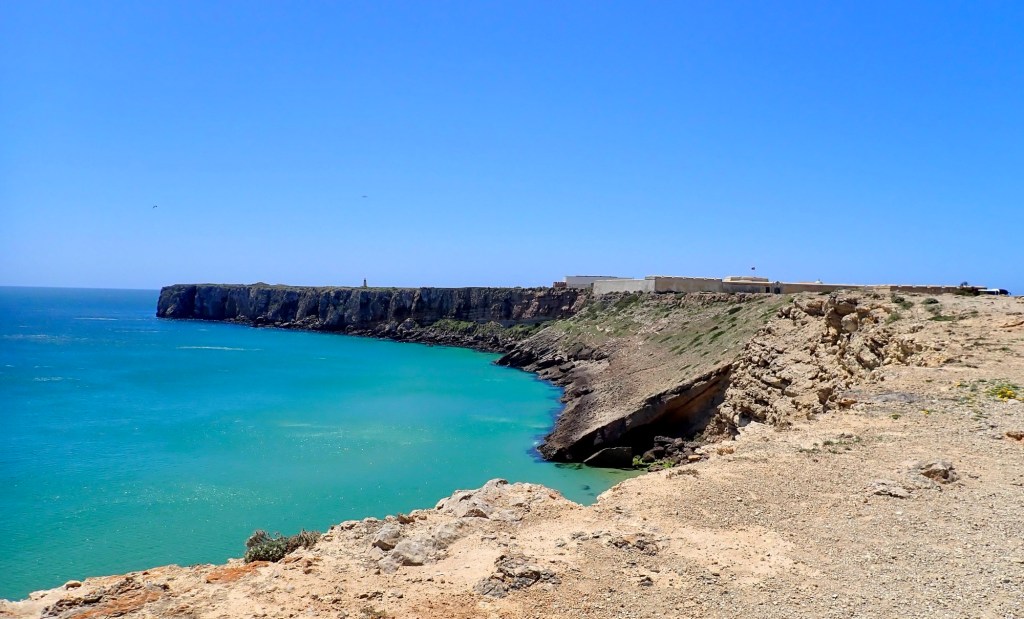
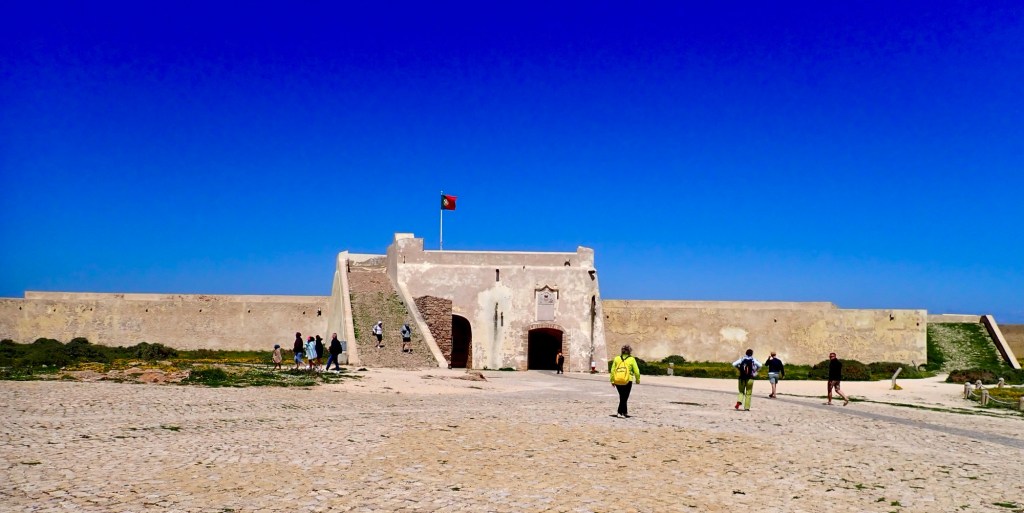
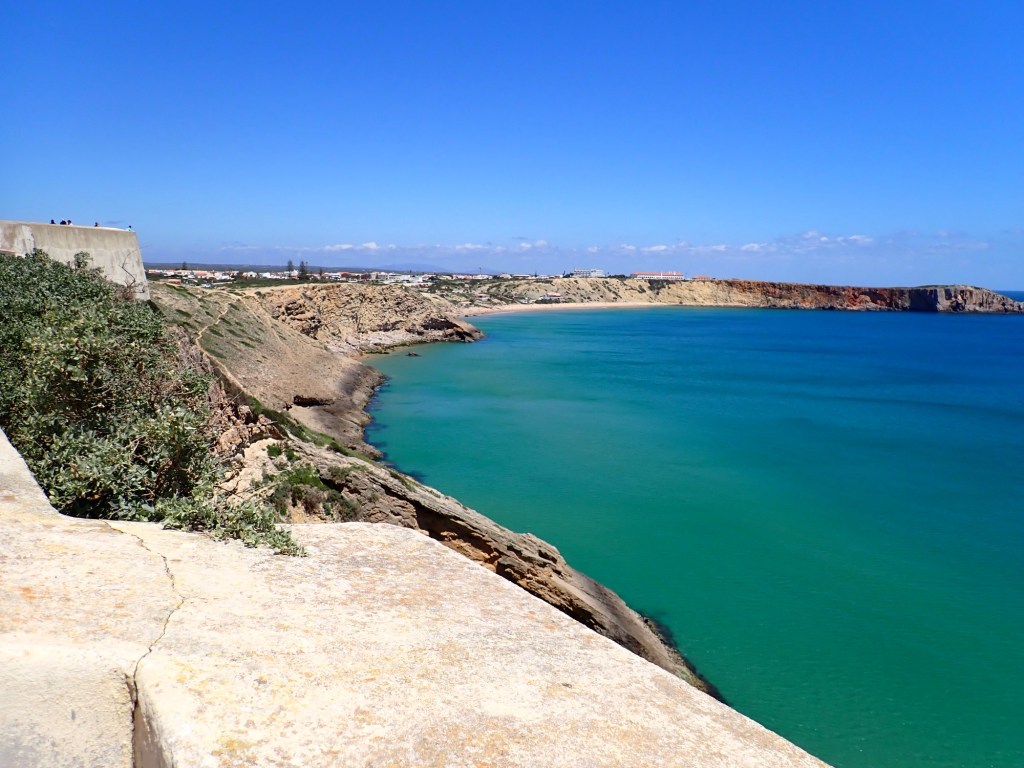
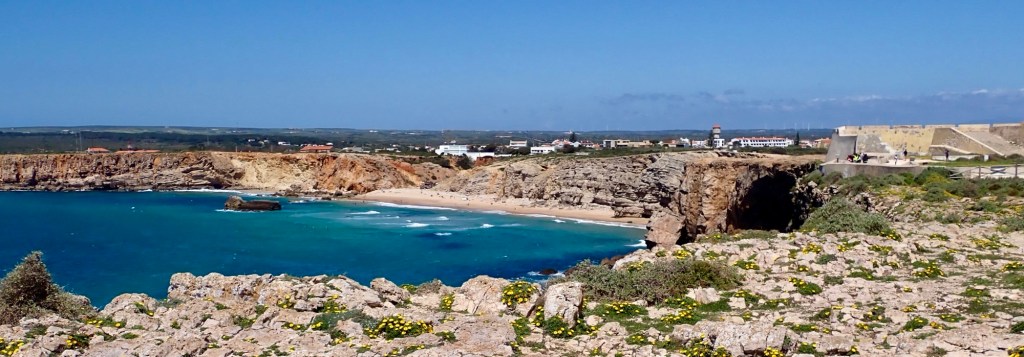
We drove a short distance from there to The Fortaleza Sagres which is located at the southern tip of the Sagre Peninsular and this uniquely designed fort protected the town from raiders from North Africa. The fort only has a wall on one side as the other three sides consist of 60m vertical cliffs, there were strategically placed gun points looking out to sea from where cannons could fire out at ships. It was this fort that Henry the Navigator devised his 15c expeditions around the west coast of Africa.
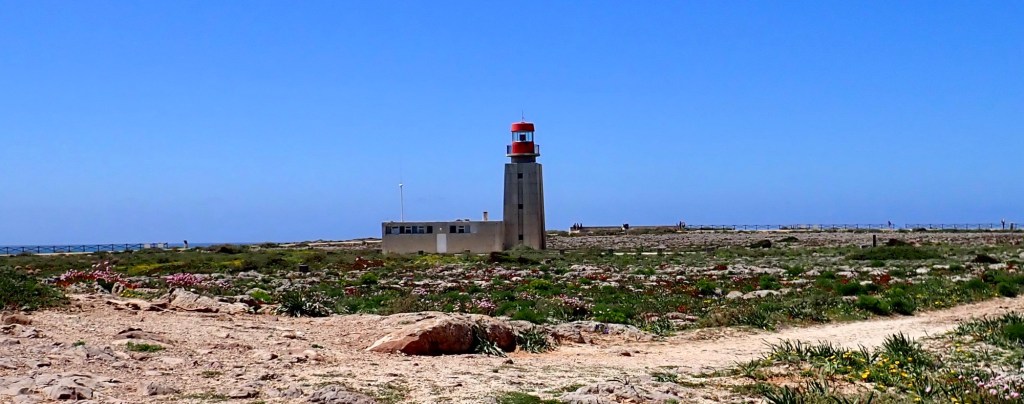
Some information boards from the site.Lighthouse in the grounds.This strange structure was built around a small hole that went all the way down to the sea below, it was built to magnify the sound of the water below.View looking back to Cabo de Sao Vincente.
When we left the area and turned north for the first time in 16 days we headed to a good looking site only to find it closed as it had no electricity, after a quick conflab we decided to head further north to Odeceixe where we are staying tonight, even that wasn’t simple as the main road to the site was closed for repairs and we had to do a weird diversion through the town and out of town for a few miles before heading back to the site, I was glad to park for the night.
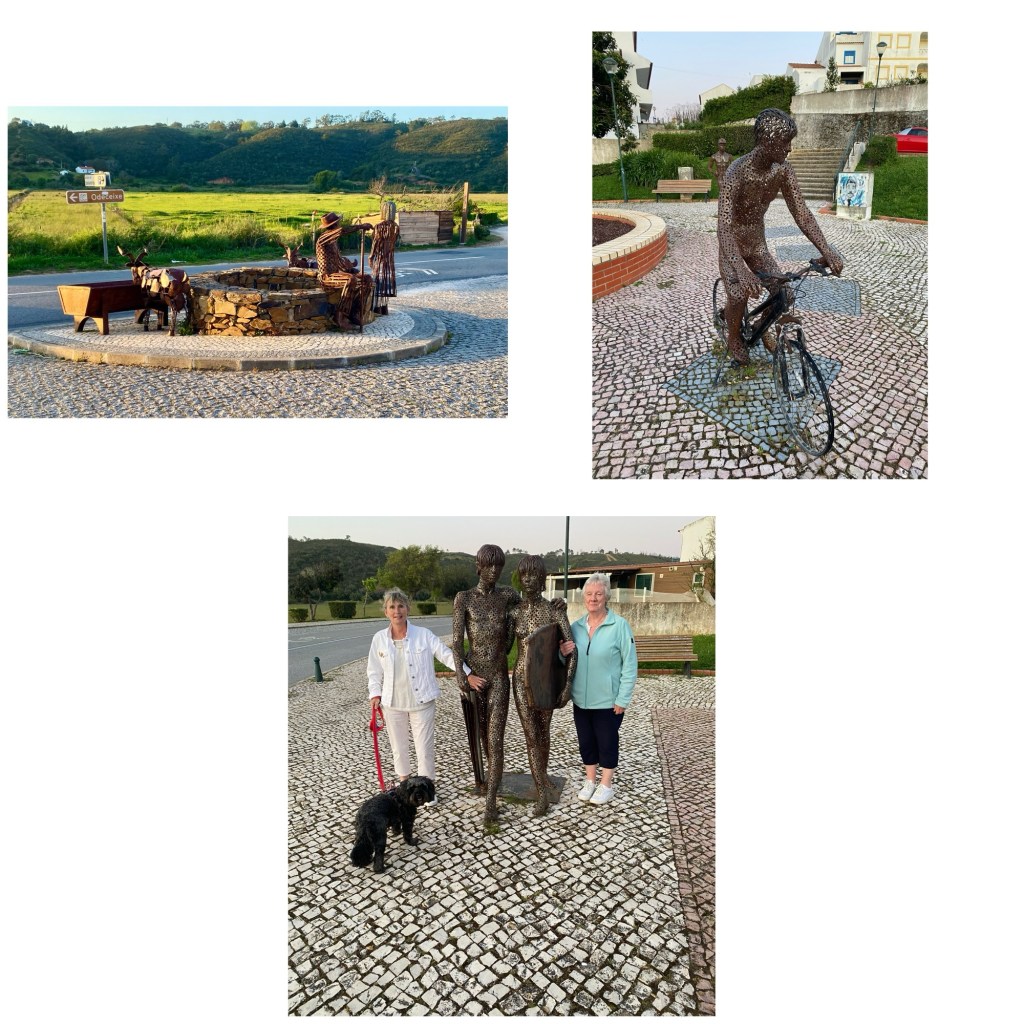
After tea Alison, Michelle and I went for a wander around the village and it turned out to quite interesting and larger than we thought.
Lots of opportunity for keep fit and interesting statues.
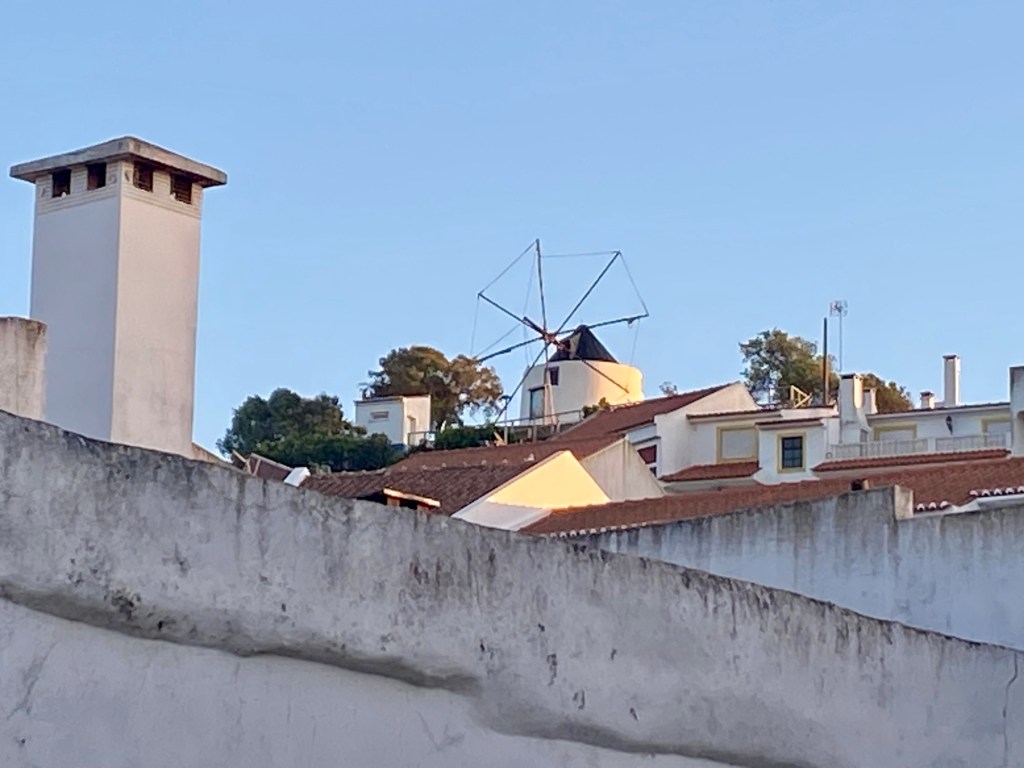
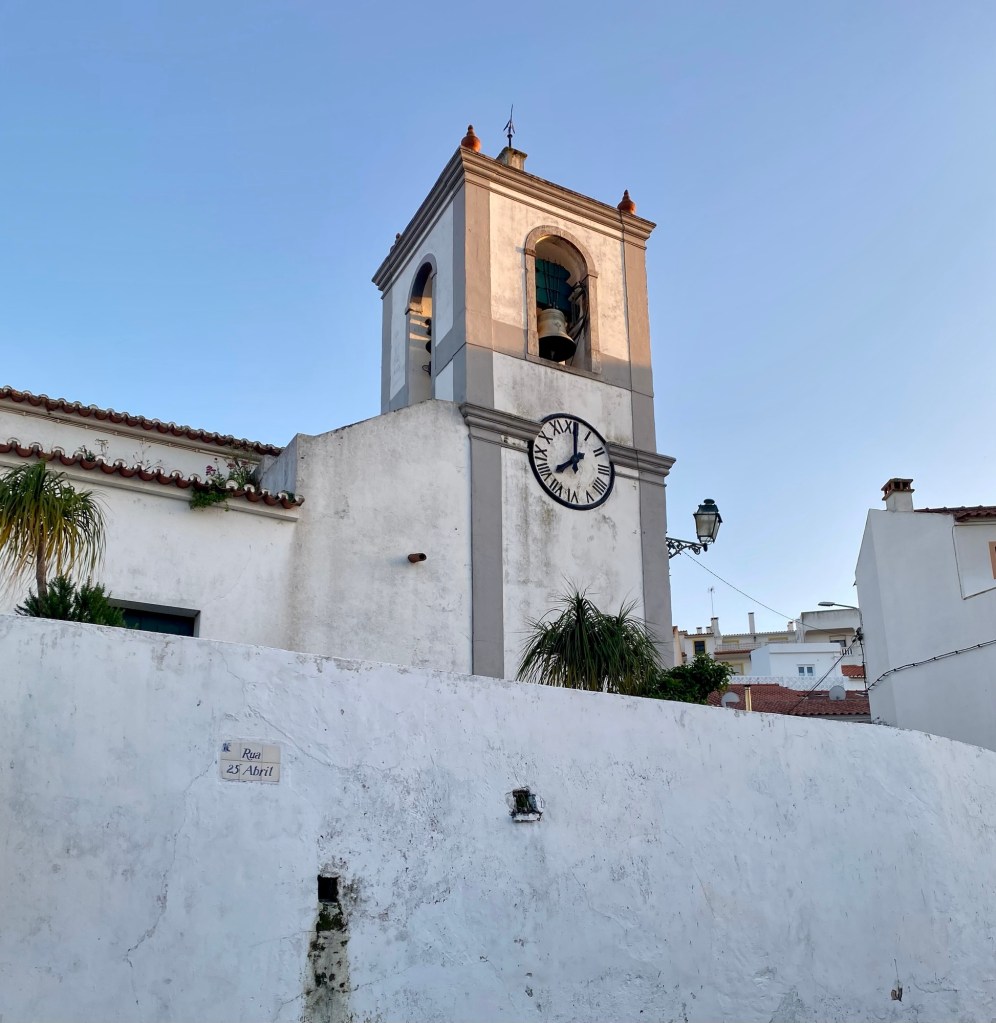
Old Windmill.Town church, bell struck the hour whilst we stood there and made us jump.Narrow High Street.
We spent a great part of this morning trying to source a new wing mirror to replace the smashed one. We drove 9k to a Peugeot garage but they didn’t have spares so they gave us an address back in Faro which we drove to, the spares attendant seemed confident it wouldn’t be a problem, but after spending a great deal of time on the computer declared he couldn’t find the correct one anywhere in Portugal. He printed out the serial number details etc for me and included the price €1,017, Ha HA HA, it looks like the temporary repair is going to have to do until we reach the UK.
We needed somewhere to stop stretch our legs and clear our heads so we headed to ….
What a lovely named place, it took some time on twisty roads and there seemed to be a lot of traffic today.
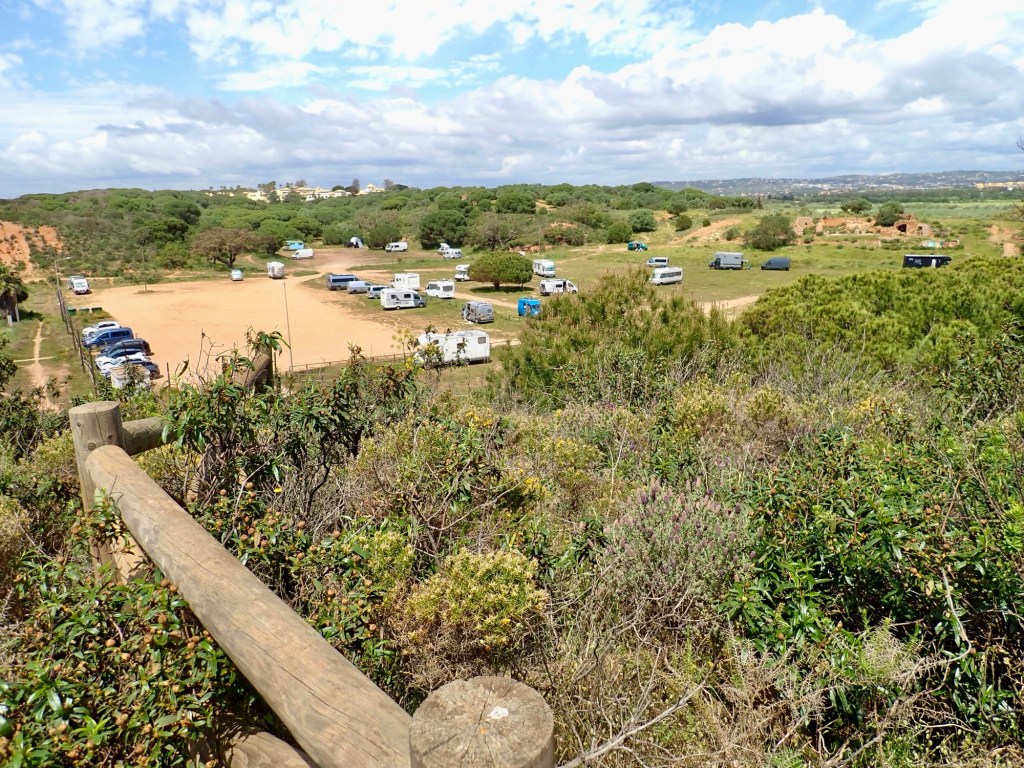
A huge parking area with space galore.
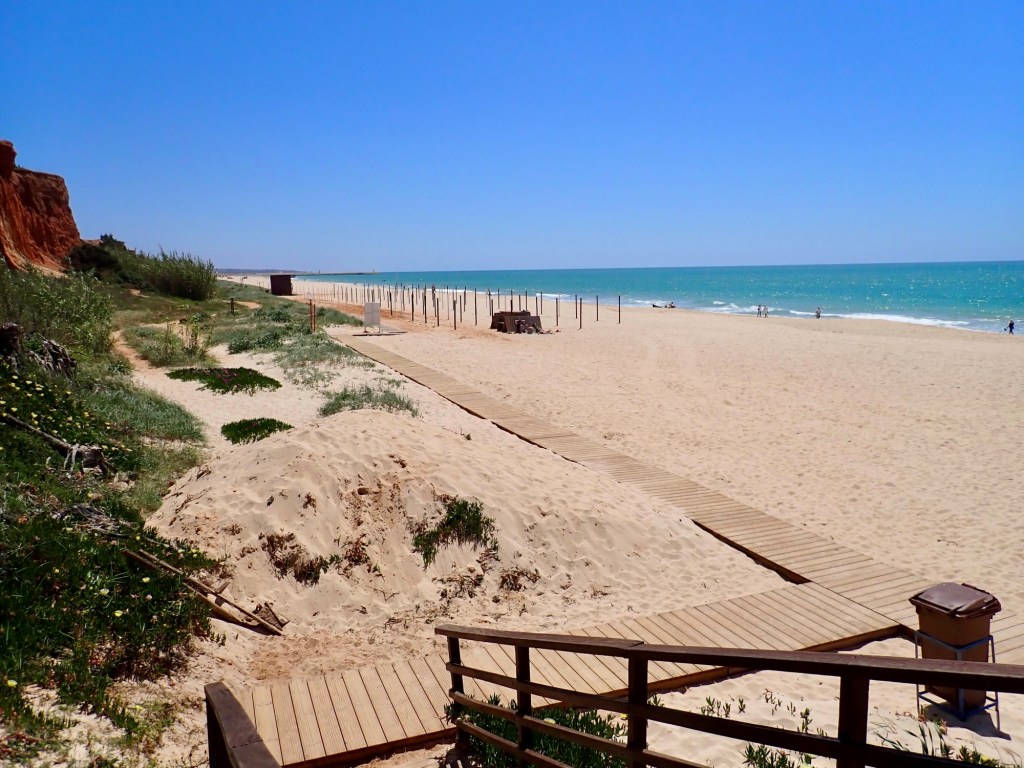
After lunch we walked to the beach where a sign immediately made it obvious Layla couldn’t go on.
There was hardly a soul there and I’m sure we could have got away with it.
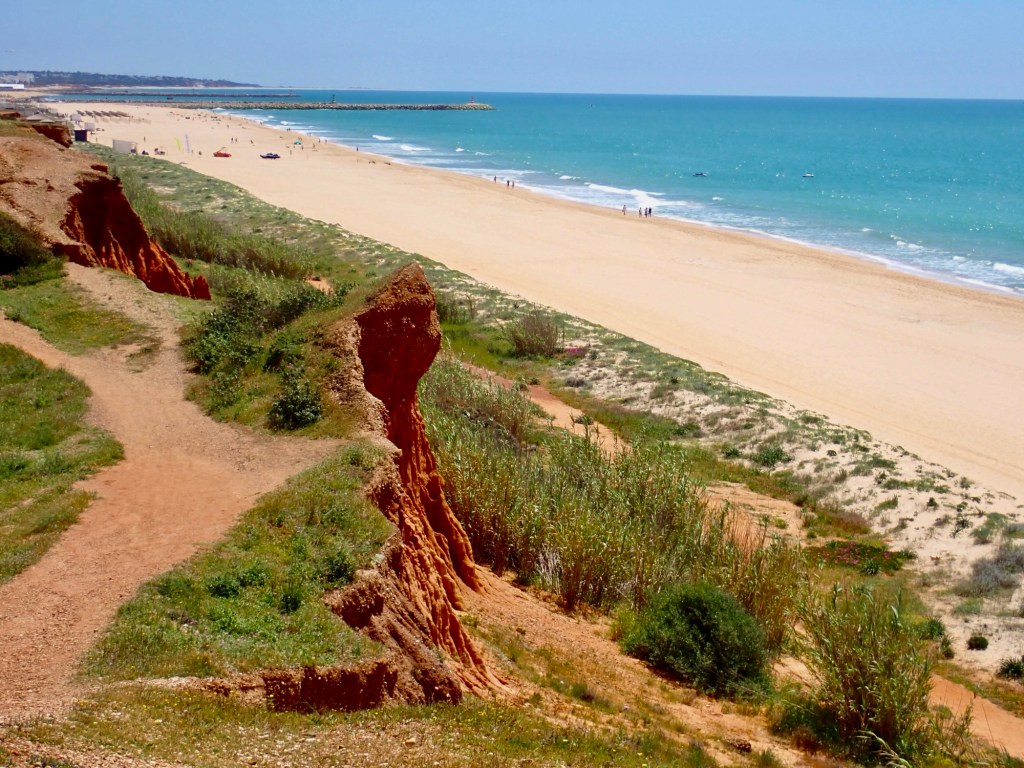
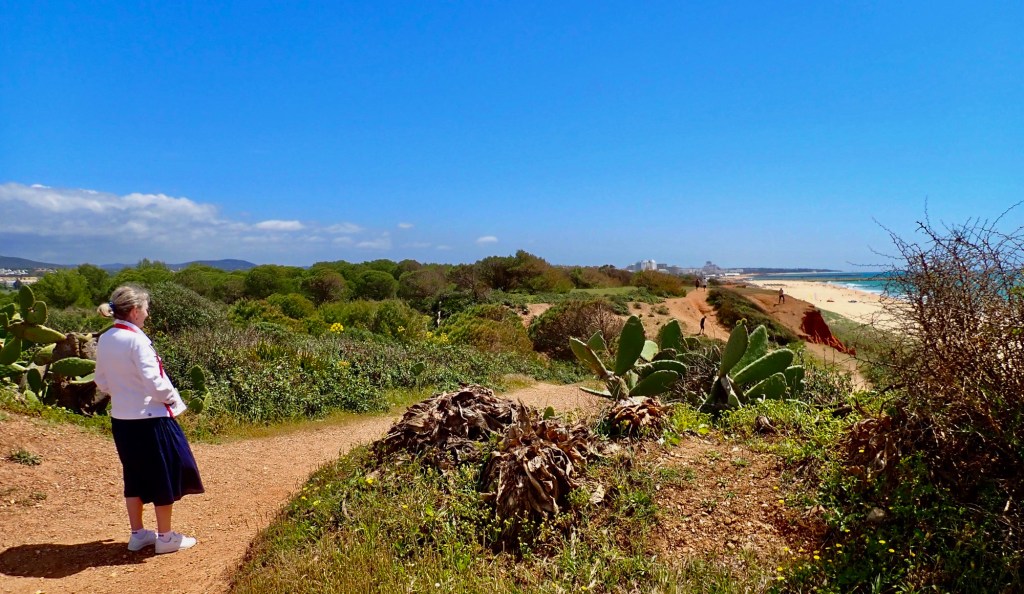
We instead took a short walk along the cliff tops the surface under our feet wasn’t too good and it made getting up and down difficult without good walking shoes.
From there we drove on to tonight’s stop on the opposite bank of the River Arade to Portimao, inexpensive and basic but it provides what we need.
After leaving the site, quite a queue to use the services we drove around the corner to Intermarche where Michelle made use of the washing machine/drier at a very low price. We also stocked up on some more food etc.
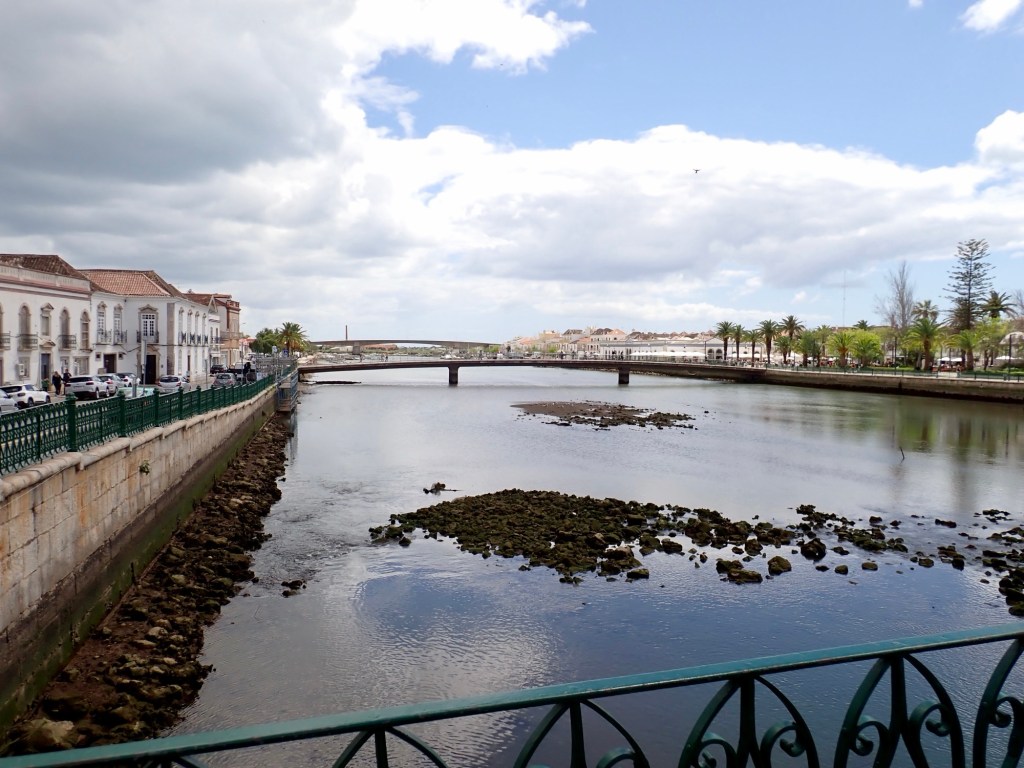
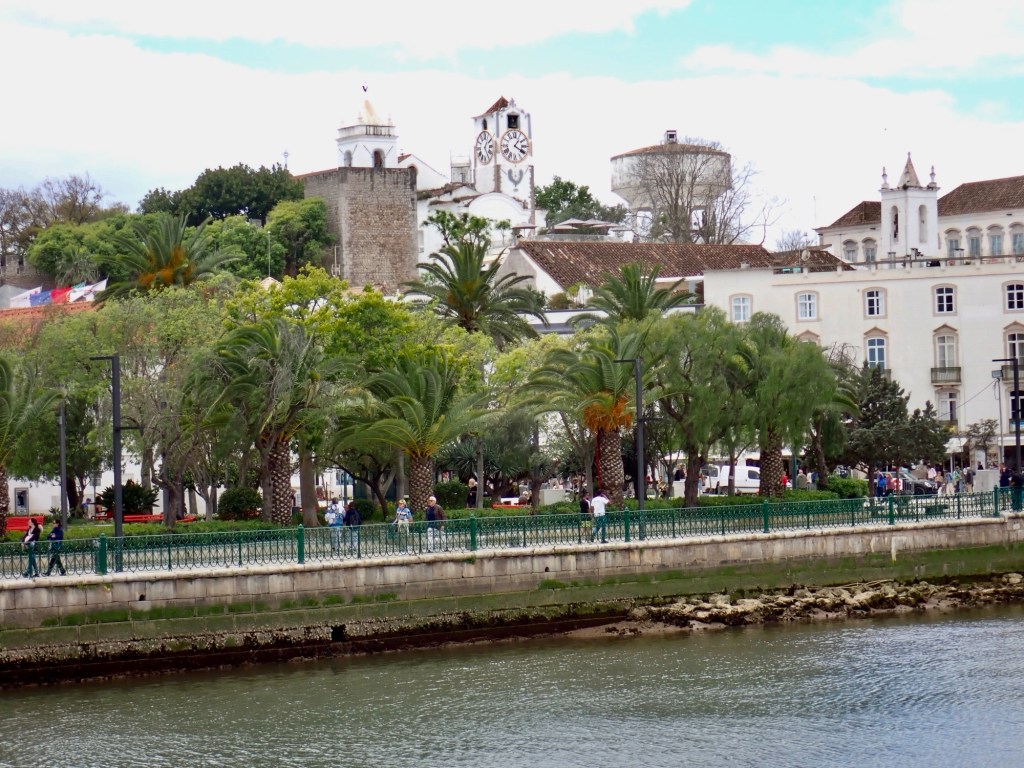
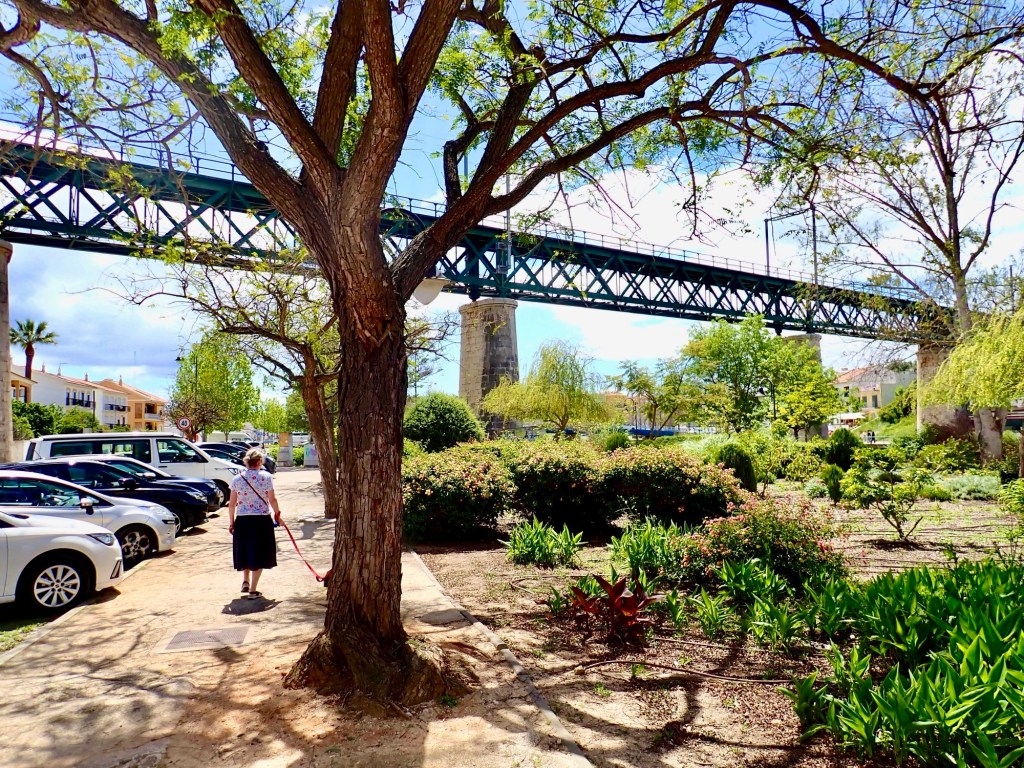
We drove down the coast to Tavira parking quite close to the centre alongside the river. We had a pleasant walk around this town The river runs out into a series of lagoons that form the Rio Formosa natural park with lots of wildlife including flamingos and spoonbills.
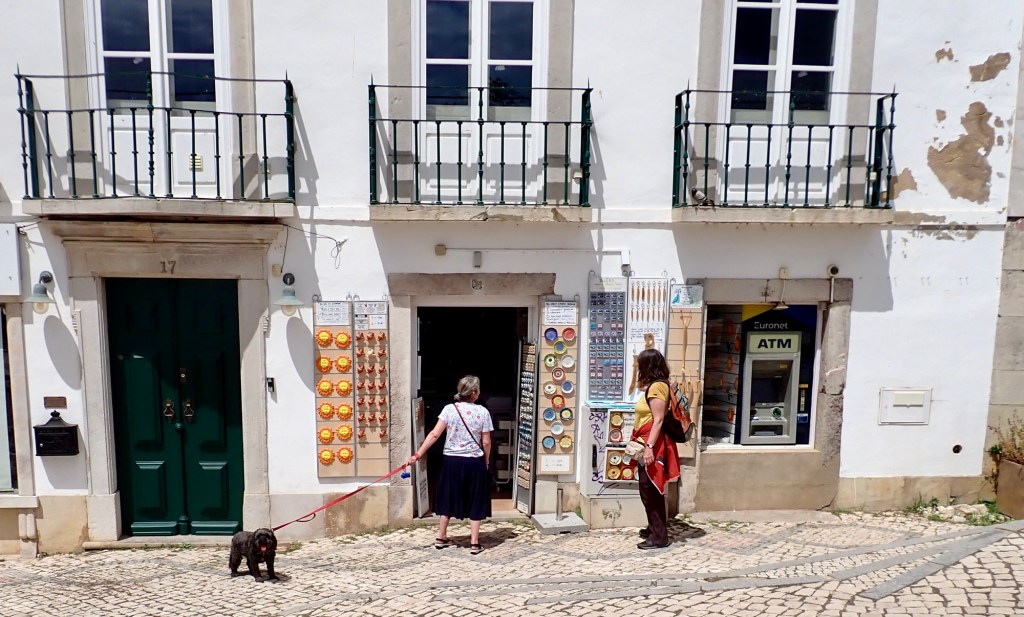
Even on Sunday there were a few tourist shops open.
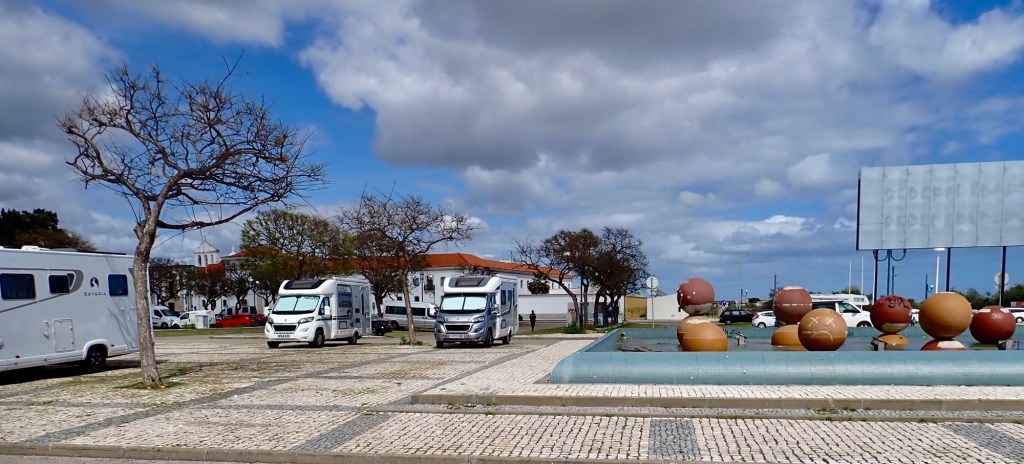
From Tavira we drove to Faro where we are staying the night on a huge car park against the city walls.
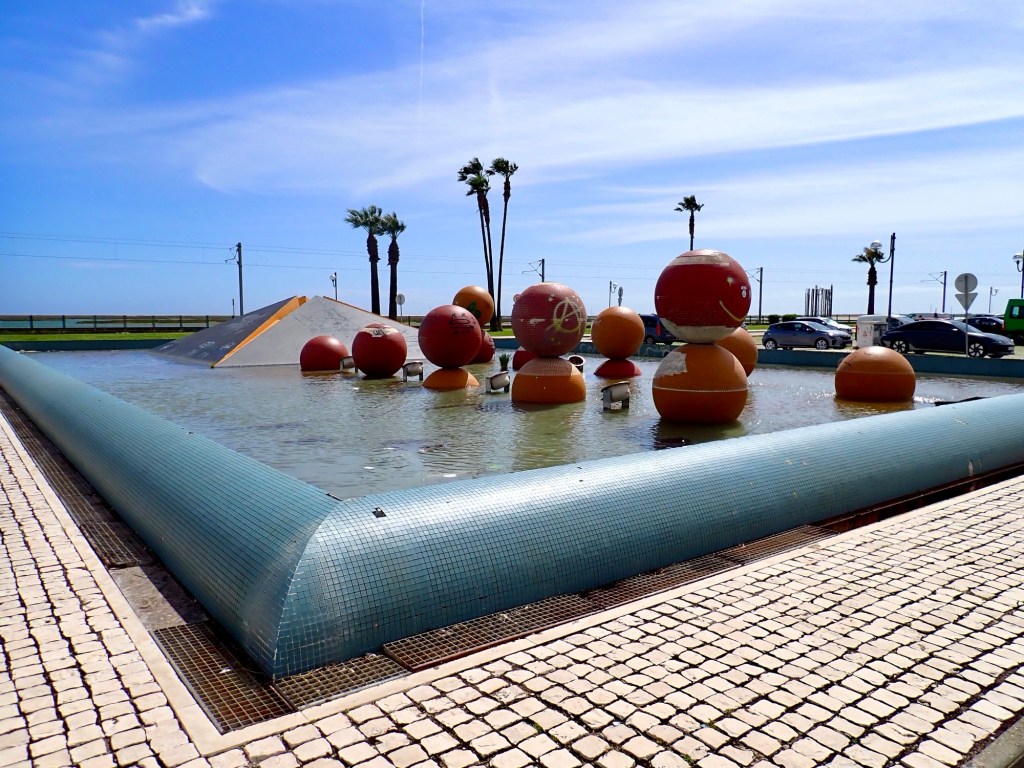
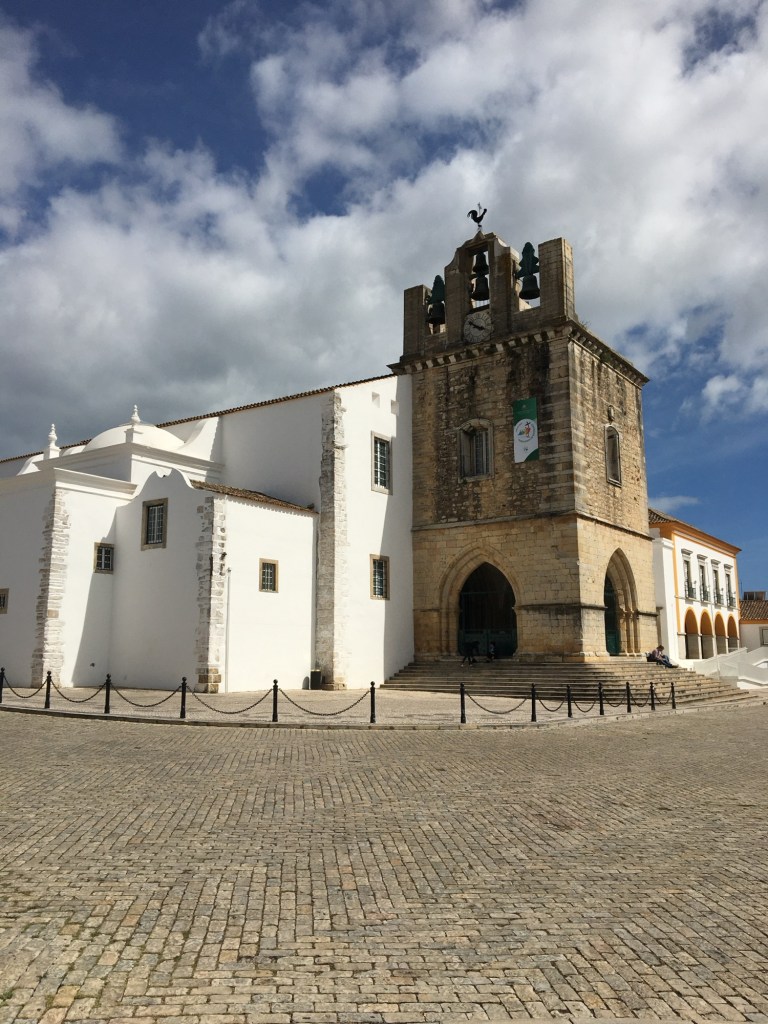
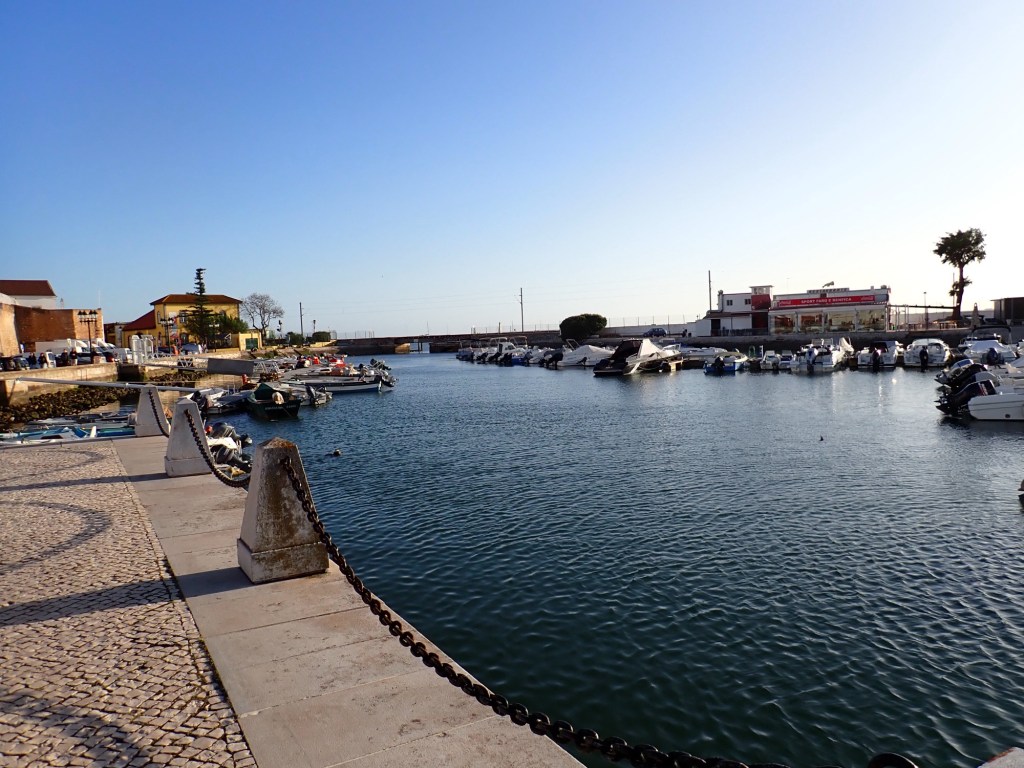
Water sculpture but not working.Cathedral.My little pixie😊The Marina
We had a very pleasant meal in a restaurant on the marina Cafe o Coreto, it had an extensive menu so it provided well for all four of us and even allowed Layla inside which is rare here in Portugal.
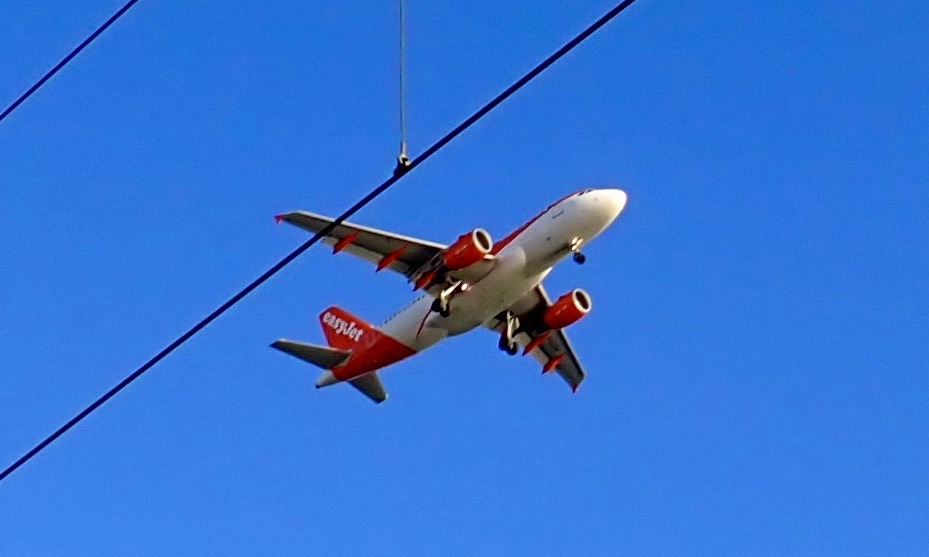
One thing you can’t ignore is the flight path to the airport goes right over Faro and there is a steady stream of planes landing from 6am to 11pm with Easy Jet, Ryan Air and Tui being easy to recognise.
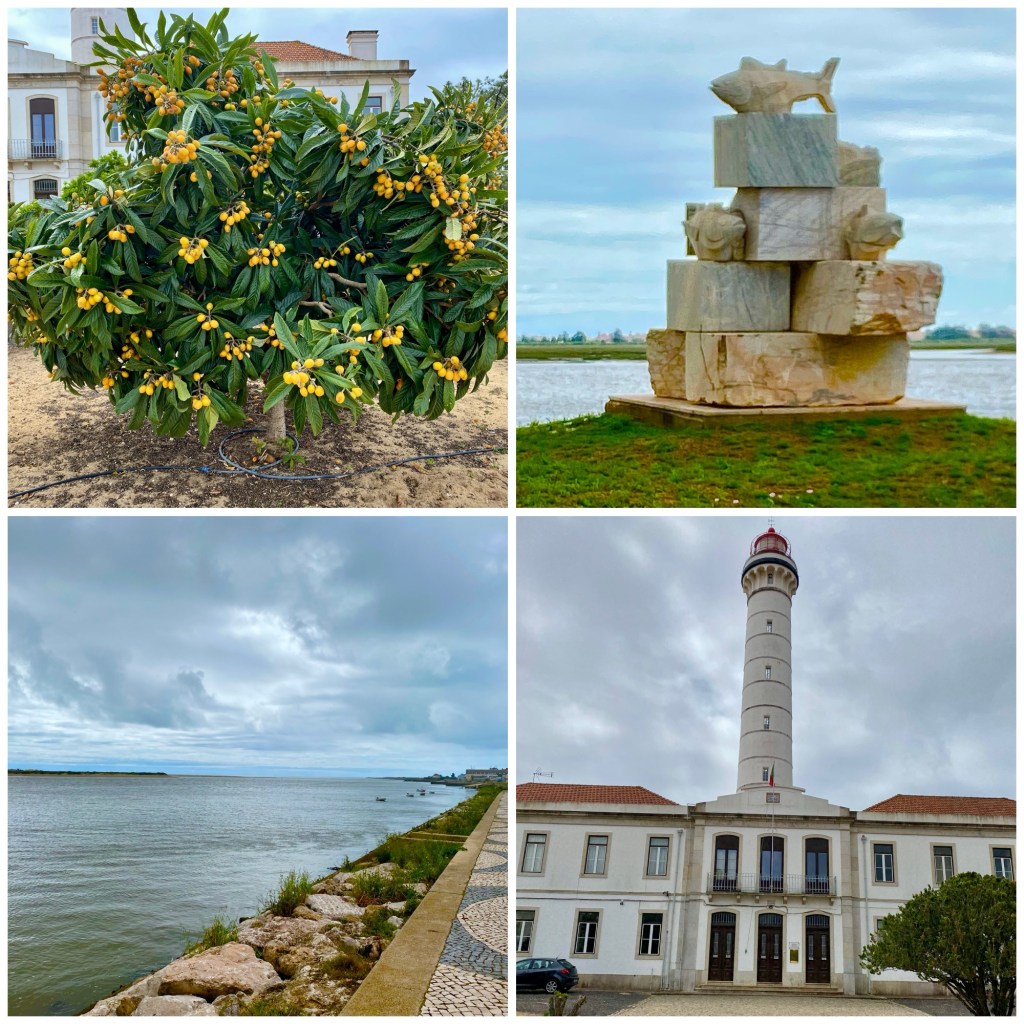
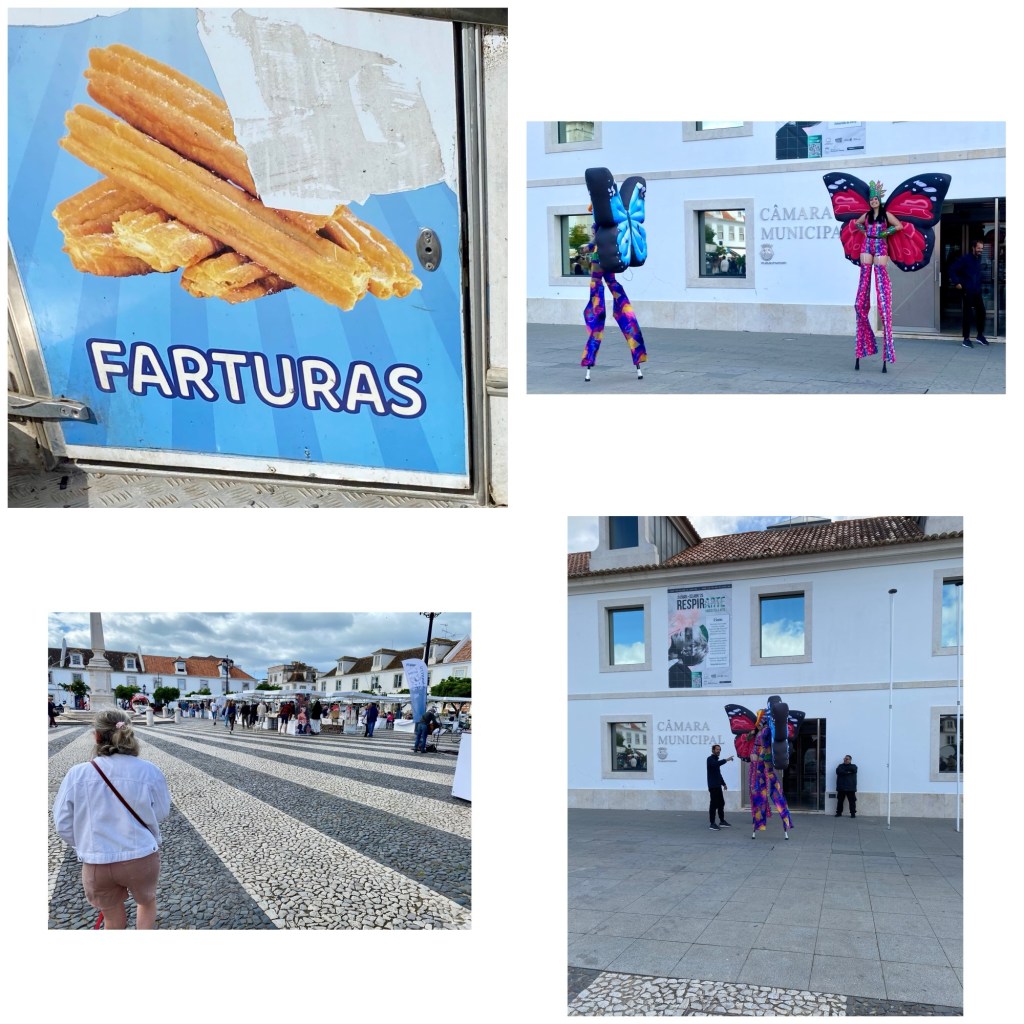
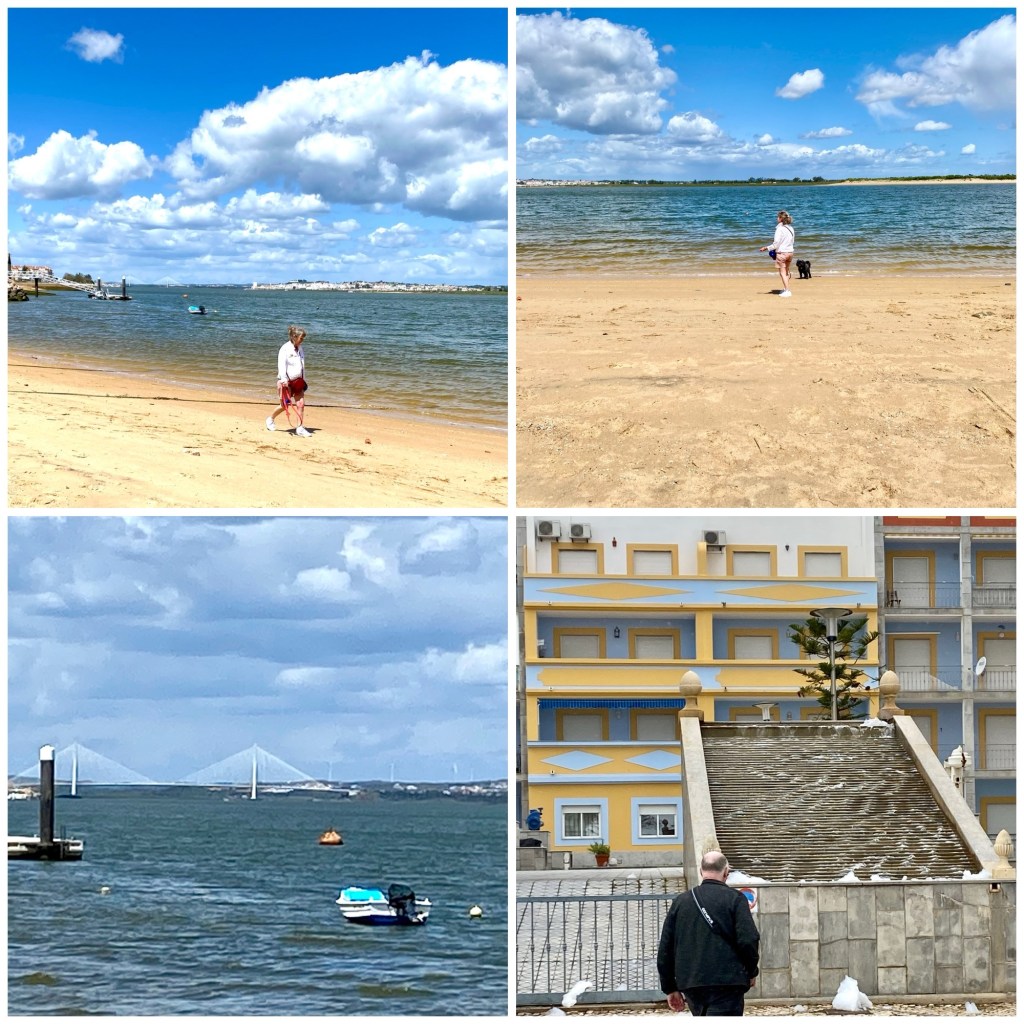
We have spent the past two days walking miles and exploring more of the town and the surrounding area, vert little to write so I will just add a medley of photos of things we have seen.
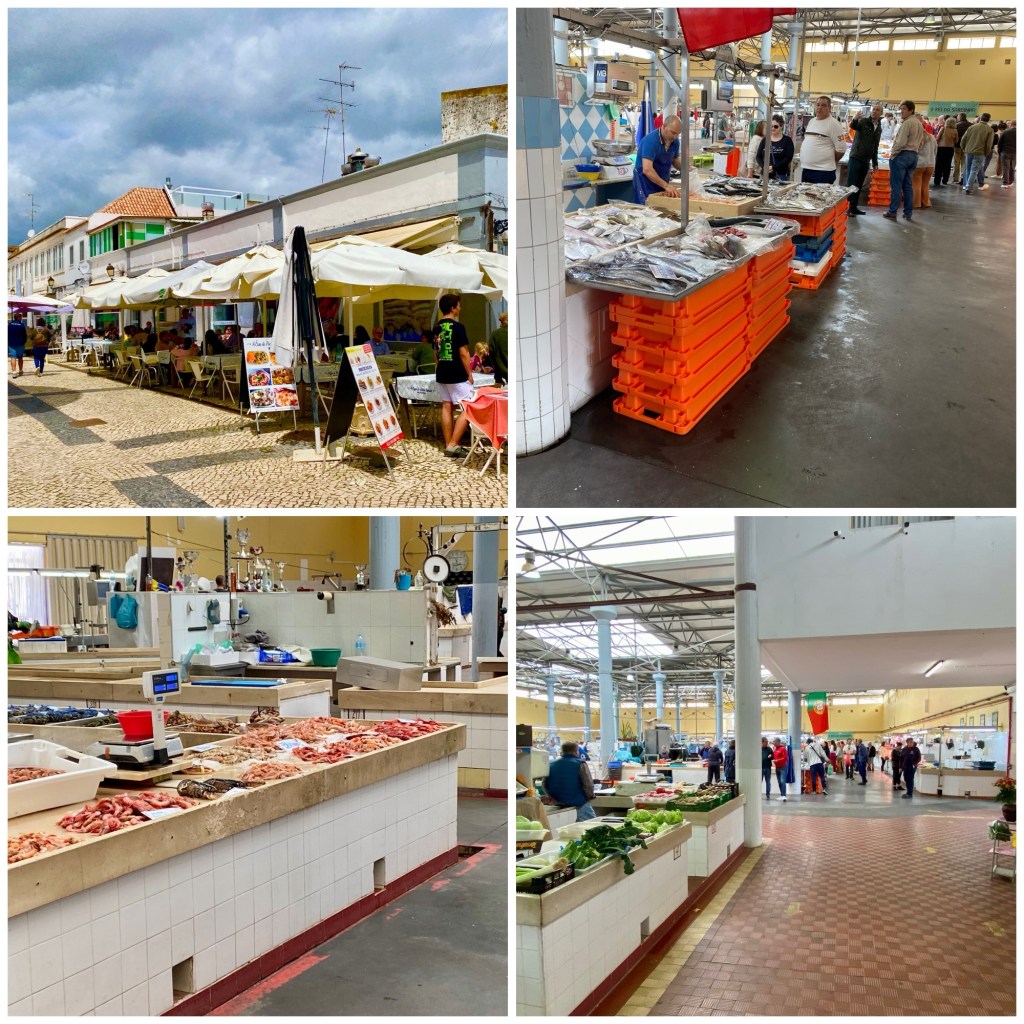
Scenes in local market hall, plenty of fish.Chinese plum tree, view out to the sea and local lighthouse.You wouldn’t want to be in company eating those . Stilt walkers taking part in the festival.Layla enjoying a beach, the bridge to Spain in the distance and Peter looking at “ a steps waterfall.”




















 taraabit