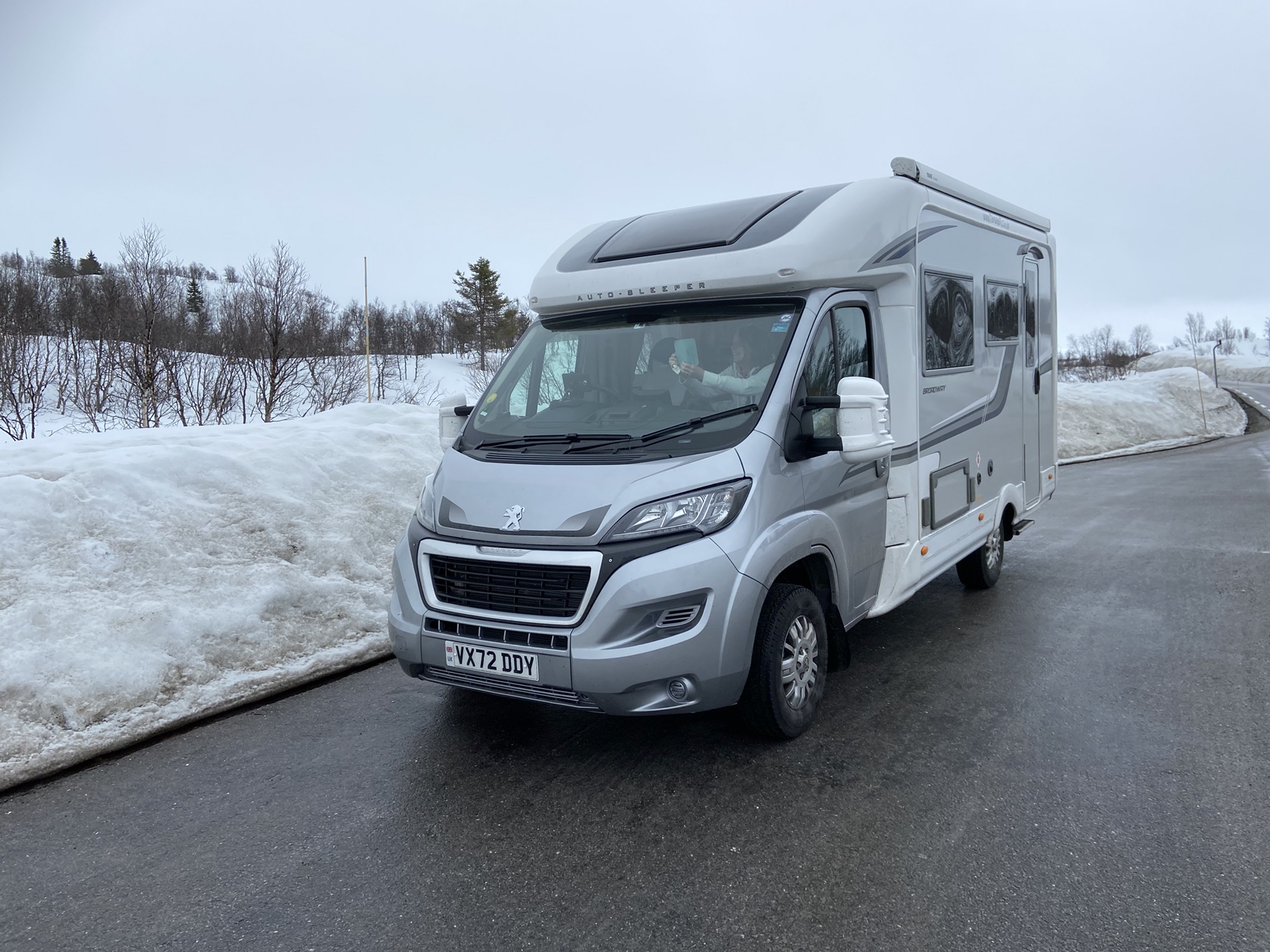
Saturday 8th and Sunday 9th June 2024.
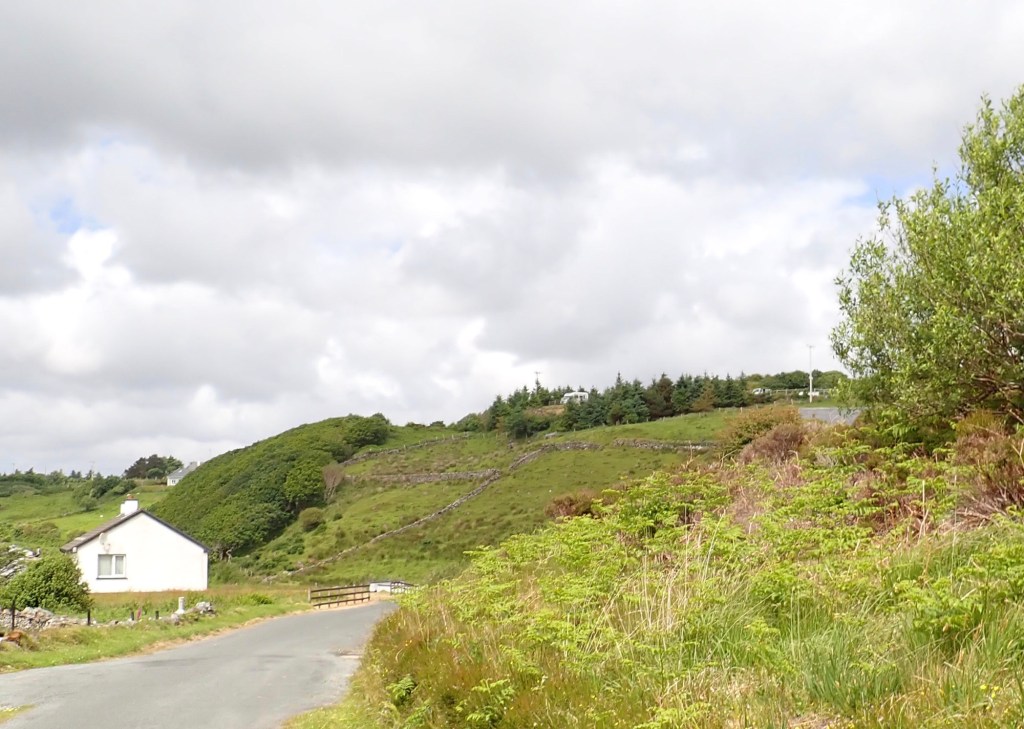
Saturday morning was spent on domestic duties but after lunch we went for a walk down a steep lane to the beach that we could see in the distance below us.

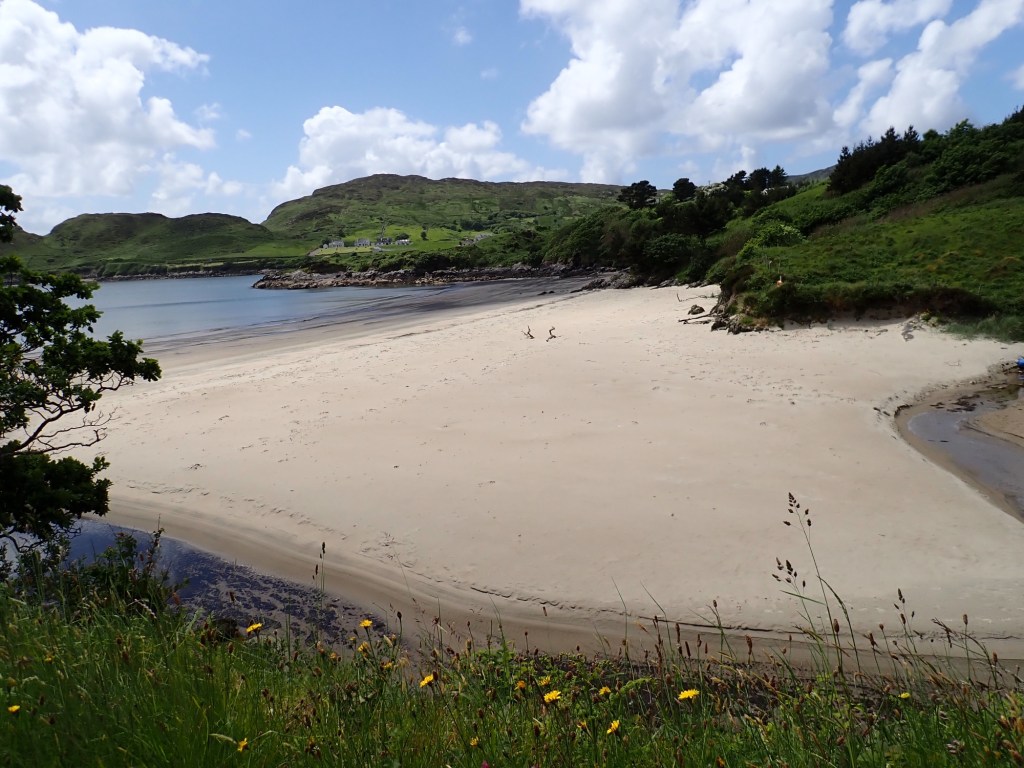
It was totally deserted and as the tide was out we could enjoy a pleasant time in the sunshine playing with Layla on the beach and then sitting soaking up the sun.
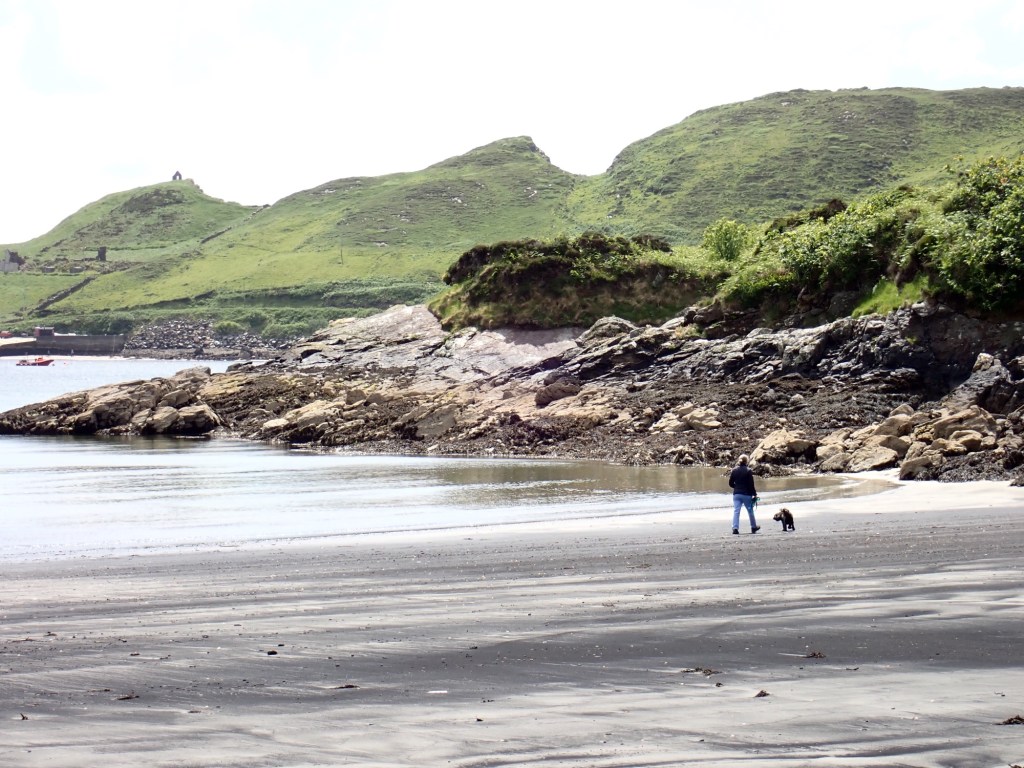

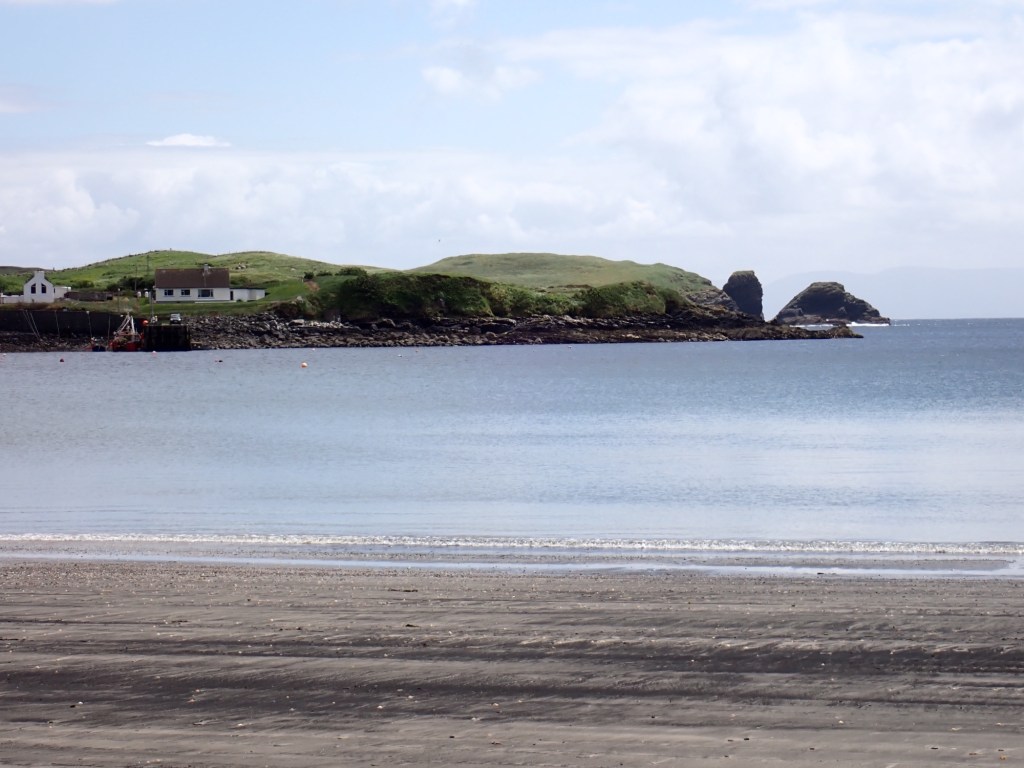
The walk back up made the heart and lungs work hard but I made it😊
SUNDAY.
What a difference a day make, the wind blew hard all night and it rained heavily and that has continued all day today. We couldn’t stay in the van all day as we would have gone stir crazy so we decided to be tourists, being Sunday there wasn’t anything open other than tourist spots.
Our first stop was Sliab Liag Visitors Centre which was a modern building housing displays of the geology and history of the region, plus it had a good cafe and toilets. From the centre you can pay to catch a shuttle bus to take you up to the top of Slieve League Cliffs. These cliffs rise almost 2,000 ft from the Atlantic Ocean, Slieve League is one of the highest cliffs in Europe. They are almost three times higher than the Cliffs of Moher we visited last week. However similar to last week when we emerged from the shuttle bus the rain was lashing down and the clouds were very low.
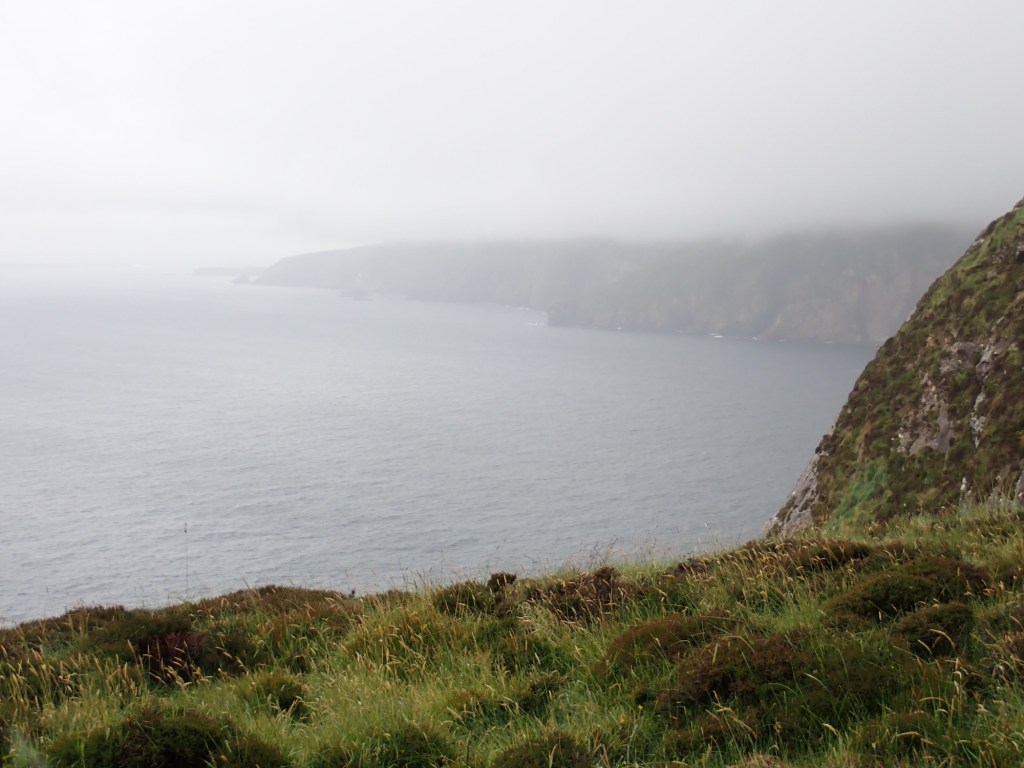
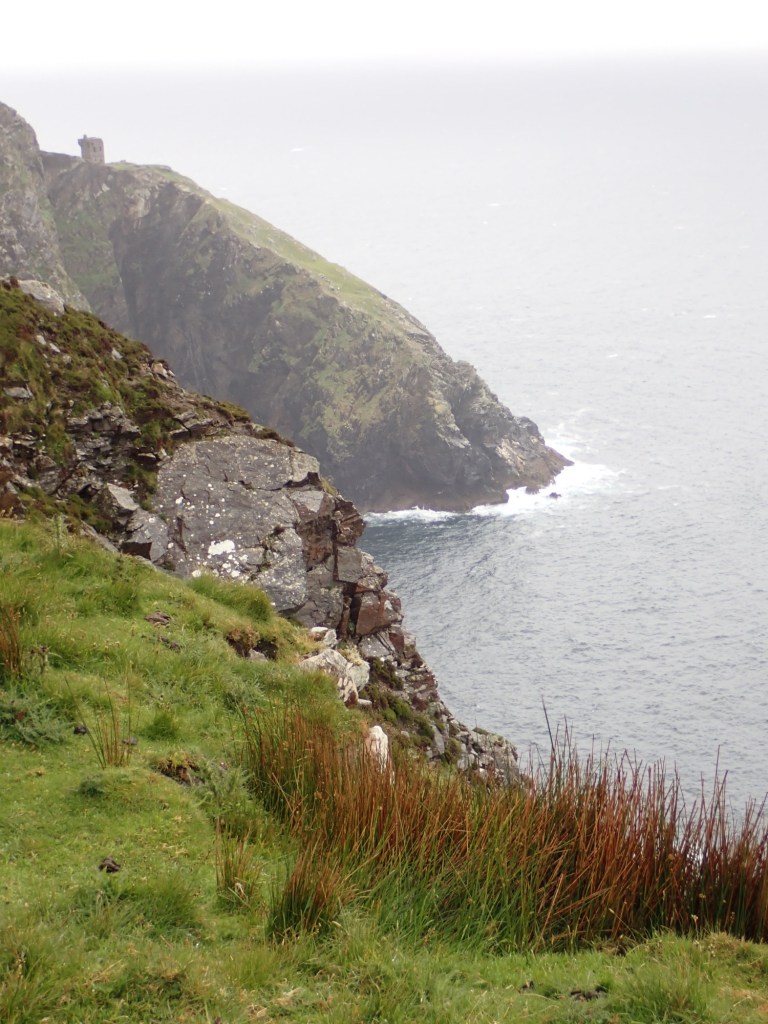
We walked away from the highest cliffs and I managed to take a photo of a lesser cliff which is still quite dramatic.
When we boarded the bus upon its return we were well and truly wet!
We drove on further down the peninsula and visited Glencolmcille Folk Museum.
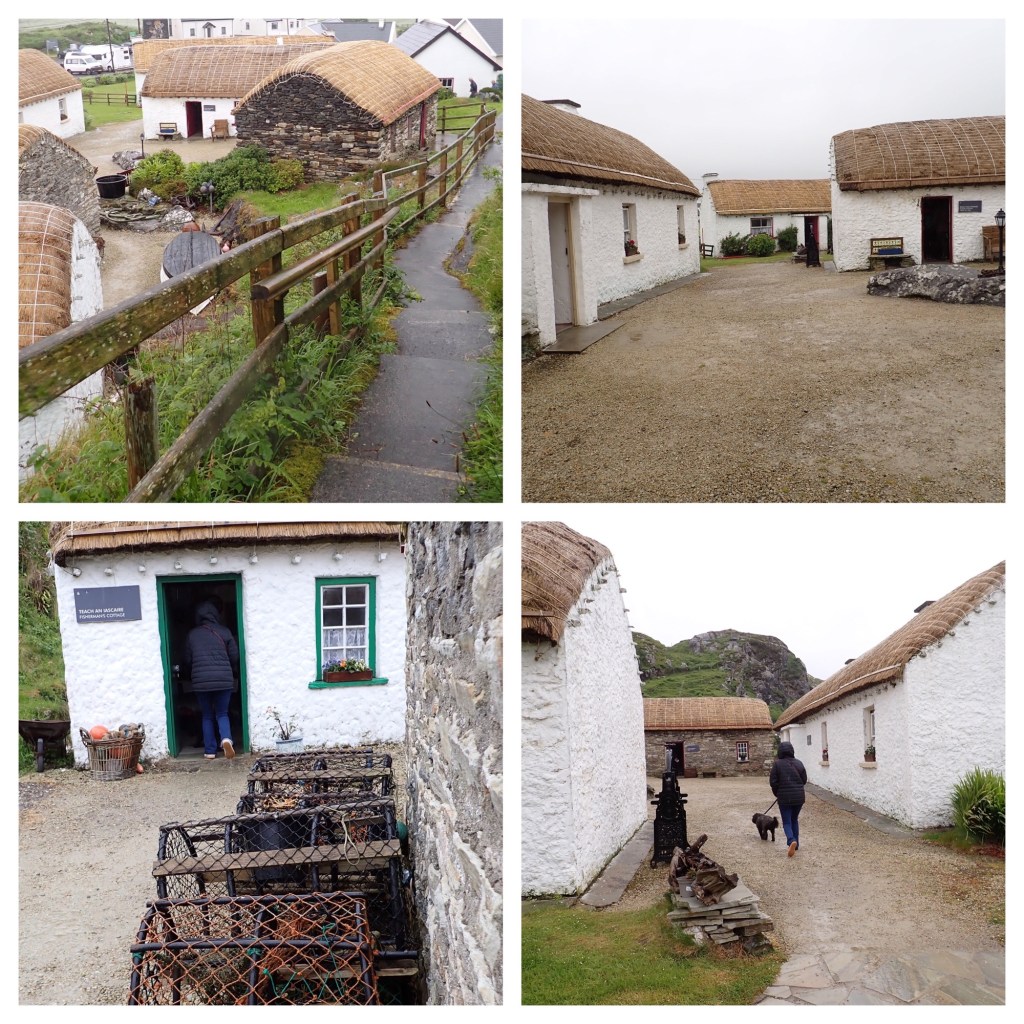
This was founded in 1967 by Father James McDyer, it was built by local volunteers and the artefacts were donated by by local people, each of the six cottages depicts the 17th,18th and 19th centuries .
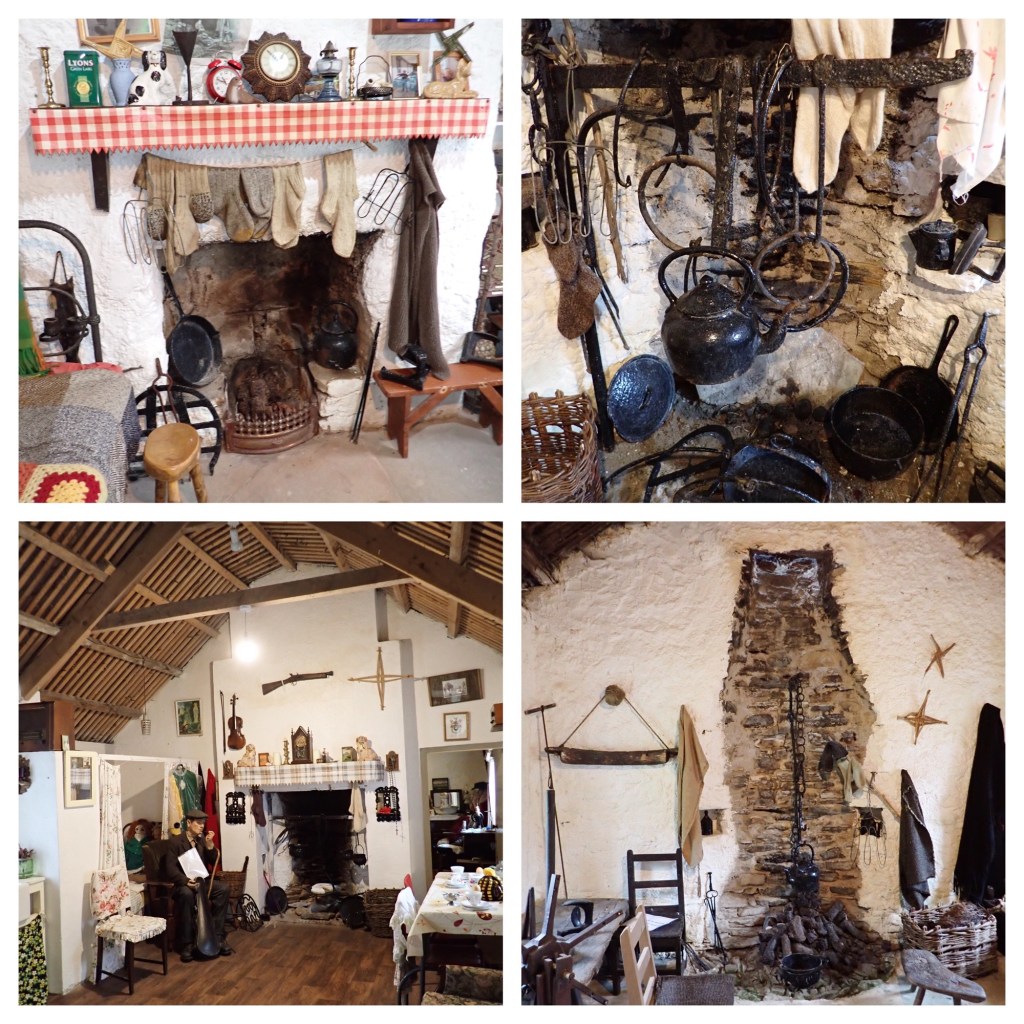
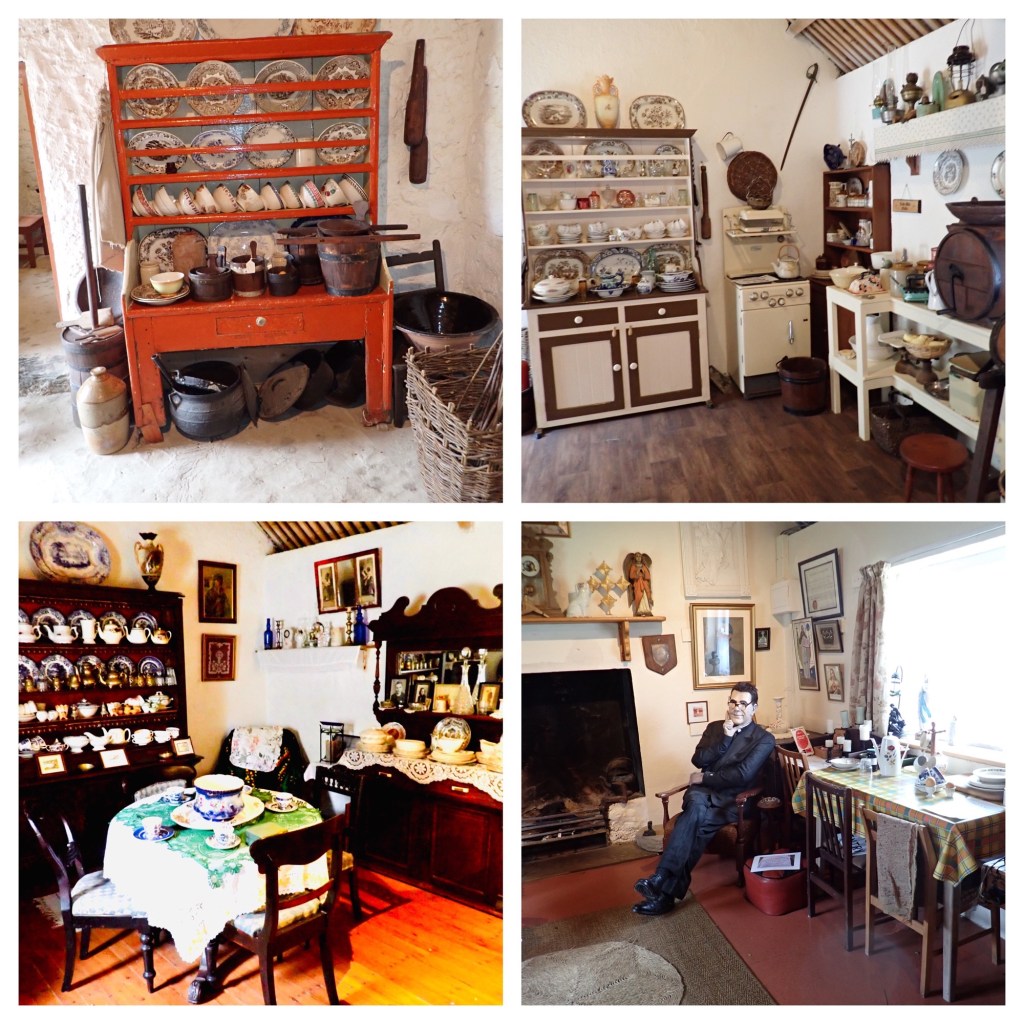

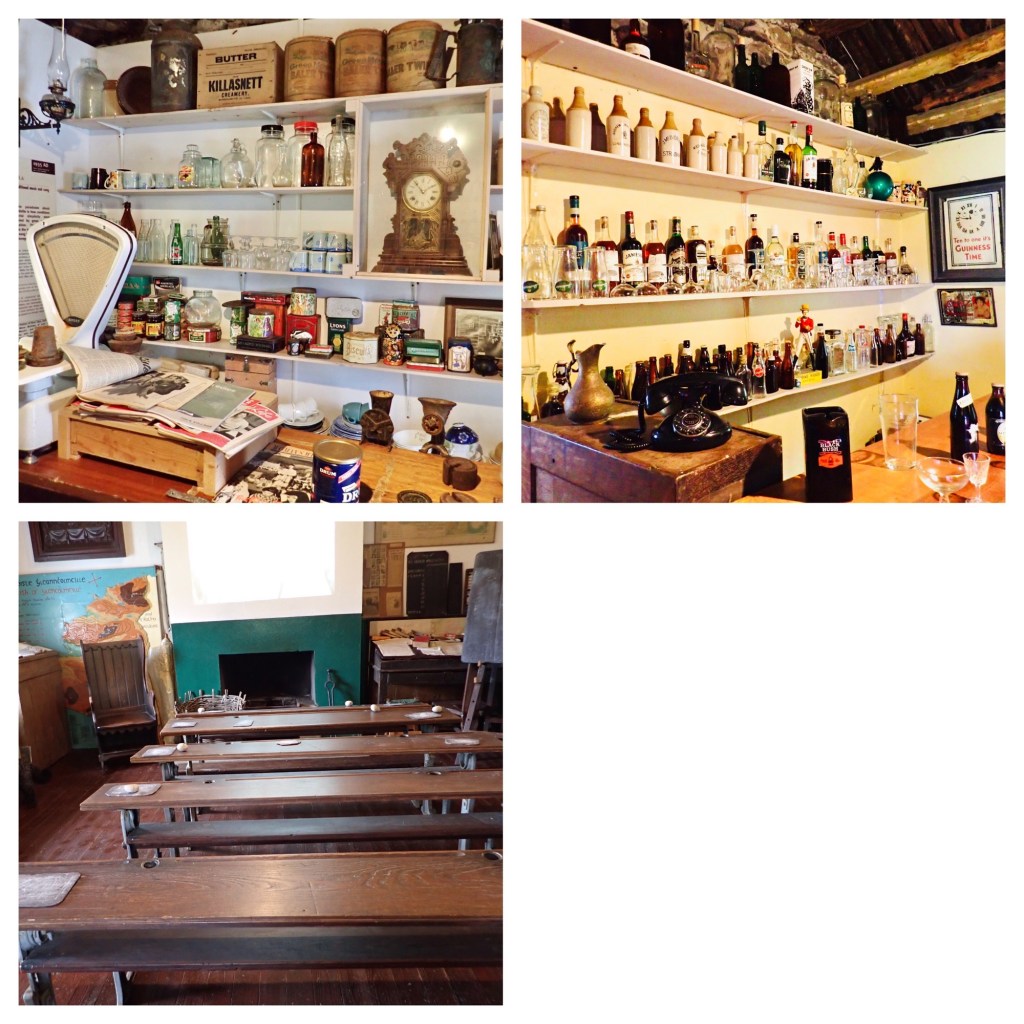
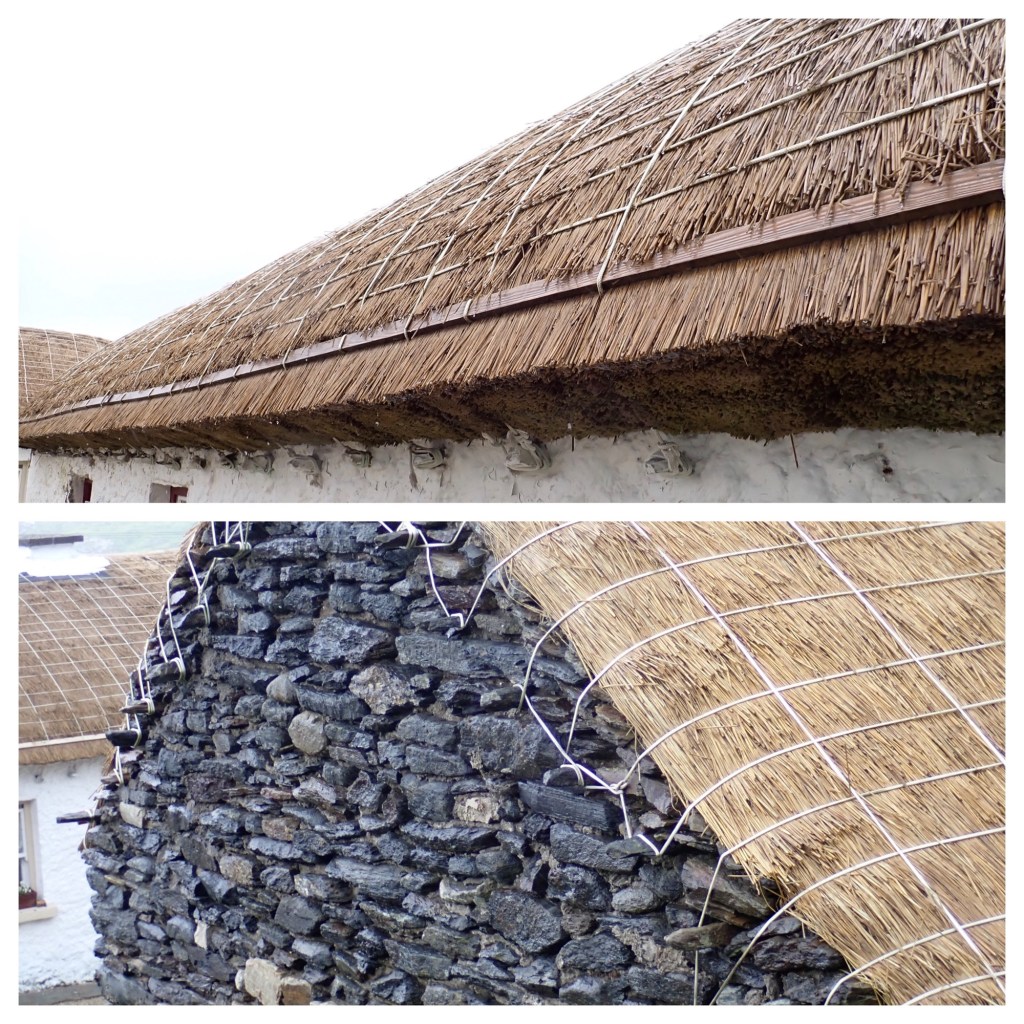
Father James Mc Dyer not only instigated the Folk Museum but when he arrived in Glencolmcille in 1951 he found a region that was suffering from a lack of employment and as a consequence emigration was taking place. Determined to help he campaigned persistently for basic utility services, he was successful and consequently electricity was brought to the area. An International Student Work Camp was later established and during the 1960’s the students worked to install piped water to the village. He managed to encourage factories to be built in the area and marketed the area as a tourist destination.

The rain hadn’t eased and as the other attractions were outdoors we headed back to the campsite for the rest of the day.
 taraabit